
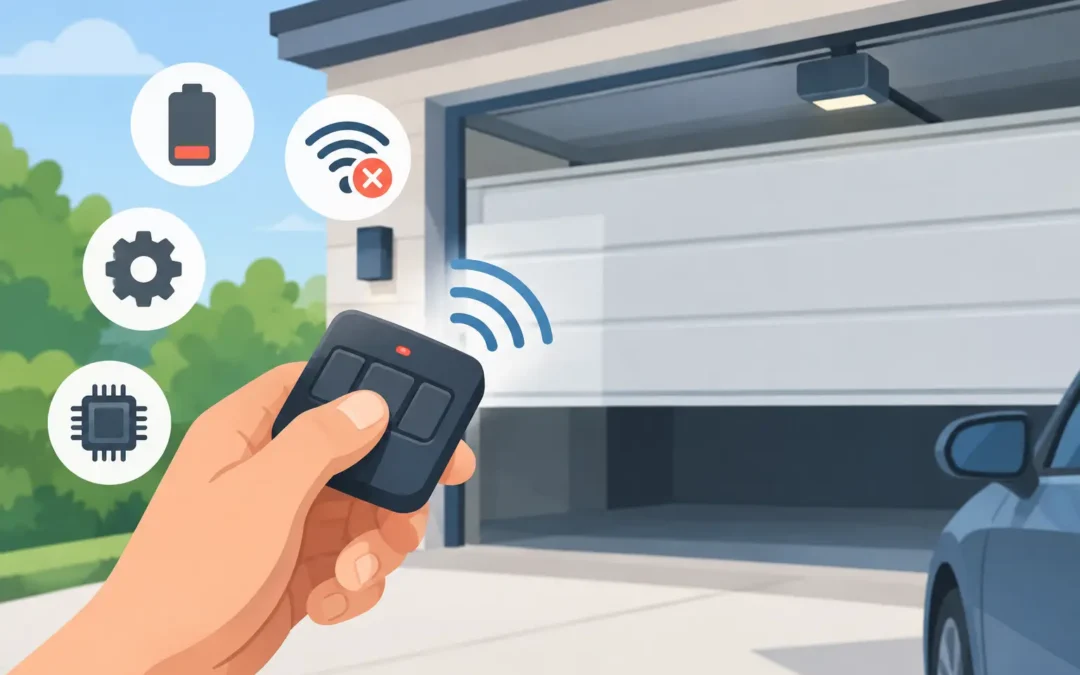
A remote that suddenly will not open the garage is more than an inconvenience. It can leave you stuck in the driveway, disrupt a busy morning, and raise a real security concern if the door will not close properly. Understanding what causes garage opener remote failure can help you rule out simple issues quickly and recognize when the opener itself needs professional attention.
The remote is only one part of a larger operating system. It sends a coded radio signal to a receiver in the garage door opener, which then activates the motor and safety controls. A fault anywhere in that chain – the battery, remote, receiver, wiring, motor unit, or even nearby interference – can make it appear that the remote has failed.
Dead or Weak Batteries Are the Most Common Cause
Before assuming the opener needs repair, start with the remote battery. A weak battery may still light the remote’s LED indicator, but it may not produce a strong enough signal to reach the opener reliably. Many homeowners notice the door works only when they are very close to the garage, then stops working altogether.
Replace the battery with the exact type specified inside the remote compartment or in the opener manual. Make sure the battery contacts are clean, properly aligned, and free of corrosion. If a new battery does not restore operation, the issue is likely elsewhere.
Battery problems are especially common in Northern Illinois and Southern Wisconsin winters. Cold temperatures can reduce battery output, exposing a battery that was already near the end of its useful life. Keeping an extra remote battery on hand is a simple way to avoid a preventable access problem.
Signal Interference Can Block the Remote
Garage door remotes use radio frequencies, and those frequencies can be affected by electronic interference. The problem may be intermittent: the remote works at certain times of day, from certain locations, or only after several button presses.
Potential sources include LED light bulbs installed near the opener, wireless security equipment, nearby radio systems, battery chargers, appliances, and damaged electronic devices. Some LED bulbs are not designed to limit radio-frequency interference and can interfere with a garage door opener’s receiver.
Try operating the remote after turning off or unplugging recently added devices near the garage. If the opener begins responding normally, the source of interference may be clear. Replacing a problematic bulb or relocating an electronic device can solve the issue without replacing the remote or opener.
Distance matters as well. A remote that only works directly in front of the garage may have a weak battery, a damaged antenna, a failing receiver, or substantial interference. Do not rely on repeated button presses as a long-term fix. Inconsistent operation can eventually become complete failure.
The Remote May Need Reprogramming
Modern openers use rolling-code technology to improve security. Each time the remote is used, the code changes according to a secure sequence shared with the opener. If the remote loses its programming or the opener memory is reset, the two devices may no longer communicate.
This can happen after a power outage, electrical work, replacement of the opener circuit board, accidental use of the Learn button, or a prior attempt to program another remote. A remote can also be erased when the opener’s memory is cleared to remove lost or stolen transmitters.
Check whether the wall control inside the garage still operates the door. If it does, the motor unit has power and the problem may be limited to the remote’s battery, programming, or signal. Follow the manufacturer-specific programming instructions carefully. The Learn button is usually located on the opener motor housing, but its location and programming sequence vary by brand and model.
Avoid repeatedly pressing or holding the Learn button without knowing the procedure. On many units, holding it too long can erase all programmed remotes and wireless keypads. That creates more work and can leave every user without remote access until the devices are programmed again.
Physical Damage and Worn Remote Components
Remotes spend a hard life in vehicles, pockets, toolboxes, and kitchen drawers. A drop on concrete, moisture exposure, extreme heat inside a car, or worn button contacts can damage the small circuit board inside the case.
Signs of remote damage include a button that feels loose or does not click, an LED that does not illuminate after installing a fresh battery, a cracked case, or operation that changes when the remote is squeezed or moved. Water damage can corrode internal contacts even if the remote appeared dry after exposure.
In many cases, replacement is more practical than trying to repair a damaged transmitter. The replacement must be compatible with the opener model and properly programmed. Universal remotes can be useful, but compatibility is not guaranteed for every system. A correct manufacturer-compatible remote is often the most dependable choice.
Receiver, Antenna, or Opener Problems
If every remote and wireless keypad stops working, the remote is probably not the source of the problem. Start by checking that the opener is plugged in and that the outlet has power. A tripped GFCI outlet, breaker issue, unplugged power cord, or power surge can shut down the motor unit.
When the wall button works but none of the remotes do, the receiver or antenna may be the concern. The antenna wire hanging from the opener should not be cut, pinched, tucked behind metal, or wrapped around wiring. Metal surfaces and obstructions can reduce reception, particularly in commercial settings or garages with substantial steel framing.
A failing logic board or receiver can also prevent the unit from recognizing remote signals. These electronic failures are more likely on older opener systems and after lightning, power surges, moisture exposure, or repeated electrical interruptions. The proper repair depends on the opener’s age, condition, safety features, and availability of replacement parts. Sometimes a receiver or board repair makes sense. Sometimes replacing an outdated opener provides better reliability and current safety technology.
Door Problems Can Look Like Remote Failure
The remote may be working correctly while the garage door system is refusing to move. Garage door openers are designed to stop or reverse when they detect an obstruction, excessive force, or a problem with the safety sensors.
Look for flashing opener lights, clicking sounds, or a door that starts to move and immediately reverses. Photo-eye safety sensors near the bottom of the tracks may be blocked, dirty, misaligned, or affected by damaged wiring. A broken spring, seized roller, bent track, or damaged cable can make the door too heavy or difficult for the opener to lift.
Do not keep activating the remote if the door is binding, moving unevenly, or making grinding noises. Continuing to run an opener against a mechanical problem can damage the motor, gear, rail, or door components. Never attempt to adjust garage door springs or cables yourself. Those parts are under extreme tension and require trained service.
How to Narrow Down the Cause of Garage Opener Remote Failure
A few observations can save time. If one remote fails but another works, focus on the failed remote’s battery, damage, and programming. If all remotes fail but the wall control works, investigate interference, the antenna, receiver, or opener electronics. If neither the remotes nor wall control works, check power to the opener first.
If the door responds to the remote but will not fully open or close, the issue is usually not the transmitter. Watch for sensor lights, error codes, unusual door movement, or changes in the opener’s sound. These clues help identify whether the repair involves the door, the opener, or the remote-control system.
For homeowners, prompt repair protects daily convenience and home security. For businesses, a nonfunctioning remote or receiver can interrupt deliveries, employee access, fleet movement, and building security. Commercial operators should also consider who has active remotes and whether lost devices should be removed from the system memory.
When to Call a Garage Door Professional
A new battery and a straightforward reprogramming attempt are reasonable first steps. Call for service when the problem continues, multiple controls stop working, the opener shows signs of electrical damage, or the door is not moving safely. Professional diagnosis can separate a simple transmitter issue from a failing opener, sensor problem, or mechanical door repair.
Barcol Door Company provides experienced garage door and opener service for homeowners and commercial properties throughout Northern Illinois and Southern Wisconsin. A qualified technician can test the remote signal, receiver, safety system, door balance, and opener operation to recommend a repair that makes practical sense.
A garage door remote should work when you need it, not only when conditions are perfect. Addressing inconsistent operation early can restore dependable access before a minor signal problem becomes a locked-out driveway or a door that will not secure your property.