
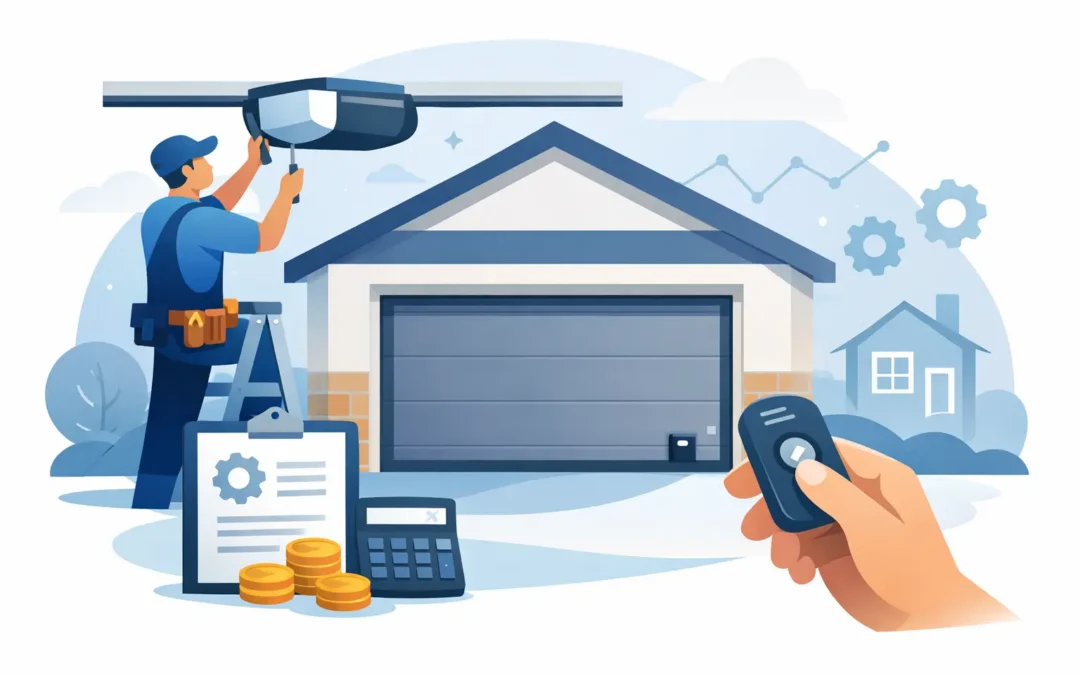
A garage door opener quote can look simple at first, then change once the technician sees the door, the ceiling height, the outlet location, or an aging track system. That is why automatic garage door opener installation cost is rarely one flat number. The opener itself matters, but so do the condition of the door, the mounting setup, and whether the job is a basic replacement or a first-time installation.
For most homeowners, the real question is not just price. It is what you are getting for that price, how long the opener will last, and whether the system will run safely and quietly after installation. A low quote can look attractive until it leaves out key parts, needed adjustments, or proper setup.
What affects automatic garage door opener installation cost
The biggest cost factor is the type of opener being installed. Chain-drive openers are often the most budget-friendly and work well for many standard residential doors. Belt-drive openers usually cost more, but they are quieter, which matters if there is a bedroom or living space above the garage. Wall-mount and jackshaft-style openers can be a strong option for certain layouts, but they typically come at a higher equipment and labor cost.
The door itself also changes the price. A lightweight single door is usually more straightforward than a heavy double door, an insulated door, or a custom wood door. Heavier doors may require a more powerful motor, additional balancing work, or hardware adjustments before a new opener can be installed correctly.
Whether the project is a replacement or a new installation also matters. Replacing an existing opener is often faster if the framing, outlet, and support are already in place. A first-time installation may require new mounting brackets, electrical work, or added reinforcement, which raises labor time and material cost.
Typical price range homeowners can expect
In many cases, homeowners can expect automatic garage door opener installation cost to fall somewhere between a few hundred dollars and over a thousand, depending on the opener model and the work involved. A basic chain-drive replacement on a standard residential door will generally land at the lower end. A premium belt-drive opener with battery backup, smart controls, keypad access, and camera features will push the project higher.
Labor is one part of that total, but not the only one. The final number can include the opener unit, rails, remotes, wall controls, safety sensors, disposal of the old unit, and system testing. If the installer finds worn springs, loose hinges, bent track, or an unbalanced door, those issues may need attention before the opener is put into service.
That last point is worth taking seriously. An opener is not designed to compensate for a garage door that is already struggling. If the door is hard to lift manually or does not stay balanced, installing a new opener without correcting the root problem can shorten the life of the equipment and create safety concerns.
Equipment choices that raise or lower cost
Features have a direct impact on price, and some are worth paying for depending on how the garage is used. A basic opener with one or two remotes will cost less than a model with Wi-Fi connectivity, app control, motion-detecting lights, battery backup, and integrated security features.
Noise level is another practical factor. Chain-drive systems are durable and cost-effective, but they are typically louder. Belt-drive systems cost more upfront, yet many homeowners consider the quieter operation well worth it. If the garage is attached to the house, that upgrade often makes everyday use more comfortable.
Horsepower, or more accurately lifting capacity, also affects cost. Standard sectional doors can often use a mid-range opener without issue. Heavier insulated doors or oversized doors may require a stronger unit. Choosing too little power can lead to strain and early wear, while overspending on a unit far beyond the door’s needs may not add much value.
Installation details that can change the quote
Ceiling height and garage layout influence labor more than some homeowners expect. A standard-height garage with open ceiling access is generally simpler to work on. High-lift doors, limited overhead clearance, finished ceilings, or unusual framing can all add time to the job.
Electrical access is another common variable. If there is already a properly placed outlet near the opener location, installation is more straightforward. If a new outlet is needed, or if wiring must be updated to meet code and practical use, the total cost can increase.
Support framing can come into play as well. The opener must be mounted securely, and the header area must be suitable for the load and motion of the system. If reinforcement is needed, that should be handled as part of a proper installation rather than treated as an afterthought.
Why labor quality matters
It is easy to focus only on equipment price, but labor quality affects long-term value. A professional installation is not just hanging the motor and connecting the rail. It includes aligning the opener, setting travel limits, adjusting force settings, testing the reverse mechanism, checking the photo eyes, and making sure the door moves smoothly.
An improperly installed opener can be noisy, inconsistent, and hard on the door system. It may reverse unexpectedly, fail to close evenly, or wear out components faster than it should. In some cases, poor installation can create a safety risk for vehicles, property, and people.
That is why experienced service matters. A qualified installer looks at the entire system, not just the box being mounted to the ceiling. For homeowners in Northern Illinois and Southern Wisconsin, working with an established local company such as Barcol Door Company can make the difference between a quick hookup and a properly functioning system built to last.
When a low price is not really a better deal
The cheapest quote is not always the lowest total cost over time. Some estimates cover only the opener and basic mounting, with extra charges added later for remotes, keypad setup, sensor replacement, haul-away, or door adjustments. Others may use lower-grade equipment that works fine at first but does not hold up under regular use.
A better approach is to ask what is included. Does the quote cover removal of the old unit, installation of all safety components, programming of remotes, final testing, and warranty support? If not, the lower price may not tell the full story.
There is also the issue of compatibility. Not every opener is the right match for every door. If a unit is chosen on price alone without considering door size, weight, and daily usage, the savings can disappear in repair calls and premature replacement.
Repair versus replacement
Sometimes homeowners start by asking about opener installation cost when the real issue is whether they need a new opener at all. If the existing unit is fairly recent and the problem is limited to a remote, sensor, gear, or wall control, repair may be the more economical option.
On the other hand, replacement often makes sense if the opener is older, lacks modern safety features, struggles with daily operation, or has recurring mechanical issues. A new unit can improve reliability, reduce noise, and add convenience features many homeowners now expect.
This is where honest evaluation matters. A dependable service provider should be able to tell you whether a repair is practical or whether replacement is the smarter long-term move.
How to budget for the job
If you are planning for a garage opener project, it helps to think in tiers instead of looking for one universal number. A basic replacement for a standard door may fit a modest budget. A mid-range upgrade with quieter operation and smart access will cost more but often offers better daily value. A more complex installation involving structural adjustments, electrical work, or a specialty opener should be budgeted higher from the start.
It also helps to plan for related needs. If your springs, rollers, or weather seal are near the end of their service life, handling those items during the same visit can be more efficient than spacing everything out. That does not mean every project needs add-ons. It means the smartest quote accounts for the full condition of the system.
The best installation is one that fits the door, the garage, and the way you use the space. If you are comparing estimates, look beyond the headline number and ask what is included, what condition your current system is in, and what level of opener makes sense for your home. A good opener should do more than open and close the door. It should work reliably, safely, and quietly for years after the installer leaves.