
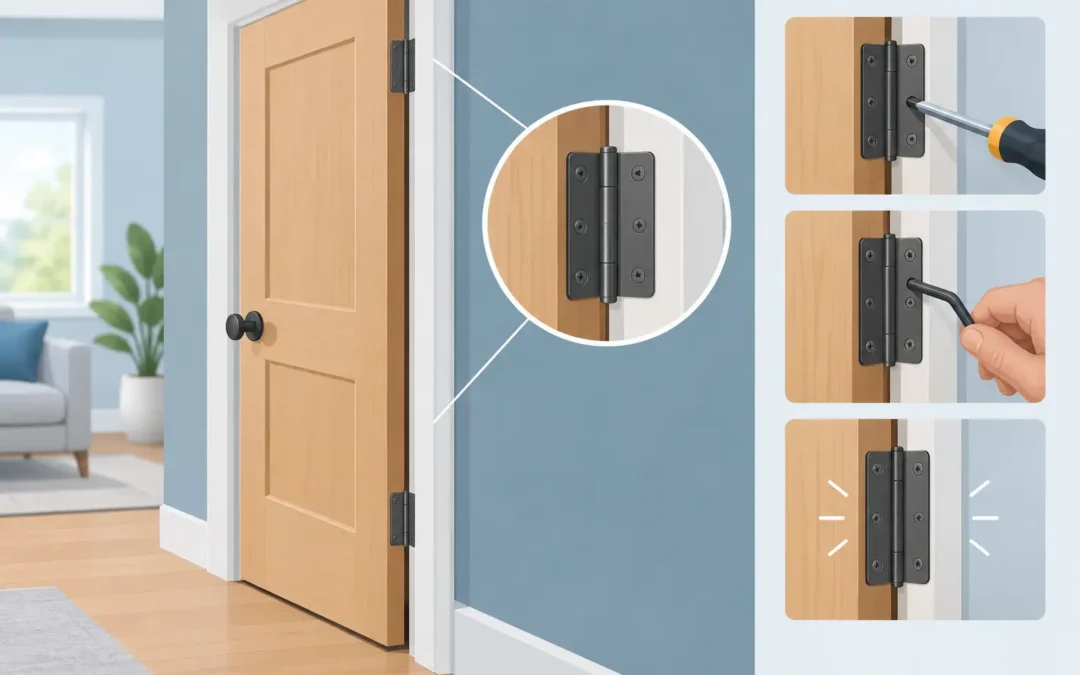
A door that drags across the threshold, rubs the frame, or needs a hard pull to latch is more than an everyday annoyance. It can wear out hardware, damage flooring, compromise weather sealing, and create a security concern. Learning how to align door hinges starts with recognizing whether the issue is a simple adjustment or a sign that the door, frame, hinges, or surrounding structure needs professional attention.
For homeowners, a misaligned entry, service, or garage pedestrian door can affect comfort and curb appeal. For commercial properties, poor door alignment may interfere with accessibility, fire door performance, security hardware, and daily traffic flow. The right repair depends on the type of door and the reason it moved out of position.
Why Door Hinges Fall Out of Alignment
Hinges do not usually fail without a reason. On a lightweight interior door, the problem may be as straightforward as loose screws in the top hinge. On a heavy hollow metal, wood, or exterior door, hinge alignment can be affected by the door weight, repeated use, frame movement, worn hardware, or improper installation.
The upper hinge carries much of the load when a door is open. Over time, repeated opening and closing can loosen the hinge screws or enlarge the screw holes, allowing the door to sag toward the latch side. You may notice uneven gaps around the perimeter of the door, rubbing at the top or bottom corner, or a latch that no longer lines up with the strike plate.
Seasonal movement can also play a role. Wood doors and wood frames can expand or contract with changes in humidity. In older homes and commercial buildings, settling or shifting may pull the frame out of square. A door that closed properly last year can begin rubbing as the building moves or the materials respond to moisture.
Heavy doors deserve special attention. Commercial steel doors, solid-core wood doors, fire-rated assemblies, and doors with closers, panic hardware, or access control systems place significant force on hinges and frames. A quick adjustment may restore operation temporarily, but it will not correct a bent hinge, damaged reinforcement, loose frame anchorage, or improperly sized hardware.
How to Align Door Hinges: Start With an Inspection
Before tightening or adjusting anything, close the door slowly and look at the gaps between the door and frame. A consistent reveal around the top and sides is a good sign. A tight gap at the top latch corner often points to sagging. A tight gap at the hinge side may indicate that the hinges are binding, the frame is twisted, or the door is warped.
Open the door partway and gently lift it at the handle or lock edge. If it moves upward, the hinge screws may be loose or the hinge leaves may be worn. Check every screw, especially at the top hinge. Missing screws, stripped holes, or screws that turn without tightening should be addressed before attempting a more involved repair.
Also inspect the hinges themselves. Look for bent leaves, loose hinge pins, excessive wear around the knuckles, rust, paint buildup, or gaps where the hinge is not sitting flat against the door or frame. On commercial doors, verify that the hinges are appropriate for the door weight and application. Undersized or poorly specified hinges will continue to cause problems even after an adjustment.
Do not overlook the latch and strike. Sometimes the hinges are sound, but the strike plate has shifted or the latch is damaged. If the door closes smoothly but will not latch, the strike may need adjustment rather than the hinges.
Identify Where the Door Is Rubbing
The rub point provides useful direction. If the top latch-side corner rubs, the door is commonly sagging and the top hinge or its fasteners should be checked first. If the bottom latch-side corner rubs, the frame may have settled, the door may be warped, or the lower hinge may be out of position.
A door that drags on the floor may have loose hinges, but it can also indicate a raised threshold, flooring changes, water damage, or a door that has swollen. Avoid planing, cutting, or grinding the door until the hinges and frame have been evaluated. Removing material may solve the immediate rub but create a larger gap when conditions change.
Practical Hinge Adjustments for Standard Doors
For a typical residential swinging door, begin by tightening all accessible hinge screws with a properly sized screwdriver. Start at the top hinge and work down. Avoid over-tightening, which can strip threads or damage the screw head.
If a screw hole is stripped in a wood frame, the repair must restore a solid fastening point. A temporary filler may hold briefly, but a properly secured screw is needed to support the weight of the door. Longer screws can sometimes be used at the top hinge to reach solid framing behind the jamb, provided they are appropriate for the door construction and do not interfere with nearby wiring or building components.
If the door still sags after the screws are secure, the hinges may be worn or bent. Replacing the hinges with matching, properly rated hardware is often a better repair than forcing the existing hinges back into place. Match the hinge size, finish, corner style, pin type, and weight rating. Exterior doors may also require non-removable pins or security hinges, particularly where the hinge barrel is exposed outside.
Minor alignment changes can be made by repositioning a hinge, but this work requires care. Moving a hinge without correcting the underlying cause can create uneven gaps, binding, or latch problems. For a high-use entry door, a heavy door, or any opening with a closer, experienced adjustment is usually the more reliable choice.
When Not to Adjust a Commercial Door Yourself
Commercial doors are systems, not just slabs on hinges. The door, frame, hinges, closer, latch, threshold, weather seals, panic device, locks, and access controls all work together. Altering one component can affect the operation of another.
Fire-rated openings require particular care. Fire doors must close and latch correctly to perform as intended during a fire. Field modifications, unapproved hinge replacements, removed hardware, or changes that prevent positive latching can jeopardize the assembly’s rating and code compliance. If a fire door drags, will not self-close, or does not latch, arrange for qualified service rather than making an improvised repair.
The same applies to doors serving accessible routes. A door that requires excessive force, catches on flooring, or has insufficient clearance can create a barrier for customers, residents, students, and staff. Facilities such as schools, health care properties, assisted living communities, hospitality locations, and public buildings should treat recurring alignment problems as a maintenance priority.
A commercial technician can evaluate hinge condition, frame alignment, reinforcement, closer force, latch engagement, and hardware compatibility as part of one repair. That approach helps avoid repeat service calls and protects the life of the opening.
Preventing Future Hinge Problems
A door that operates correctly should not need repeated force to close. Include high-use doors in routine maintenance, especially exterior entrances, employee doors, service doors, and doors exposed to weather. Check for loose screws, rubbing, oil loss at hinges, failed weather seals, and changes in closing speed before they become larger problems.
Keep hinge knuckles clean and lightly lubricated with a product suited to door hardware. Lubrication reduces noise and friction, but it will not fix sagging, worn bearings, loose fasteners, or a shifted frame. If the door begins binding again soon after lubrication, schedule an inspection.
For homeowners, prompt repair can prevent damage to the jamb, threshold, flooring, and lock hardware. For businesses, preventive maintenance supports security, accessibility, employee safety, and reliable daily operation. Replacing worn hinges before they damage the door or frame is often the more cost-effective choice.
Get the Right Repair for the Door You Have
A loose screw may be a simple fix. A sagging commercial entry door, fire-rated opening, or heavy exterior door requires a closer look at the full assembly. The goal is not merely to make the door shut today, but to restore proper clearances, smooth movement, secure latching, and dependable service over time.
Barcol Door Company helps Northern Illinois and Southern Wisconsin property owners and facility teams address door and hardware issues with experienced repair, replacement, and installation support. When a door keeps rubbing, will not latch, or shows signs of frame or hinge damage, a professional evaluation can protect the door, the building, and the people who use it every day.