
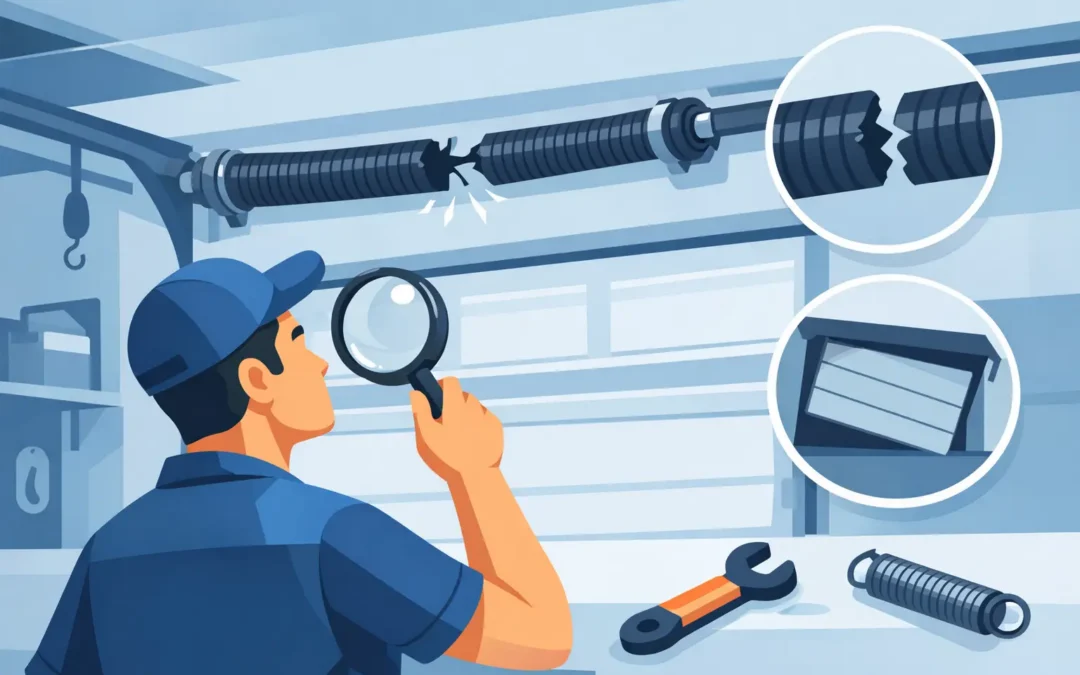
A garage door usually gives you a warning before it stops working. One morning it may feel heavier than normal, open unevenly, or make a loud bang from the garage that sounds like something snapped. If you are wondering how to spot broken garage springs, the key is knowing what changes in your door’s movement, sound, and balance point to a spring problem instead of an opener issue.
Garage door springs do the heavy lifting. They counterbalance the weight of the door so it can open and close with controlled tension. When a spring breaks or starts to fail, the door can become unsafe very quickly. For homeowners, that often means a car trapped inside or outside the garage. For commercial properties, it can mean downtime, security concerns, and an opening that cannot be used reliably.
How to Spot Broken Garage Springs Before the Door Fails
The clearest sign is a door that suddenly feels extremely heavy. If you try to lift it manually and it barely moves, or the opener strains but cannot raise it more than a few inches, the spring may no longer be carrying the load it was designed to support.
Another common sign is a visible gap in the spring. With a torsion spring system, the spring is mounted above the garage door opening on a metal shaft. When it breaks, it often separates and leaves a noticeable space in the coil. Extension springs, which run along the horizontal tracks, may appear stretched out, hanging loose, or visibly disconnected.
Listen to the way the system sounds. Many customers describe a broken spring as a sharp bang, similar to a firecracker or a board snapping. That sound often happens the moment the spring breaks, even if the door is not in use. After that, the opener may hum, struggle, or reverse because the door weight is no longer balanced.
The door’s position can also tell you a lot. A door with a broken spring may open a few inches and stop, slam shut, sit crooked in the opening, or move unevenly from one side to the other. If one side rises faster than the other, that is a sign the counterbalance system is no longer working evenly.
Common symptoms homeowners notice first
In real-world service calls, the first complaint is not always, “I think my spring is broken.” More often, it is, “My garage door won’t open,” or “The opener sounds like it’s working, but nothing is happening.” That distinction matters because many door problems can look similar at first.
If the opener runs but the door does not move, the issue could be the opener, the disconnect, or the spring system. If the opener tries to lift the door and then stops under obvious strain, springs move higher on the list. If the door opens halfway and then reverses, that can also happen when the opener senses unusual resistance from a heavy, unbalanced door.
You may also notice jerky movement, cables that look loose, or rollers that seem to be under unusual stress. Springs and cables work together, so when a spring fails, other hardware may appear out of place too. That does not always mean multiple parts broke at once, but it does mean the system should not be forced.
Visual signs of a broken spring
A quick visual inspection from a safe distance can help confirm your suspicion. Look above the door if you have torsion springs. If you see a clean break with a 2-inch to 3-inch gap in the coil, that spring is broken. This is one of the most reliable visible signs.
If you have extension springs, check both sides along the tracks. A broken extension spring may look elongated, separated, or slack when compared with the spring on the opposite side. Mismatched tension between the left and right sides is a strong clue that something has failed.
Cables are another indicator. If a cable is loose, hanging, or has come off the drum, the spring system may be compromised. In some cases the cable itself is not the original cause. It came loose because the spring broke first and tension was lost. That is why replacing parts without identifying the root problem can lead to more trouble.
Why broken springs are often mistaken for opener problems
Garage door openers get blamed for spring failures all the time. That is understandable. The opener is the part you see trying to do the work. But the opener is not meant to lift the full weight of the door by itself. It is designed to guide a properly balanced door.
When a spring breaks, the opener is suddenly asked to move a door that may weigh well over a hundred pounds with no counterbalance support. Some openers will stop immediately. Others will pull briefly, strain loudly, and then reverse. That behavior can look like a motor problem, but the real issue is often in the spring system.
This is one reason a DIY diagnosis can be tricky. The symptoms overlap. A trained technician can usually tell within minutes whether the problem starts with the springs, the opener, the cables, or more than one component.
When a garage spring is failing but not fully broken
Not every spring problem starts with a clean snap. Springs can weaken over time and still remain intact for a while. In that stage, the door may still open, but not smoothly. It may feel heavier than it used to, drift downward when partially open, or slam harder at the bottom.
You may also hear more creaking, popping, or binding than usual. Older springs can lose tension gradually, which puts extra wear on the opener and hardware. If your door suddenly seems less predictable, that is worth checking before a full break leaves the door stuck.
This is especially important for high-cycle doors in commercial settings or busy households where the garage door is used several times a day. Frequency of use affects spring life. A spring that is near the end of its cycle rating may show warning signs before it fails completely.
What not to do if you think a spring is broken
Do not keep pressing the opener button and hoping the door will power through. That can burn out the opener, bend hardware, or create a more expensive repair. It can also pull the door unevenly and make the situation less safe.
Do not try to lift a heavy door alone. A door with a broken spring can drop suddenly or shift off balance. The weight is more than most people expect, and the risk goes up if cables or rollers are already under stress.
Most important, do not try to adjust or replace garage door springs yourself unless you are specifically trained to do it. Springs are under high tension. Improper handling can cause serious injury and damage to the door system.
When to call for professional service
If you see a broken spring, hear the snap, or notice the door is suddenly heavy or crooked, it is time to call for service. The fastest path is a proper inspection, because broken springs sometimes come with related issues such as worn bearings, frayed cables, bent tracks, or opener strain.
For homeowners, quick service helps restore access, security, and peace of mind. For commercial facilities, it helps avoid interruption and protects a door opening that may be part of daily operations. A professional repair also makes sure the replacement spring is the correct size, type, and cycle rating for the specific door.
In Northern Illinois and Southern Wisconsin, Barcol Door Company handles these issues every day for both residential and commercial customers. That matters because spring replacement is not just about swapping a part. It is about restoring safe door balance and making sure the full system is working the way it should.
How to spot broken garage springs and act early
If your garage door is louder, heavier, slower, or more uneven than normal, do not ignore it. Many spring failures start with small changes in door performance before they become a complete breakdown. Catching those signs early can prevent damage to the opener and reduce the chance of being stuck with a door that will not move when you need it most.
A garage door should open smoothly, stay balanced, and sound consistent from day to day. When it does not, that change is the message. Pay attention to it, stay clear of high-tension parts, and get the right repair before a minor warning turns into a major problem.