A lock that works well on a low-traffic office door can become a costly maintenance problem at a school entrance, hotel corridor, or busy retail back room. When evaluating mortise versus cylindrical locks, the right choice depends on more than appearance or initial price. Door construction, daily use, security requirements, code compliance, and future service all matter.
For many commercial facilities, lock hardware is part of a larger opening system that includes the door, frame, hinges, closer, strike, access control, and panic hardware. Selecting the lock after the door is installed can limit options and add unnecessary labor. A clear comparison early in the project helps avoid that problem.
Mortise Versus Cylindrical Locks: The Basic Difference
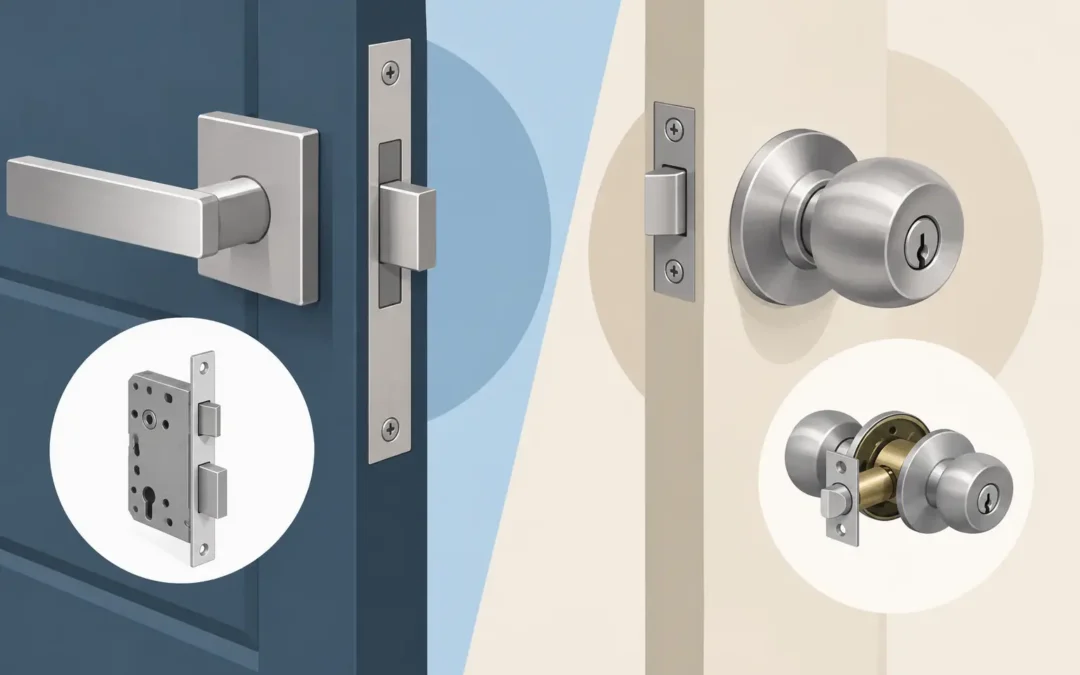
A mortise lock is installed in a pocket, called a mortise, cut into the edge of the door. The lock body fits inside that pocket, while the trim, lever, cylinder, latch, and deadbolt components connect to the body. Mortise locks are commonly specified for commercial hollow metal doors, wood doors, institutional buildings, hospitality properties, and other higher-use openings.
A cylindrical lock, sometimes called a bored lock, installs through two round holes drilled through the door. Its latch and chassis are contained within the lock assembly, and the lever or knob trim mounts on each face of the door. Cylindrical locks are common on offices, closets, interior commercial openings, and residential doors because they are generally faster and less expensive to install.
Both can be dependable, code-compliant products when properly selected and installed. The difference is not that one is always good and the other is always inadequate. The difference is how each lock is built, what the door preparation requires, and how well it stands up to the demands of a specific opening.
Why Mortise Locks Are Common in Demanding Facilities
Mortise locks are often the preferred choice where durability, security, and serviceability are priorities. Their larger internal case can accommodate more substantial components and a wider range of functions. Depending on the model, one mortise lock can combine a latchbolt, deadbolt, lever operation, key cylinder, privacy function, or classroom function in a single coordinated assembly.
That design is valuable on doors that see repeated use throughout the day. In schools, assisted living facilities, theaters, hotels, and public-facing businesses, a lock may be operated hundreds or thousands of times each week. A commercial-grade mortise lock is designed for that type of use and can often be repaired by replacing internal components instead of replacing the entire lock.
Mortise locks also support many specialized needs. They are frequently used with electrified functions, key control systems, institutional trim, and access control. On exterior or security-sensitive doors, they can provide a strong latch and deadbolt arrangement without adding a separate deadbolt above the lever.
The trade-off is installation. A mortise requires accurate door preparation, and retrofitting a door that was bored for a cylindrical lock may involve patching, refinishing, or replacing the door. The lock itself also usually costs more than a comparable cylindrical model. For a high-use commercial opening, however, the longer service life and repair options may make the investment worthwhile.
Where Cylindrical Locks Make Sense
Cylindrical locks are practical for many openings, particularly where use is moderate and the door does not require a complex locking function. They are familiar, readily available, and usually quicker to install or replace. When a facility has a large number of standard office, storage, or utility room doors, cylindrical hardware can provide dependable performance at a lower upfront cost.
Their simpler preparation is a major advantage during renovations. If a door already has standard bore holes, replacing a worn cylindrical lock can often be completed without modifying the door. This can reduce downtime and labor costs, especially across a multi-door project.
Cylindrical locks are not limited to light-duty work. Heavy-duty commercial cylindrical locks are available for busy openings, and they can be an appropriate solution for certain schools, office buildings, clinics, and retail spaces. The key is to specify the grade, function, lever style, backset, latch, and strike correctly rather than choosing based on price alone.
Still, cylindrical locks have limits. Their compact chassis does not offer the same range of integrated functions as a mortise lock. On a heavily used exterior door or a location exposed to abuse, a basic cylindrical lock may wear faster or provide less flexibility for future changes. A heavy-duty model can help, but it should be evaluated against the real demands of the opening.
Security Depends on More Than the Lock Body
It is easy to assume a mortise lock is automatically more secure because it is larger and more complex. In many commercial applications, a properly specified mortise lock does offer excellent security. But the lock is only one part of the system.
A strong lock cannot compensate for a weak frame, loose hinges, poor strike reinforcement, deteriorated door edge, or incorrect installation. The strike must be securely fastened to the frame, and the door must close and latch consistently. On exterior doors, weather conditions, building movement, and closer adjustments can affect alignment over time.
Key control matters as well. A good lock system should be matched with the level of key management the facility needs. A small office may only require a straightforward keying plan. A school district, healthcare facility, or multi-building property may need restricted keyways, master keying, or electronic access control to better manage who can enter which areas.
For doors that require panic hardware, fire-rated hardware, or controlled egress, lock selection should be reviewed as part of the full assembly. Life safety requirements always take priority over convenience. A door must allow occupants to exit as required while still providing the intended level of security from the outside.
Door Type and Function Drive the Decision
The best way to choose between mortise and cylindrical hardware is to start with the door’s job. Consider who uses it, how often it cycles, what it protects, and whether it is part of a rated or regulated opening.
A private office door may be well served by a commercial cylindrical lock. A frequently used classroom, patient room, hotel guest room, or main entry may justify mortise hardware because of its durability and available functions. A storeroom with valuable inventory may require a heavy-duty lock, reinforced strike, and a door and frame that can support the desired security level.
Door material also matters. Hollow metal doors and frames are common in commercial settings and work well with both lock types when prepared correctly. Wood doors can also accept either option, although existing holes, door thickness, edge condition, and fire rating must be considered. Glass aluminum storefront doors often require narrow-stile hardware or specialized locking arrangements, rather than a standard mortise or cylindrical lock.
For fire-rated doors, hardware changes should never be treated as routine. Improper field modifications can affect the door label and the opening’s fire rating. A qualified door and hardware professional can confirm whether the selected lock, preparation, and installation method are appropriate for the rated assembly.
Installation and Long-Term Service Costs
Initial cost is often the first question, but long-term maintenance should carry equal weight. Cylindrical locks generally cost less to purchase and install, particularly when replacing like-for-like hardware on an existing bored door. That makes them a sensible choice when budgets are tight and the opening has modest use.
Mortise locks involve more labor and precision at installation, but they can offer value over time on demanding openings. When a component wears out, the lock may be serviceable without replacing all exterior trim or changing the door preparation. This can reduce disruption and preserve a consistent hardware appearance across a facility.
Service history is useful here. If a door regularly has loose levers, failed latches, broken keys, or alignment issues, replacing the same basic lock may only repeat the problem. The better answer may be a different grade of cylindrical lock, a mortise lock, a closer adjustment, hinge repair, strike reinforcement, or a combination of those corrections.
Choosing the Right Lock for Your Building
There is no universal winner in the mortise versus cylindrical locks discussion. Cylindrical locks are efficient, economical, and dependable for many standard openings. Mortise locks are often the better investment for high-traffic, security-sensitive, or functionally complex commercial doors.
Before ordering hardware, review the complete opening: door and frame condition, fire label, handing, closer operation, required lock function, traffic level, keying needs, and any access control or code requirements. That process prevents a lock from becoming the weak point in an otherwise well-built door system.
For Northern Illinois and Southern Wisconsin property owners and facility managers, Barcol Door Company can help match the hardware to the opening, whether the need is a straightforward lock replacement or a full commercial door and frame project. The right lock should do its job quietly for years, and selecting it with the full door system in mind is the best way to make that happen.