
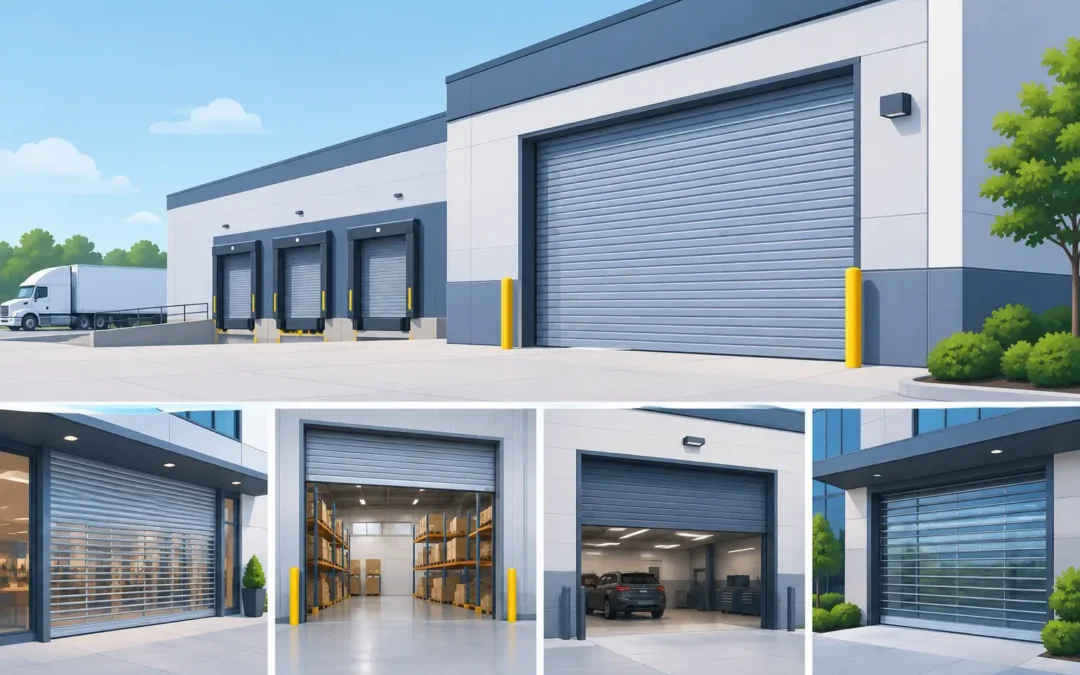
A door opening can be one of the busiest points in a building. It may need to accept deliveries before sunrise, secure valuable equipment after closing, separate occupied spaces during an emergency, or allow vehicles to move through service bays all day. Rolling door applications are built for these demanding conditions because they provide dependable security and access without requiring the floor space of a swinging or sectional door.
For commercial property owners, contractors, and facility managers, the right rolling door starts with the job it must perform. A warehouse loading opening has different requirements than a school concession stand or an automotive service bay. Size, frequency of use, exposure to weather, fire-rating requirements, and the level of security needed all affect the best choice.
Common Rolling Door Applications
Rolling steel doors are widely used where durability and security matter most. The curtain coils above the opening, helping preserve usable space inside and outside the building. That compact design can be especially valuable in tight service corridors, loading areas, and facilities where equipment or shelving sits close to the opening.
Warehouses and loading areas
Warehouses, distribution centers, and manufacturing facilities rely on rolling doors to control access to loading docks, storage rooms, and exterior openings. These doors can stand up to regular use, impacts, and the daily movement of forklifts, carts, and deliveries.
For exterior loading openings, facility managers often need a door that balances security with operational speed. Insulated rolling doors may be the right choice when temperature control is a concern, particularly in heated work areas, cold-storage support spaces, or buildings with high energy costs. A basic non-insulated steel door may be more practical for an unconditioned storage area. The right answer depends on the building envelope and how the space is used, not simply the size of the opening.
Automotive and service bays
Auto dealerships, repair shops, fleet facilities, and municipal garages need doors that keep work moving while protecting tools, vehicles, and inventory. High-cycle rolling doors can be a strong option for openings that operate repeatedly throughout the day. They are suited to bays where a door must open reliably, close securely, and stay out of the way of lifts, vehicles, and work areas.
Visibility can matter in these environments as well. Some door configurations allow for vision panels or ventilation options, but those features should be selected carefully. More visibility may improve safety and natural light, while a solid curtain generally provides greater privacy and security.
Retail storefronts and counter openings
Retail businesses often use rolling grilles or smaller rolling counter doors to secure merchandise without making an interior space feel permanently closed off. A grille can protect a storefront inside a mall, a pharmacy counter, a concession area, or a service window while preserving sightlines after hours.
For food service counters and transaction windows, a compact rolling counter door can close off the opening cleanly at the end of the day. Material selection matters here. Finishes, cleanability, corrosion resistance, and the size of the coil housing can all affect whether a product fits the space and the operation.
Schools, theaters, and public facilities
Schools, theaters, community buildings, and recreation facilities have many openings that need controlled access. Rolling doors are often used at concession stands, equipment rooms, receiving areas, cafeterias, stages, and storage spaces. These properties also tend to have specific requirements for safety, accessibility, and fire protection.
A door that works well in a private warehouse may not be suitable for a school corridor or an assembly area. Noise level, daily supervision, appearance, and code requirements can carry more weight in public-facing facilities. Working with a door professional early helps avoid specifying a product that meets the opening size but misses the broader operational need.
Parking, storage, and secured property areas
Parking structures, self-storage facilities, maintenance compounds, and secured equipment areas use rolling doors to control vehicle and personnel access. These openings may be exposed to wind, moisture, road salt, and temperature swings common across Northern Illinois and Southern Wisconsin.
Weather seals, guides, bottom bars, locks, and operators are not minor details in these applications. They influence security, noise, weather resistance, and the door’s long-term performance. A well-built door can still create problems if the surrounding opening, steel framing, or hardware is not properly prepared and installed.
Security, Fire Protection, and Access Are Different Jobs
One of the most common mistakes in commercial door planning is expecting one product to solve every problem. A security door, a fire-rated rolling door, and a high-speed access door may all look similar from a distance, but they are designed and tested for different purposes.
A standard rolling steel door is often selected to deter unauthorized entry and protect property. It may be the appropriate choice for an exterior storage opening, stockroom, or service area. A fire-rated rolling door is designed to close during a fire event and help protect an opening in a fire-rated wall. It must be specified with the appropriate rating and installed with compatible components according to the building’s requirements.
Rolling grilles offer a different benefit. They provide security while allowing airflow and visibility, making them useful for retail interiors, parking areas, and public-facing counter openings. They are not a replacement for a fire door when a rated assembly is required.
Access needs also deserve their own evaluation. Manual operation may be practical for a small, infrequently used counter opening. A motor operator is usually the better choice for large or regularly used openings. For busy facilities, controls, safety devices, and operator performance should be planned around actual traffic patterns rather than added as an afterthought.
What to Consider Before Selecting a Rolling Door
The opening is only the starting point. Before selecting a door, a facility manager or contractor should consider the door’s purpose, operating frequency, available headroom and side room, building construction, and the environment around it. A door exposed to a wet washdown area, for example, may require different materials and finishes than a door installed in a dry interior stockroom.
It is also wise to look beyond the curtain itself. The guides, counterbalance system, operator, controls, photo eyes, sensing edges, locks, and weather seals all contribute to safe, reliable operation. For rated openings, the full assembly and surrounding wall construction must meet the applicable requirements.
Maintenance should be part of the decision from day one. Commercial doors work hard, and routine inspection can identify worn components before they interrupt business or create a safety concern. Doors that cycle frequently may need more regular service than doors used only a few times per week. A planned maintenance approach is often less disruptive and less costly than waiting for a failed spring, damaged guide, or operator issue to shut down an opening.
Installation Quality Protects the Investment
Even the right rolling door can underperform if it is improperly measured, installed, or adjusted. Commercial openings are rarely as simple as they appear on a plan. Structural conditions, steel jambs, clearances, electrical access, floor level, and adjacent equipment all need to be verified before installation.
Experienced installation also matters when coordinating rolling doors with hollow metal frames, entry doors, panic hardware, closers, and other building components. On larger projects, having one knowledgeable source for doors, frames, hardware, installation, and repair can reduce coordination issues and help keep the work on schedule.
Barcol Door Company helps commercial customers evaluate these details before they become expensive field problems. From a replacement door for a service opening to a specification-driven project with multiple door types, practical product guidance and expert workmanship make a measurable difference.
The most useful rolling door is not necessarily the heaviest or most expensive model. It is the one that fits the opening, meets the code and security requirements, handles the expected daily use, and can be serviced when the building needs it most. Before ordering, take the time to assess the operation around the opening – that is where the right door choice begins.