
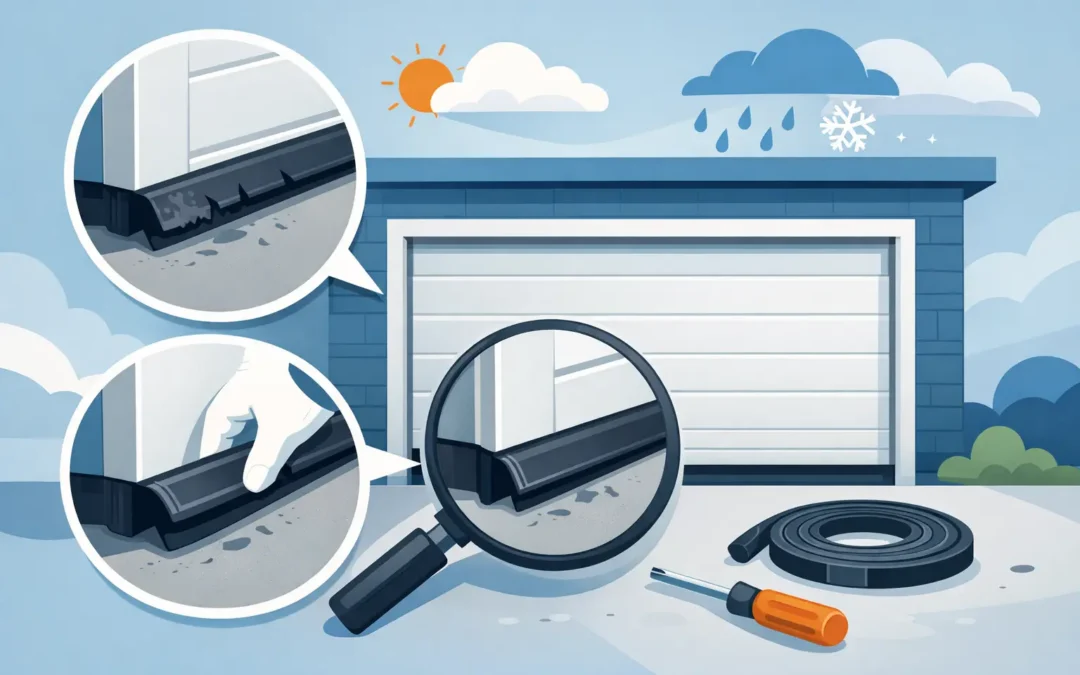
A garage door can look closed while still leaving a clear path for cold air, rainwater, insects, and blowing leaves. In Northern Illinois and Southern Wisconsin, that small gap can make a garage feel noticeably colder, dirtier, and harder to use. Weather seals for garage doors provide a simple but important barrier at the bottom and edges of the door, helping protect the space behind it from the conditions outside.
For homeowners, that often means a cleaner garage, better protection for stored items, and less draft entering an attached home. For commercial properties, properly fitted seals can help keep service bays, loading areas, and workspaces cleaner while reducing water intrusion and pest concerns. The right seal is not complicated, but choosing and installing it correctly matters.
What Garage Door Weather Seals Actually Do
Garage door weather seals close the gaps created when a moving door meets an uneven floor, jamb, header, or track system. Most residential doors use a bottom seal attached to the bottom retainer, along with stop molding or perimeter seal on the side jambs and header. Commercial sectional and rolling doors may use heavier-duty bottom astragals, brush seals, dock seals, or specialized perimeter materials based on the opening and application.
The bottom seal does most of the visible work. It compresses against the concrete when the door closes, creating a barrier against water, dust, leaves, and small pests. Side and top seals reduce drafts and wind-driven rain that can enter around the door perimeter.
No weather seal makes a garage completely airtight, and that is not always the goal. Garage doors need to operate freely, and many garages are not conditioned spaces. A good seal should reduce unwanted gaps without interfering with door travel, safety sensors, or proper closing.
Signs Weather Seals for Garage Doors Need Replacement
Weather stripping gradually hardens, cracks, tears, and loses its ability to flex. Temperature swings speed up that wear. A seal that looked acceptable last season may no longer make consistent contact after another winter of freezing temperatures and road salt.
Look at the bottom edge of the closed door during daylight. If you can see light coming under one area, the bottom seal may be worn, compressed, or the floor may be uneven. Water trails after a storm, piles of leaves near the corners, and insects entering the garage are also common warning signs.
A visual inspection is useful, but touch tells part of the story too. Rubber or vinyl that feels brittle, flattened, split, or permanently bent is usually ready for replacement. On perimeter seals, watch for torn vinyl, loose fasteners, gaps at the corners, or sections that no longer touch the door face.
Some problems that look like a weather seal issue are actually door adjustment issues. If the door sits unevenly, stops short of the floor, or has a damaged bottom section, replacing the seal alone may not solve the problem. The door, tracks, rollers, cables, and opener settings should be checked as part of the diagnosis.
Choosing the Right Type of Seal
There is no single weather seal that fits every garage door. The correct option depends on the door construction, retainer style, opening size, floor condition, and whether the door is residential or commercial.
Bottom Seals and Retainers
Residential bottom seals are commonly made from vinyl or rubber and slide into a metal or PVC retainer attached to the bottom of the door. The seal profile must match the retainer. A T-end seal, bead-end seal, and bulb-style seal are not interchangeable simply because they appear similar from a distance.
A bulb-shaped bottom seal can conform well to minor floor variations because it compresses as the door closes. More flexible rubber materials often perform well in cold weather, while vinyl may be an economical choice for standard applications. The best choice depends on the door and the condition of the threshold, not just the lowest material price.
If the existing retainer is bent, corroded, cracked, or incompatible with available replacement seals, it may be smarter to replace both the retainer and seal. This gives the new material a secure attachment point and avoids repeated service calls for a seal that slips or tears prematurely.
Side and Top Perimeter Seals
Perimeter weather stripping is typically installed on the exterior jambs and header, where it lightly contacts the door when closed. It should be positioned carefully. Too loose, and it leaves a gap. Too tight, and it can create drag, affect door operation, or wear faster than expected.
For older wood doors, warped sections, or openings that have shifted over time, standard stop molding may not close every irregular gap. An experienced technician can determine whether adjustment, a wider seal, repair to the framing, or another solution is appropriate.
Commercial and High-Use Applications
Commercial doors usually need seals selected for more demanding conditions. A busy service bay, warehouse opening, automotive facility, or school maintenance area may require durable material that holds up to frequent cycling, vehicle traffic, moisture, and debris.
Brush seals are useful in certain commercial applications because their bristles conform to uneven surfaces and moving components. Heavy-duty rubber astragals are often used at the bottom of larger sectional or rolling doors. In loading environments, the condition of the concrete, drainage, dock equipment, and traffic pattern can all affect what will perform best.
Why the Garage Floor Matters
Even a new seal cannot fully compensate for a badly cracked, sloped, or uneven concrete floor. Garage slabs settle over time, and low spots often develop near the door opening. Water can then pool under the closed door, especially during heavy rain or snowmelt.
A larger bottom seal may help bridge modest irregularities, but there is a limit. If a gap is significant, adding more material can create excess pressure on the door or cause the seal to fold instead of compressing properly. A floor threshold may be an option in some residential settings, but it must be selected and installed with drainage, vehicle access, and door operation in mind.
The practical approach is to address the cause of the gap rather than forcing a seal to do more than it was designed to do. Sometimes that means a door adjustment. Other times, it means concrete repair, improved drainage, or a different sealing method.
Professional Installation Prevents Common Problems
Replacing a bottom seal can appear straightforward, but old seals often stick inside the retainer, and damaged retainers can have sharp edges. The door is also heavy. Safely lifting or securing it while working along the bottom edge requires the right process and tools.
Perimeter seals demand careful alignment as well. If they are mounted out of position, the door may rub, bind, or still leave corner gaps. On an automatic door, poor alignment can contribute to closing problems and unnecessary strain on the opener.
Professional service is especially worthwhile when the door is older, the opening is uneven, or the issue involves more than the seal itself. Barcol Door Company can inspect the door system, identify the source of the gap, and recommend a repair that fits the door, the building, and the budget.
Make Seal Inspections Part of Seasonal Maintenance
A quick inspection before winter and again after spring thaw can catch small problems before they become water damage or a pest issue. Clear leaves, gravel, salt, and packed snow from the door path so the bottom seal can sit against the concrete as intended. Avoid pulling frozen material away from the seal aggressively, since that can tear flexible vinyl or rubber.
Keep the bottom of the door and the threshold area clean, and check that the door closes evenly. If you notice new daylight, recurring water, a torn seal, or a door that no longer sits squarely on the floor, schedule service before the next severe weather cycle. A properly fitted seal is a small repair that helps keep the entire garage more useful, cleaner, and better protected.