
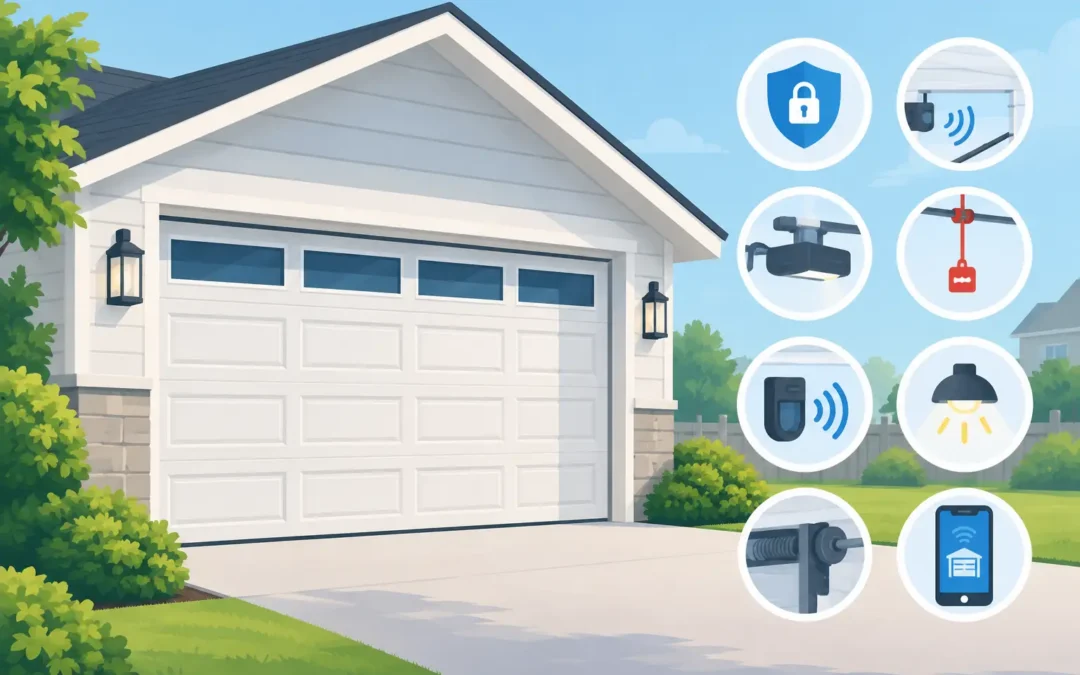
A garage door can weigh several hundred pounds, move with enough force to damage a vehicle, and operate near children, pets, and busy family routines. That is why the best garage door safety features are not optional extras. They are working parts of a properly installed and maintained door system.
For homeowners, the right safety equipment helps prevent injuries, protects property, and keeps a minor problem from becoming an urgent repair. For commercial properties, dependable safeguards also support safer loading areas, employee access, and day-to-day operations. The features that matter most depend on the door’s age, opener type, usage, and condition, but several protections should be present on every modern residential system.
1. Photo-Eye Safety Sensors
Photo-eye sensors are among the most important garage door safety features. Mounted near the bottom of each side of the door opening, they send an invisible beam across the opening. If a person, pet, bicycle, box, or vehicle breaks that beam while the door is closing, the opener should stop and reverse.
These sensors are required on modern automatic garage door openers, but their effectiveness depends on proper alignment and a clear path. A sensor can be knocked out of position by a broom, lawn equipment, or even a bump from a vehicle tire. Dirt, spiderwebs, and moisture can also interfere with the beam.
If the door starts down and immediately reverses, check for an obstruction first. Then look at the sensor indicator lights. A blinking or unlit light often points to alignment, wiring, or sensor trouble. Do not bypass the sensors to get the door moving. That removes a critical layer of protection and can create a serious hazard.
2. Auto-Reverse and Force Settings
A properly operating garage door should reverse if it contacts an object while closing. This feature works with the opener’s force settings, which monitor resistance as the door travels. If the door encounters unusual resistance, it should stop and return to the open position.
Auto-reverse is a backup to photo-eye sensors, not a substitute for them. Sensors detect an obstruction before the door reaches it. The force-reversal feature responds only after contact is made. Both systems need to work correctly.
Homeowners can perform a basic test by placing a solid object, such as a piece of lumber laid flat, in the door’s path. When the closing door touches it, the door should reverse promptly. If it continues closing, stops without reversing, or requires excessive force to open, schedule service. Improper force settings may be part of the problem, but worn springs, damaged rollers, a binding track, or an unbalanced door can also cause unsafe operation.
3. A Manual Release That Works When Power Is Out
Every automatic opener should have a manual release cord, usually a red handle hanging from the opener rail. This allows the door to be disconnected from the opener during a power outage or opener failure.
The release is useful only when homeowners know where it is and can operate it safely. Before pulling the cord, make sure the door is fully closed whenever possible. Releasing a door that is open, partially open, or poorly balanced can allow it to fall quickly. Once disconnected, lift the door carefully and only if it moves smoothly.
A manual release is especially valuable during severe Midwest weather, when power interruptions can leave a vehicle trapped in the garage. It should be checked during routine maintenance, but any concern about a heavy or unstable door calls for professional service rather than a do-it-yourself adjustment.
4. Properly Contained Springs and Cables
Garage door springs carry most of the door’s weight. Extension springs, which stretch along the horizontal tracks, should have containment cables running through their centers. If an extension spring breaks, the containment cable helps keep the broken spring from flying across the garage.
Torsion springs are installed above the door opening and typically provide smoother, more controlled lifting power for heavier doors. They still operate under extreme tension and should never be adjusted, removed, or replaced by an untrained person.
Cables are equally important. Frayed cables, loose loops around drums, or cables that have come off their drums can leave a door crooked or unstable. A door that rises unevenly, hangs at an angle, or makes a sudden loud bang may have a spring or cable issue. Keep people clear of the door and arrange a repair right away.
5. A Door That Is Balanced and Securely Guided
The opener does not do the heavy lifting. Springs do. When springs are correctly matched and adjusted, a disconnected garage door should stay near the halfway point when lifted by hand. A door that crashes down, shoots upward, or feels unusually heavy is out of balance.
Balance is a safety issue because an overworked opener can fail unexpectedly, and a door that will not stay in place can injure someone or damage what is underneath it. Good rollers, straight tracks, secure brackets, and properly tightened hardware all help the door travel safely.
Do not attempt to tighten bottom brackets or replace cables yourself. Those components are connected to the spring system and remain under tension. A professional technician can inspect the entire operating system, identify worn parts, and restore safe travel without exposing your household to unnecessary risk.
6. A Modern Opener With Security and Control Features
Garage door safety also includes protecting access to the home. Newer openers use rolling-code technology, which changes the access code each time the remote is used. This makes it far more difficult for someone to copy a fixed remote signal.
A vacation lock or remote lockout feature can disable remote controls while the family is away. Keypads should use a secure personal code, and that code should be changed after moving into a home or whenever a remote is lost. Many homeowners also benefit from an opener with battery backup, which keeps the door operational during a power outage.
Smart controls can add convenience by sending open-door alerts or allowing homeowners to check door status from a phone. They are useful, but they are not a replacement for physical safety equipment, sound installation, or regular maintenance. A smart opener attached to a worn-out door still needs repair.
7. Pinch-Resistant Door Sections
Sectional garage doors have joints where panels meet as the door moves. Pinch-resistant panel designs help reduce the chance of fingers getting caught between those sections during operation.
This feature is particularly worthwhile for households with young children. It should be paired with clear rules: children should not race under a moving door, play with wall controls, or hang from the door. The wall button should be installed high enough to be out of a child’s reach while remaining visible from the door.
Pinch resistance does not eliminate every hazard around a moving door, but it is a practical design improvement when replacing an older garage door.
8. Routine Inspection and Professional Service
Even the best safety equipment needs attention. Test the photo eyes and auto-reverse function monthly, watch the door through a full open-and-close cycle, and listen for scraping, grinding, popping, or excessive vibration. Lubricate moving metal parts with a garage-door-approved lubricant as recommended, but avoid treating lubricant as a solution for broken or worn components.
Call for service if you notice any of these conditions:
- The door will not open or close smoothly.
- The door reverses for no clear reason.
- A spring is broken, stretched, or making loud noises.
- Cables are loose, frayed, or off the drum.
- Tracks are bent, rollers are damaged, or the door is visibly uneven.
Commercial facilities should take an even more structured approach. Frequent cycles, larger openings, vehicle traffic, and employee use place greater demands on rolling steel doors, sectional doors, operators, and safety devices. Regular inspections help facility managers address problems before a door failure interrupts operations or creates a workplace hazard.
Choosing the Right Safety Upgrades
Not every garage door needs a full replacement to become safer. In some cases, replacing an outdated opener with a modern unit adds photo eyes, force reversal, rolling-code security, battery backup, and better control options. In other cases, the door itself has deteriorated enough that new hardware or a replacement door is the smarter long-term investment.
Age matters, but condition matters more. A newer opener cannot compensate for failing springs, damaged tracks, or a door that is too heavy for its hardware. Likewise, a well-built door needs an opener that meets current safety expectations.
For homeowners throughout Northern Illinois and Southern Wisconsin, a professional inspection is the clearest way to determine which upgrades are worthwhile. Barcol Door Company can assess the door, opener, springs, cables, and safety controls as one system, then recommend practical repairs or replacements based on how the door is actually used.
A garage door should close securely, reverse when it should, and operate without drama. If yours hesitates, sounds different, or no longer passes its safety tests, addressing it now is far safer than waiting for the next failed opening or closing cycle.