
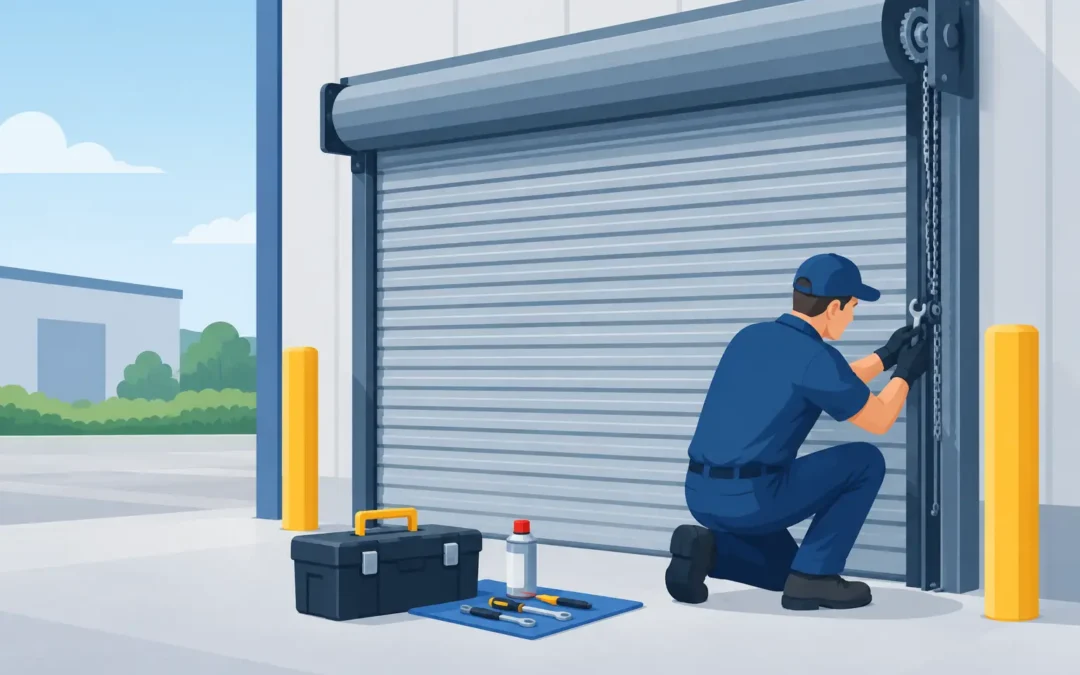
A rolling door that sticks halfway open at 7 a.m. can delay deliveries, leave inventory exposed, or keep employees and customers waiting outside. The best way to avoid that disruption is to maintain rolling doors before small signs of wear become a service call. Routine attention protects the door, its operator, and the people who use the opening every day.
Rolling steel doors are built for demanding work, but they are not maintenance-free. Dirt in the guides, damaged slats, worn springs, loose hardware, and neglected operators can all affect performance. A practical maintenance plan keeps the door moving properly and gives facility managers, property owners, and operators a clear reason to call for professional service before the opening becomes unusable.
Why Rolling Door Maintenance Matters
A rolling door is a working part of your building, not just a barrier at the wall. It may secure stock rooms, loading areas, concessions, pharmacies, parking spaces, service counters, or exterior storefronts. When it does not close fully or operate smoothly, security and access are immediately affected.
Regular maintenance also helps prevent premature replacement. A bent bottom bar may lead to guide damage. A dry bearing can put extra strain on the curtain and operator. A door that is out of alignment can wear unevenly every time it cycles. Addressing the source early is usually less disruptive and less expensive than responding after a door binds, drops, or stops moving.
Maintenance requirements depend on the door’s size, location, cycle count, and operating system. A small manually operated counter door in a low-traffic area needs a different schedule than a motorized loading dock door used dozens of times each day. Exterior openings also deal with rain, windblown debris, temperature changes, and road salt that can speed up wear in Northern Illinois and Southern Wisconsin.
How to Maintain Rolling Doors Between Service Visits
Most day-to-day care begins with observation. Staff should know what normal operation looks and sounds like. A door that suddenly becomes louder, slower, jerky, or difficult to close is giving an early warning that deserves attention.
Keep the opening and guides clean
Check the area around the opening regularly. Remove cardboard, shrink wrap, leaves, gravel, and other debris that can interfere with the bottom bar or track area. On exterior doors, look for buildup in the guides after storms and during winter conditions.
Wipe exposed guide surfaces and the lower portion of the curtain with a mild cleaner that will not damage the finish. Avoid harsh solvents, abrasive pads, or high-pressure washing near moving components unless the door manufacturer specifically permits it. A clean door is easier to inspect, and it is less likely to carry debris into the guides.
Do not paint over labels, moving joints, or hardware. Product labels and warning decals provide operating and service information that may be needed later. If a curtain has finish damage or signs of corrosion, have it evaluated rather than covering the problem with a quick coat of paint.
Watch the curtain, slats, and bottom bar
Operate the door while standing clear of its path. The curtain should travel evenly through the guides without scraping, shuddering, or pulling to one side. Look for dented slats, separated end locks, loose fasteners, bent guides, and damage at the bottom bar.
Minor impact damage is not always cosmetic. Forklifts, carts, vehicles, and pallet loads can bend a guide or bottom bar just enough to change how the curtain tracks. Continuing to run the door can turn a manageable repair into damage across multiple slats or operating components.
Weather seals deserve the same attention. Worn or missing bottom seals can allow water, pests, dust, and cold air into the building. If the seal is flattened, torn, or no longer contacts the floor consistently, replacement may improve both building comfort and protection.
Use the right lubricant, sparingly
Lubrication is useful only when applied to the correct parts. Depending on the door design, this may include bearings, chains, sprockets, and other manufacturer-approved moving points. Use a lubricant suited for door equipment and follow the manufacturer’s instructions.
More lubricant is not better. Excess product collects dust and grit, particularly around busy loading areas. Never spray lubricant into guides unless the manufacturer calls for it. Guides are generally intended to remain clean so the curtain can travel without collecting residue.
Springs, counterbalance assemblies, cables, and operator components can store significant energy. They are not do-it-yourself adjustment points. If a door feels unusually heavy, will not stay in position, or moves unevenly, stop operating it and schedule qualified service.
Test controls and safety features
For motor-operated rolling doors, check wall controls, key switches, remote controls, and any accessible emergency release according to the equipment instructions. Make sure control stations are clearly labeled and not blocked by shelving, equipment, or stored materials.
Photo eyes, sensing edges, and other entrapment protection devices should be kept clean and tested on the schedule recommended by the manufacturer and your safety policy. A failed safety device is not a minor inconvenience. It can create a serious risk for employees, visitors, and equipment in the opening.
Do not bypass a safety feature to keep a door running. If the operator reverses unexpectedly, will not close, or ignores a control command, take the door out of normal use until it can be inspected. Temporary workarounds often create greater damage and greater liability.
Warning Signs That Call for Professional Repair
A facility team can handle cleaning and visual checks, but certain conditions should move directly to a professional repair call. This is especially true for fire-rated rolling doors, high-cycle doors, and openings tied to security or code requirements.
Call for service when you notice any of the following:
- The door binds, shakes, scrapes, or stops before fully opening or closing.
- The curtain has bent, cracked, or missing slats, damaged end locks, or a bent bottom bar.
- The door is difficult to lift manually or does not remain in position.
- Guides are loose, bent, separating from the wall, or filled with material that cannot be safely removed.
- The operator makes grinding sounds, trips breakers, runs without moving the door, or has unreliable controls.
- A vehicle, forklift, or other equipment has struck the door or opening.
A trained technician can inspect alignment, tension, curtain condition, mounting points, operator settings, and hardware without placing employees at risk. For commercial facilities, documented service can also help support planned maintenance records and reduce surprises during inspections.
Build a Schedule Around Use, Not the Calendar Alone
A monthly visual inspection is a sensible starting point for many rolling doors. High-use openings may need a weekly check by onsite staff, particularly in warehouses, retail receiving areas, schools, and facilities where the door is part of a daily workflow. Low-use doors still need periodic operation because a door that sits unused can develop corrosion, buildup, or control issues.
Professional maintenance should be scheduled at intervals appropriate for the specific opening. The right frequency depends on door size, operating cycles, exposure, manufacturer guidance, and whether the door has specialized requirements. Fire-rated rolling doors, for example, require particular attention to their release mechanisms and inspection obligations. Do not assume that a general door checklist is enough for a rated assembly.
Keep a simple record of inspections, repairs, impacts, unusual noises, and changes in operation. That history helps identify repeat problems. If the same door needs guide adjustments twice in a short period, there may be an underlying alignment issue, building movement, or traffic pattern causing damage.
Protect the Door by Protecting the Opening
Many rolling door repairs begin with conditions around the door rather than a failed part. Keep pallet stacks, displays, and equipment clear of the travel path. Mark the opening where forklift traffic is common, and train operators to report even minor impacts. A door may still open after a strike, but that does not mean it is safe or properly aligned.
Consider the building environment as well. Frequent washdown, airborne dust, chemical exposure, or outdoor weather can require a more tailored maintenance approach. The goal is not to apply the same routine to every opening. It is to give each door the care its use demands.
For homeowners with rolling garage or storage doors, the same principle applies: keep tracks clear, listen for changes, avoid spring adjustments, and do not ignore a door that starts acting differently. A prompt repair protects the door and helps keep the garage secure.
Barcol Door Company helps property owners and facility teams assess rolling door problems, complete professional repairs, and plan maintenance around the demands of the opening. When a door starts showing signs of trouble, scheduling service early is the simplest way to protect access, security, and the work happening on both sides of it.