
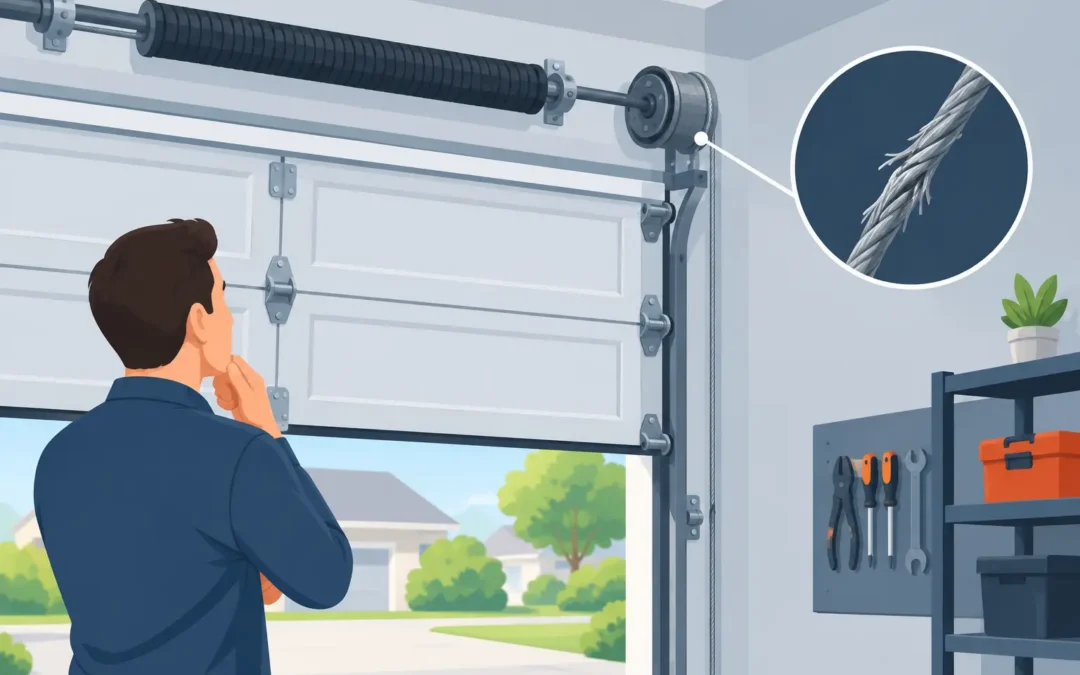
A garage door that lifts unevenly, hangs crooked in the opening, or refuses to move may have a failed lift cable. Garage cable replacement is a safety-critical repair, not a quick household fix. The cables work under substantial tension with the spring system, and the wrong move can turn a door problem into an injury, vehicle damage, or a door that will not secure your property.
What Garage Door Cables Do
Most residential overhead doors use lift cables to transfer the force created by torsion or extension springs. A cable runs from the bottom bracket of the door to a drum or pulley system. When the opener or a person raises the door, the springs offset much of the door’s weight while the cables guide the lift evenly on both sides.
That balance matters. A typical garage door is heavy, and a door that is no longer supported evenly can bind in its tracks, come off track, or drop unexpectedly. Cables are small compared with the door panels, opener, and springs, but they are a central part of the operating system.
Commercial doors may use more specialized cable, drum, shaft, or counterbalance arrangements. A rolling steel door, high-lift overhead door, or larger sectional door should be evaluated by a technician familiar with that specific system and its operating requirements.
Signs You May Need Garage Cable Replacement
A cable does not always snap without warning. Fraying, corrosion, poor alignment, or wear at the drum can appear first. Pay attention if the door begins acting differently, particularly when the change happens suddenly.
The clearest warning signs include a door sitting noticeably lower on one side, a loose cable hanging beside the track, or a cable that has come off its drum. You may also hear scraping, popping, or a loud bang, although a bang can also indicate a broken spring. If the door opens only a few inches and stops, the opener strains or reverses, or the door feels unusually heavy when operated manually, stop using it until it has been inspected.
Look at the bottom corners of the door from a safe distance. Bent hardware, a shifted bottom bracket, frayed cable strands, or a cable wrapped incorrectly around a drum all require professional attention. Do not pull on a loose cable or attempt to wind it back into place.
A door that is off track is especially urgent. Continuing to run the opener can bend tracks, damage rollers and panels, or pull the door farther out of position. Disconnecting power to the opener and keeping people clear of the opening is the sensible first step.
Why This Repair Is Not a DIY Project
Homeowners can often handle basic maintenance such as cleaning photo eyes, lubricating approved moving parts, or replacing remote batteries. Cable work is different because it is connected to stored spring energy and the full weight of the door.
Torsion springs are mounted above the door opening and are tightly wound. Extension springs run along the horizontal tracks and also carry significant force. Releasing tension without the proper tools, training, and sequence can cause components to move violently. Bottom brackets are another danger point because they are commonly under cable tension.
There is also a diagnosis issue. A broken cable can be the visible symptom rather than the only problem. The cause may be a worn drum, broken spring, bent track, seized roller, damaged bearing, incorrect cable routing, or an opener that has been used to force an unbalanced door. Replacing only the cable without addressing the cause can lead to another failure soon after.
Professional repair protects more than the person performing the work. It helps prevent a heavy door from falling onto a vehicle, blocking an exit, or leaving a home or facility exposed after hours.
What Professional Garage Cable Replacement Should Include
A competent cable repair begins with securing the door and assessing the entire counterbalance system. The technician should identify whether the cable broke, slipped from the drum, stretched, frayed, or failed because another component is out of alignment.
The repair process typically includes releasing and resetting spring tension safely, installing the correct cable for the door’s weight and lift system, and routing it properly on the drum or pulley. Both sides of the door need to be checked for even tension and travel. The technician should then inspect springs, drums, bearings, rollers, tracks, bottom brackets, hinges, and the opener connection.
Once the system is reassembled, the door should be balanced and tested through its full travel. A properly balanced door stays under control and does not place unnecessary strain on the opener. Safety reversal settings and photo eyes should also be checked when the opener is involved.
For commercial properties, the service call may also include evaluating usage levels, door cycles, access requirements, and the condition of related hardware. A loading area, automotive dealership, school, or hospitality property cannot always wait for a convenient repair window. The right repair restores dependable operation while helping prevent disruption to staff, deliveries, tenants, and customers.
When a Cable Can Be Repaired and When It Must Be Replaced
A cable that has simply slipped off a drum may be reset if it is still in good condition and the source of the problem is corrected. A cable with broken strands, kinks, rust, flattening, or visible wear should be replaced. Reusing a damaged cable to save a small amount now is rarely worthwhile when the door’s safe operation is at stake.
In many cases, replacing both lift cables is the better decision, even if only one has failed. The paired cable has experienced the same age, weather exposure, and operating cycles. Replacing both supports even performance and reduces the chance of another service call shortly afterward. The recommendation can depend on the cable condition, door age, and whether a clear one-time cause created the failure.
Springs deserve the same consideration. Springs often wear at a similar rate, so a technician may recommend replacing both when one has broken. That is not always necessary, but it is worth discussing before authorizing the repair.
How to Protect Your Door System After Repair
Regular attention can extend the life of cables and related door parts. Keep the tracks clear of debris, avoid hitting the lower door sections with vehicles or equipment, and do not use the opener to overcome a door that is sticking or uneven. If the door starts moving noisily or slowly, schedule service before a small alignment issue becomes a failed cable or damaged opener.
A periodic professional inspection is particularly useful for doors that operate many times each day. This includes busy household garages, apartment properties, vehicle service areas, warehouses, and commercial entrances. Technicians can spot cable wear, weak springs, loose hardware, roller problems, and balance issues before they interrupt operations.
Weather also has an effect. Northern Illinois and Southern Wisconsin see freezing temperatures, moisture, and seasonal shifts that can affect moving door components. Lubrication, adjustment, and a close inspection of weather seals and hardware help a door operate more reliably through changing conditions.
Common Questions About Garage Door Cables
Can I open my garage door with a broken cable?
Do not attempt to operate the door with the opener or lift it manually unless a qualified technician has told you it is safe to do so. The door may be unbalanced, off track, or supported by only one side. Keep the area clear and arrange service.
How long does garage cable replacement take?
A straightforward repair can often be completed in one service visit when the correct parts are available and there is no major track, spring, panel, or opener damage. The timeline changes when the door has come off track or the system needs additional repairs.
Does a broken cable mean I need a new garage door?
Usually, no. Cables are repairable components. However, an older door with severe corrosion, damaged sections, failing hardware, or repeated breakdowns may warrant a conversation about replacement versus continued repairs.
When a garage door cable fails, the safest decision is to stop using the door and have the full system inspected. Barcol Door Company provides experienced service for residential and commercial door systems, helping local customers return to secure, dependable operation without guessing at a high-tension repair.