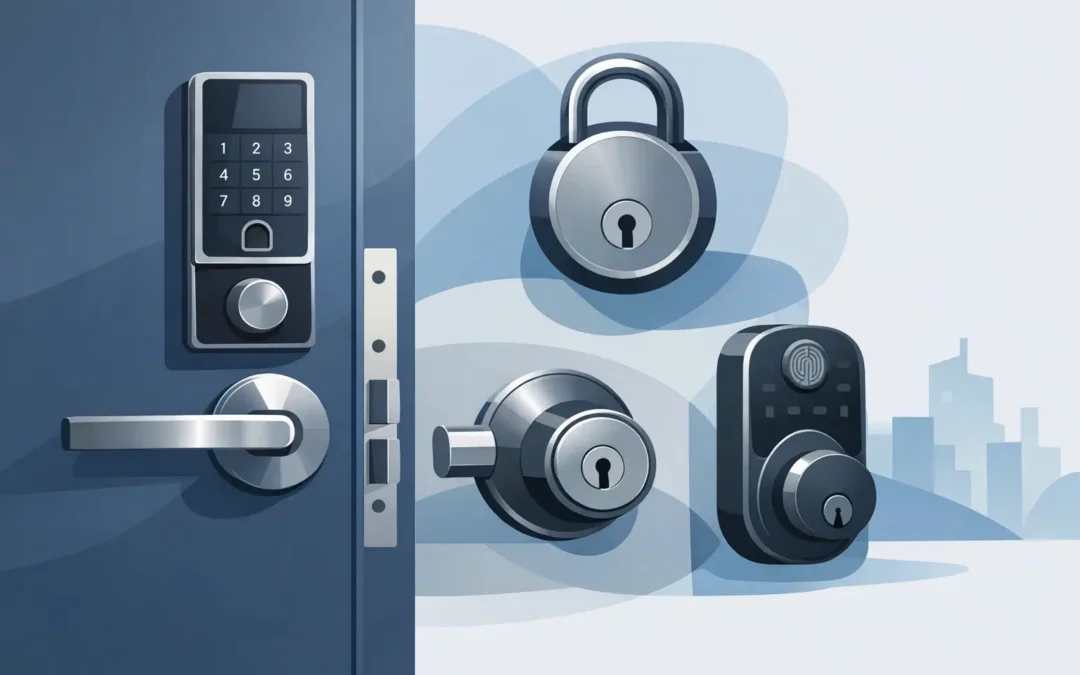
A steel door is only as secure as the hardware bolted to it. We see this all the time – a solid door and frame paired with a basic lock that was never meant for the level of traffic, abuse, or security the opening actually sees. If you are comparing the best locks for steel doors, the right choice depends less on brand hype and more on door use, building type, code requirements, and how much wear that opening takes every day.
For a back entry on a house, the best answer may be a heavy-duty deadbolt. For a school, retail space, or assisted living facility, that same lock could be the wrong choice entirely. Steel doors are common in places where durability matters, but durability alone does not make an opening secure. The lock, frame prep, strike, closer, hinges, and installation all have to work together.
What makes the best locks for steel doors different?
Steel doors usually serve one of two jobs. They either protect an exterior opening where forced entry is a concern, or they control access inside a commercial building where safety, code compliance, and daily traffic matter just as much as security. That distinction changes the hardware recommendation immediately.
A good lock for a steel door needs to match the door and frame preparation, resist wear, and hold up under repeated use. On commercial openings, it also needs to coordinate with closers, exit devices, fire ratings, and ADA requirements where applicable. A lock can be strong on paper and still be a poor fit if the opening is used hundreds of times a day or if it creates problems for egress.
That is why the best lock is rarely just the strongest one in the catalog. It is the one that fits the opening correctly, performs consistently, and supports the way the building actually operates.
Best lock types for steel doors
Cylindrical locksets
Cylindrical locksets are a common choice for offices, side entries, storage rooms, and light commercial spaces. They are practical, widely available, and easier to replace than more complex hardware. On the right opening, a commercial-grade cylindrical lock can provide reliable security without overcomplicating the installation.
The trade-off is longevity under hard use. In high-traffic buildings, a cylindrical lock may wear faster than a mortise lock or exit device. It can still be a good solution, but only if the opening does not take constant abuse and the hardware grade matches the demand.
Deadbolts
For residential steel doors and some low-traffic commercial entries, a quality deadbolt remains one of the strongest choices. A single-cylinder deadbolt paired with a solid strike and proper reinforcement gives you straightforward security and few moving parts. For many homeowners, this is still the best value.
Deadbolts do come with limits. They are not appropriate for every commercial application, especially where life safety codes require immediate egress. On a business entry, you should never assume a deadbolt is acceptable just because it feels more secure.
Mortise locks
Mortise locks are often the right answer when you need strength, longevity, and better function on a steel door. They are built for more demanding commercial use and are commonly found in schools, healthcare settings, multifamily buildings, and older institutional properties. Because the lock body is installed within the door, they tend to offer a sturdier feel and a wider range of functions.
They also cost more and require the correct door prep. If you are replacing existing hardware, the door may already be set up for mortise, which makes the choice easier. If not, converting to mortise may not be the most cost-effective move unless the opening truly needs that level of hardware.
Exit devices and panic hardware
On many commercial steel doors, especially at assembly spaces, schools, and certain public buildings, panic hardware is the best option because it handles both security and safe exit. A rim exit device, vertical rod device, or mortise exit device can secure the opening while allowing occupants to leave quickly.
This is where experience matters. The best hardware for the door may be driven by code, occupancy type, and fire-rating requirements, not just by security preference. A facility manager who chooses hardware based only on break-in resistance can create a compliance problem that becomes more expensive than the original job.
Smart locks and electronic access
Electronic locks can make a lot of sense on steel doors when access control matters more than carrying keys. For offices, employee entrances, and certain residential applications, smart locks and keypad systems offer convenience, audit trails, and easier credential changes.
Still, electronic hardware is not automatically better. Battery maintenance, compatibility with the frame and door prep, weather exposure, and user habits all affect performance. On some openings, a well-built mechanical lock is the better long-term choice. On others, electronic access saves time and improves control enough to justify the extra cost.
Residential steel doors versus commercial steel doors
A homeowner looking for the best locks for steel doors usually needs a different answer than a contractor or facility manager. Residential priorities tend to center on break-in resistance, simple operation, and appearance. In that case, a high-quality deadbolt with a reinforced strike and a good handle set is often the practical choice.
Commercial properties usually need more from the opening. The lock may need to work with a closer, latch reliably under heavy use, satisfy fire and egress requirements, and coordinate with master keying or access control. In those cases, mortise locks, commercial cylindrical locks, or panic hardware often make more sense than standard residential hardware.
That difference matters because steel doors themselves can look similar while performing very different jobs. The right hardware has to be selected for the opening, not just the material.
What to look for before you choose
Start with traffic level. A rear employee entrance used fifty times a day needs different hardware than a side door on a detached garage. The more cycles the opening sees, the more important heavy-duty commercial hardware becomes.
Next, look at security goals. Are you trying to discourage casual forced entry, restrict access to staff only, meet school or healthcare requirements, or simply replace a worn-out lock with something dependable? Those are different problems, and they do not all require the same solution.
Then consider code and safety. If the steel door is part of a means of egress or a fire-rated assembly, hardware selection is not just a product decision. It affects compliance, liability, and day-to-day safety.
Finally, think beyond the lock body. A quality lock installed on a weak strike, damaged frame, or misaligned door will never perform as intended. Some of the worst lock failures are really door and frame issues in disguise.
Installation matters more than most people expect
A lot of security problems trace back to poor installation rather than poor hardware. Steel doors and hollow metal frames need accurate prep, correct alignment, and hardware that matches the opening. If the latch does not engage cleanly or the door does not close consistently, even a premium lock will underperform.
This is especially true on commercial openings with closers, weather seals, electric strikes, or fire-rated requirements. Small installation errors turn into service calls, lockouts, and premature hardware wear. Good hardware saves money only if it is installed correctly the first time.
For that reason, many property owners are better served by choosing hardware through a professional door supplier and installer instead of buying based on packaging claims alone. A company with broad product access and field experience can usually spot the issues that a generic product listing will miss.
When replacement is smarter than repair
If the lock has failed repeatedly, the key system is outdated, or the door no longer aligns with the frame, replacing the hardware may be the better investment. This is common on older steel doors where the lock itself is not the only worn component. You may have a tired closer, loose hinges, wallowed-out frame prep, or a strike that no longer supports secure latching.
In those cases, replacing the lock without addressing the rest of the opening is often a short-term fix. A better approach is to evaluate the full assembly and choose hardware that fits current use, security expectations, and code requirements.
For homeowners, that might mean upgrading from a builder-grade deadbolt to a higher-security option with better reinforcement. For commercial properties, it may mean moving from a basic lockset to panic hardware, mortise hardware, or electronic access that better supports the building.
The right answer depends on the opening
There is no single winner for every steel door. Deadbolts are excellent for many residential applications. Commercial cylindrical locks are practical for light-duty business use. Mortise locks are a strong choice for demanding openings. Panic hardware is often the correct answer where safe egress is part of the job. Electronic locks can be valuable when access control is a priority.
The common thread is fit. The best hardware is the hardware that matches the opening, holds up under real use, and is installed by people who understand doors, frames, codes, and long-term performance. That is the kind of decision that protects your property today and saves frustration later.
If you are unsure what your steel door actually needs, start with the opening itself – how it is used, who uses it, and what happens when it fails.