
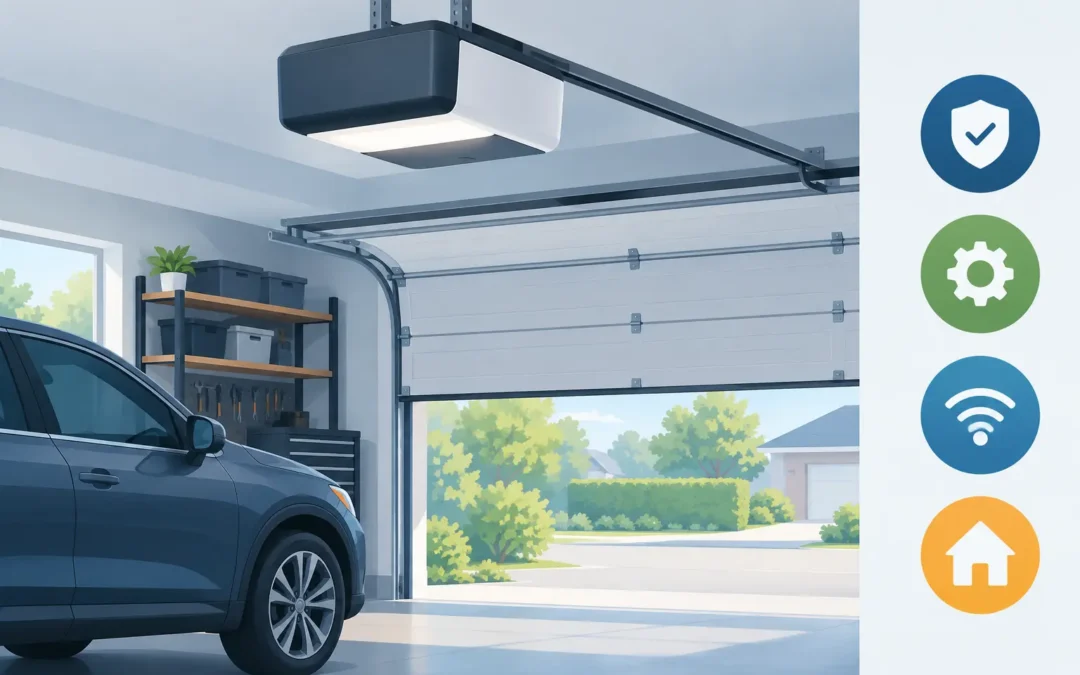
A garage door that will not open at 7:30 a.m. is more than an inconvenience. It can delay work, leave a vehicle trapped, or create a security concern at home or at your facility. The right garage openers provide dependable daily access, but only when the opener, door, springs, track, and safety equipment are matched and working together.
For homeowners, an opener should be quiet, secure, and easy to use. For commercial properties, the priority may be cycle capacity, controlled access, or dependable operation around deliveries and staff schedules. The best choice is rarely just the most powerful motor on the shelf. It is the system that fits the door, the building, and the way the entrance is used.
Start With the Door, Not the Opener
A garage door opener does not lift the full weight of a properly balanced door. The springs do that work. The opener guides the door through its travel and supplies the force to move it consistently. When a door is heavy, out of balance, binding in the track, or fitted with worn rollers, a new opener can be pushed beyond its limits from day one.
Before selecting an opener, have the door inspected for balance and overall condition. A technician can check spring tension, cables, hinges, rollers, track alignment, and the bottom seal. This matters especially for older wood doors, insulated doors, custom doors, and larger commercial applications. Repairing the door first often prevents premature opener wear and results in quieter, more reliable operation.
Door size and material also affect the recommendation. A standard single residential door has very different demands than an oversized insulated double door. A sectional commercial door, rolling steel door, or high-cycle service entrance may require a purpose-built operator rather than a residential-style unit. Matching equipment correctly is a practical investment in safety and service life.
Garage Openers: Drive Types and Real-World Trade-Offs
Most residential opener decisions come down to the drive system. Each option has a place, and the right fit depends on the garage layout, noise concerns, door weight, and budget.
Belt-drive openers
Belt-drive models are a strong choice for attached garages, rooms above the garage, and households that want quiet operation. The reinforced belt produces less vibration than many chain-driven units. They typically cost more, but the reduced noise can be worth it when bedrooms, home offices, or living areas are close by.
Chain-drive openers
Chain-drive units remain a proven, cost-conscious option. They are durable and well suited to many standard doors, particularly detached garages where operating noise is less of a concern. The trade-off is sound and vibration. A properly installed chain-drive system can perform very well, but it will generally be louder than a belt-drive opener.
Wall-mount openers
Wall-mount, or jackshaft, openers are installed beside the door rather than overhead. They can free up ceiling space for storage, lighting, vehicle lifts, or a cleaner garage layout. They are a good solution when the garage has the proper side clearance and a compatible torsion spring system. Because site conditions matter, professional evaluation is especially useful before choosing this style.
Commercial operators
Commercial operators are selected around the door type, opening frequency, environment, and access needs. A busy loading area, automotive service bay, school maintenance building, or hospitality facility may need heavy-duty operation and controls designed for repeated cycles. The wrong operator can cause costly interruptions, while the properly specified system supports daily operations without asking staff to work around a failing entrance.
Features That Make a Difference Every Day
Modern opener features should solve a real need, not simply add buttons. Battery backup is valuable during power outages, allowing the door to operate when it may be needed most. This can be particularly helpful for homes with only one garage exit or facilities that need dependable access during severe weather.
Rolling-code technology helps protect against unauthorized remote access by changing the access code after each use. Keypads offer convenient entry for family members, service providers, or employees without handing out extra remotes. Smartphone controls can add visibility by allowing users to check door status and receive alerts. They are useful for many properties, although they should complement sound access practices rather than replace them.
Motion-controlled lighting is another practical feature. Good lighting improves visibility when unloading a vehicle, entering at night, or moving through a commercial bay. For a homeowner, it may be a welcome convenience. For a business, it can support safer daily use around an active doorway.
Safety sensors are not optional extras. Photo-eye sensors near the floor are designed to reverse or stop a closing door when the opening is blocked. Sensors must be aligned, clean, and correctly installed. If a door reverses unexpectedly, refuses to close, or only closes while the wall button is held, the sensor system may need adjustment or repair.
Installation Determines How Well an Opener Performs
Even a quality opener can be unreliable when it is poorly installed. The mounting point must be secure, the rail properly aligned, the travel limits accurately set, and the safety reversal system tested. Wiring, controls, remotes, and photo eyes also need to be placed and connected correctly.
Professional installation is particularly valuable when replacing an older opener. Older doors may have worn components or outdated safety arrangements that should be addressed during the project. The installer can identify whether the existing door is suitable for the new equipment and make adjustments before a small issue becomes an emergency repair.
For commercial systems, installation requires an even broader view. Electrical requirements, operator controls, safety devices, activation methods, structural mounting, and jobsite conditions all affect the finished result. Facilities should work with an experienced door company that can supply the right operator and stand behind installation, repair, and future service.
When Repair Is the Better Choice
Not every opener problem requires replacement. A door that will not respond may have a dead remote battery, disconnected power source, tripped breaker, damaged sensor wire, or misaligned photo eye. A technician can also address worn gears, limit settings, remote programming, and certain control issues when the opener is otherwise in good condition.
Replacement becomes the better value when repairs are frequent, key components are failing, the model lacks current safety features, or the unit is no longer appropriate for the door. Excessive noise, intermittent operation, slow response, and failure to reverse properly should not be ignored. These issues can point to opener wear, but they can also indicate a door or spring problem that needs professional attention.
Do not attempt to adjust garage door springs or cables. Those components are under significant tension and require the right tools and training. If the door feels unusually heavy, hangs unevenly, or will not move manually with the opener disconnected, stop using it and schedule service.
A Better Standard for Residential and Commercial Service
Reliable access depends on more than choosing a brand name or comparing horsepower ratings. It comes from correct sizing, quality installation, regular inspection, and prompt repair when something changes. That is why homeowners and facility managers benefit from working with a door specialist that understands the complete system.
Barcol Door Company brings more than a century of door experience to residential and commercial projects across Northern Illinois and Southern Wisconsin. From selecting a quieter opener for an attached garage to servicing an operator that keeps a commercial entrance moving, experienced technicians can help identify the practical option and complete the work properly.
If your door is noisy, slow, unreliable, or no longer meeting your access needs, do not wait for the next missed appointment or blocked delivery. A professional inspection can clarify whether a focused repair or a properly matched replacement will give you dependable operation again.