A rolling door that will not open at the start of a delivery shift, close securely after hours, or meet the requirements of a fire-rated opening creates more than an inconvenience. It can interrupt operations, compromise security, and leave a facility exposed. Commercial rolling door installation should begin with the way your building operates, not with a one-size-fits-all door selection.
For warehouses, service bays, schools, retail locations, auto dealerships, and institutional properties, the right door has to perform reliably through daily traffic and changing weather. Proper product selection, accurate field measurements, capable installation, and a plan for future service all matter. A lower initial price may look attractive, but it is rarely a savings if the door is undersized, poorly fitted, or difficult to repair.
Start With the Opening and the Operation
Commercial rolling doors are built to protect openings where space, security, and durability matter. Unlike sectional doors, a rolling steel curtain coils above the opening. That design can be a strong choice where overhead clearance is limited, where a compact door profile is preferred, or where a building needs a more secure barrier at a loading area, storefront, counter, or equipment room.
The first question is not simply, “What size door do we need?” It is how the opening will be used. A receiving area with frequent forklift traffic has different needs than a school storage room, a concession counter, or a fire separation opening. Door size, cycle frequency, exposure to wind and weather, security requirements, clearance above the opening, and available side room all affect the correct configuration.
A qualified installer measures the actual opening and surrounding structure rather than relying only on plans. Field conditions can change during construction. Steel, masonry, framing, sprinkler lines, electrical conduit, and ceiling obstructions may affect mounting options and operating clearance. Identifying those details before the door arrives helps prevent delays, change orders, and an installation that looks forced into place.
Selecting the Right Commercial Rolling Door
Rolling doors are not all designed for the same job. A light-duty service counter shutter should not be expected to handle the demands of an active loading dock. Likewise, specifying an oversized industrial door for a low-use interior opening can add unnecessary cost.
A commercial door professional can help determine whether the project calls for a service door, insulated rolling door, security grille, counter shutter, fire-rated rolling door, or another specialized system. The door curtain material, slat profile, gauge, guides, bottom bar, locks, and hood all contribute to performance. Options such as insulation, vision panels, powder-coated finishes, and weather seals should support a real operating need rather than be added by default.
Security, weather protection, and energy use
For exterior openings, security and weather protection often drive the specification. A properly selected rolling steel door provides a solid barrier when the building is closed. The right guides, bottom seal, and perimeter weather seals can also reduce drafts, water intrusion, and debris entering the building.
Insulation is worth considering for conditioned spaces, but it is not always the priority. In an unheated storage building, durability and security may matter more. In a heated service area or a facility with temperature-sensitive inventory, an insulated door can help support energy efficiency and employee comfort. The building use determines the best value.
Fire-rated openings require careful coordination
Fire-rated rolling doors are a separate category and should be handled accordingly. They may be required to protect openings in rated walls or to separate areas within a facility. The door, release device, operator, activation method, and related hardware must work together as part of the building’s fire-protection plan.
This is not an area for shortcuts or substitutions. Confirm the required rating, mounting condition, hardware, and inspection expectations early with the project team and authority having jurisdiction. Proper installation supports compliance, but it also supports the safety of people and property when it matters most.
What Professional Installation Should Include
Commercial rolling door installation is a system installation. The curtain is only one part of the finished assembly. A dependable installation begins with verifying measurements, reviewing the opening condition, and confirming that the selected door matches the approved application.
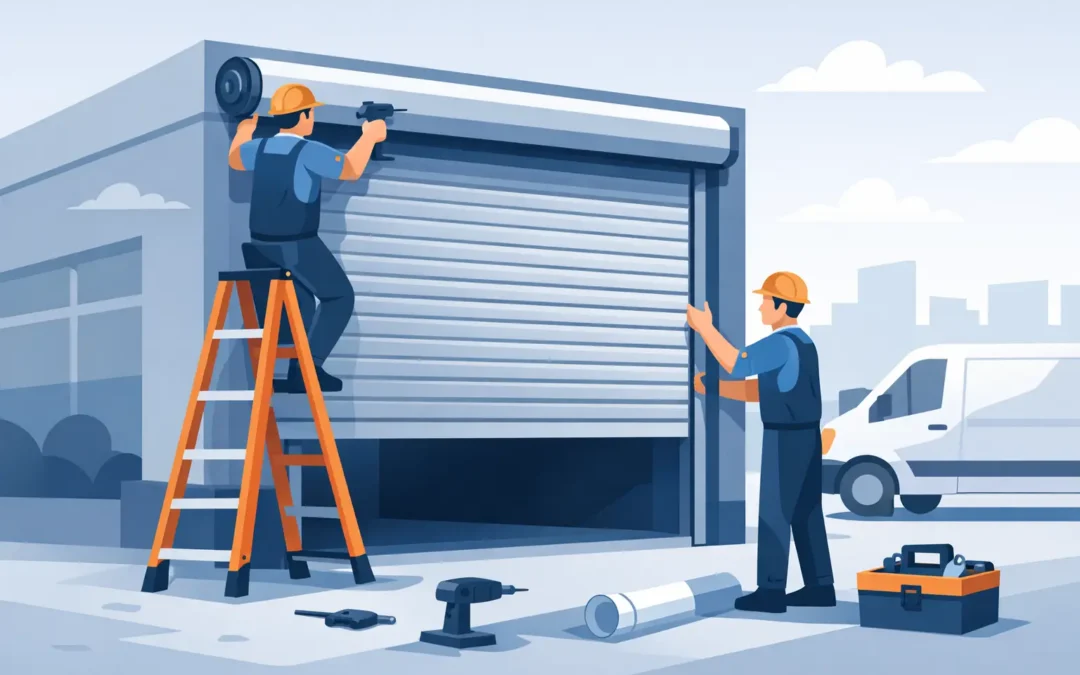
The installer then sets guides plumb and square, mounts brackets and the barrel assembly securely, installs the curtain, and adjusts spring tension so the door travels correctly. The bottom bar must seat properly at the floor, and the curtain must move through the guides without binding. Even small alignment errors can increase wear, make operation difficult, and shorten the life of springs and components.
If the door is motor-operated, electrical coordination is equally important. The operator must be sized for the door and usage level, mounted correctly, and tested with all required controls and safety devices. Depending on the application, this can include wall stations, key switches, photo eyes, edge sensors, warning devices, and interlocks. A door that opens quickly is not necessarily a door that operates safely.
Before turnover, the door should be run through multiple open-and-close cycles. Technicians should check travel limits, brake function, manual operation, locking, controls, sensing devices, and weather sealing. Facility staff should also know how to operate the door safely, what to do during a power outage, and who to call if the door is damaged or stops moving.
Avoid Problems That Lead to Downtime
Most premature rolling door issues are not caused by one dramatic failure. They start with conditions that could have been addressed during planning or installation: an opening that is out of square, damaged guides, an operator not matched to the door, inadequate clearance, or a door being used more often than it was designed to cycle.
Impact damage is another common concern in active commercial environments. Forklifts, carts, vehicles, and palletized material can strike a bottom bar or guide, putting the door out of alignment. Protective bollards, traffic controls, and clear operating procedures can prevent costly repairs in high-traffic areas.
Regular maintenance helps catch smaller issues before they stop the door completely. Springs, cables, fasteners, guides, rollers, curtain slats, seals, and operator components all deserve periodic attention. A maintenance plan is especially useful for doors that cycle throughout the day or protect critical access points.
When a repair is needed, response time matters. A door that will not close can create an immediate security issue, while a door that will not open can halt shipping, customer service, or vehicle access. Working with a local provider that can supply parts, perform repairs, and support future replacement decisions keeps the responsibility clear.
Choose a Partner That Can Support the Entire Opening
The best installation partner does more than hang a door. They understand the complete opening, including steel frames, entry doors, hardware, operators, weather seals, fire-rated requirements, and the practical demands of the facility. That broader knowledge is valuable when a project includes more than one door type or when an existing building presents unexpected conditions.
For contractors and facility managers across Northern Illinois and Southern Wisconsin, Barcol Door Company provides that full-service approach. With more than a century of experience, the company can support commercial door sales, installation, repair, replacement, and ongoing service from one dependable source.
When comparing proposals, look beyond the door model and installed price. Ask whether the scope includes site verification, necessary hardware, operator controls, safety devices, removal of an existing door, testing, and startup instruction. Clarify lead times, warranty coverage, and the process for service after installation. A detailed proposal makes it easier to compare value accurately.
Plan for the Door’s Working Life
A commercial rolling door is a long-term building component, not a purchase to revisit every few years. The right installation creates a secure, functional opening that supports your employees, inventory, customers, and daily workflow. The wrong choice can turn a simple access point into a recurring source of repairs and disruption.
Before placing an order, walk the opening with an experienced commercial door professional and explain how the space truly operates. That conversation can reveal the clearances, traffic patterns, code requirements, and service expectations that turn a rolling door from a basic barrier into a reliable part of your facility.