
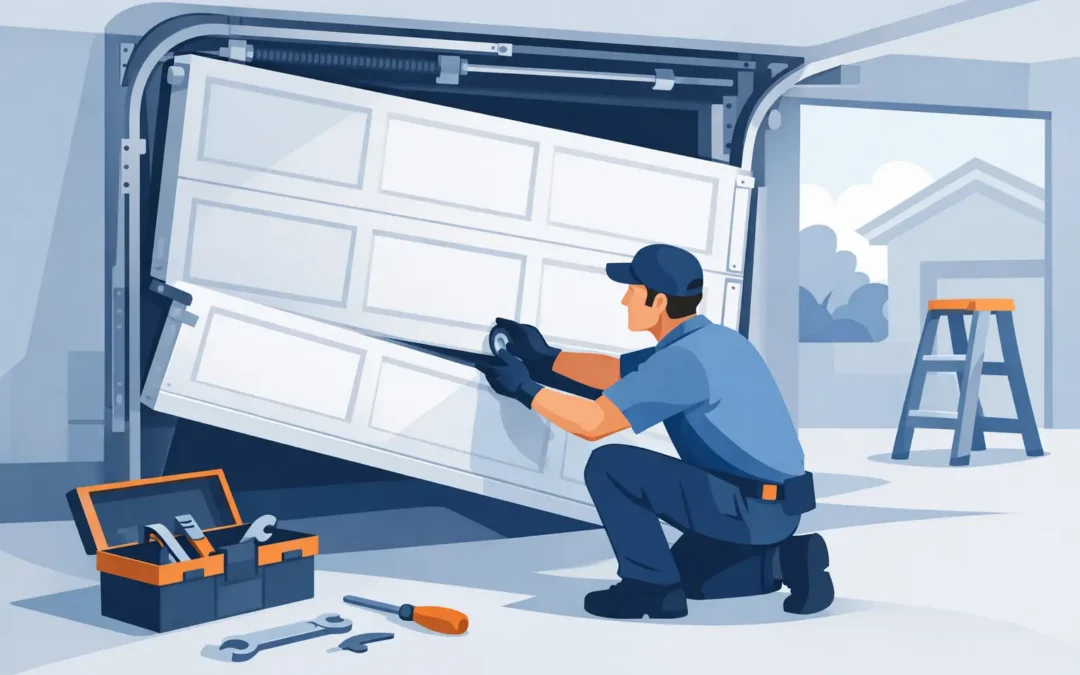
A garage door that has come off its track can look like a simple roller problem, but the door is often carrying significant weight and spring tension. One roller out of place can quickly turn into a crooked, jammed door, damaged track, broken cable, or an unsafe opening. Before attempting to learn how to fix garage door off track, stop using the opener and make sure no one stands beneath or near the door.
For many homeowners, a single loose roller may be repairable with the right tools and careful handling. If the door is hanging unevenly, a cable is loose, the track is bent, or a spring is damaged, professional service is the safer and more cost-effective choice. Commercial overhead doors require even more caution because of their size, weight, and daily use.
First, Make the Door Safe
Do not press the wall button or remote repeatedly to see if the door will straighten itself. An opener can pull harder against a jammed door, bend the track further, strip gears, or pull a cable off its drum.
If the door is fully closed and stable, leave it closed. If it is partially open, crooked, or suspended in the opening, keep people, vehicles, and pets away from the area. Do not try to force it down by hand. A door with a loose cable or broken spring can shift suddenly.
Turn off power to the opener at the outlet or breaker if it is safe to do so. If you can safely reach the opener release cord while standing clear of the door, disconnect the opener only after the door is fully closed. Never pull the emergency release on a door that is stuck open or unsupported. The door could drop quickly.
Why a Garage Door Comes Off Its Track
The track guides the rollers as the garage door moves. When that path is obstructed, loose, damaged, or out of alignment, the rollers can climb out of the track. A door may also come off track after being struck by a vehicle, pushed while locked, or operated with a broken spring or cable.
Common causes include:
- A bent, loose, or misaligned vertical track
- Worn, cracked, or broken rollers
- Loose track brackets, hinges, or mounting hardware
- A frayed, loose, or broken lift cable
- An object blocking the door’s path
- Vehicle impact or an opener pulling against a locked door
The visible roller is not always the real issue. For example, a bottom roller that has popped out can be caused by a cable problem at the bottom bracket. That bracket is connected to the lift cable and is under spring tension. It is not a safe DIY repair point.
How to Fix a Garage Door Off Track When the Damage Is Minor
A limited repair may be possible when the door is closed, only one upper or middle roller has slipped out, the cable is tight and properly seated, and the track has no major bend or separation from the wall. If any of those conditions are not true, stop and arrange service.
Before beginning, gather locking pliers or C-clamps, an adjustable wrench, a rubber mallet, a level, and safety glasses. Avoid working alone. A second adult can help steady the door and recognize unsafe movement.
- Inspect the entire door before touching the track. Look for a loose cable, a gap between track sections, bent rollers, damaged hinges, cracked panels, or a spring that is broken or stretched apart. If you find any of these issues, do not continue with a track-only repair.
- Secure the door against movement. With the door fully closed, place locking pliers or C-clamps on both vertical tracks directly above the rollers. This helps prevent the door from rising unexpectedly while you inspect the hardware. Do not clamp a door that is hanging open or badly crooked.
- Check and tighten the track hardware. Track brackets can loosen over time, especially on doors that receive frequent use. Tighten loose lag screws, bolts, and nuts, but do not over-tighten or pull damaged fasteners through the jamb. Use a level to confirm that the vertical track is plumb and that both sides of the door are positioned evenly.
- Straighten a very small track flare. If the track lip is only slightly opened where a roller escaped, carefully tap it back into shape with a rubber mallet. Do not hammer aggressively. A creased, crushed, or twisted track should be replaced rather than forced back into position.
- Guide the roller back only if it is an upper or middle roller. Slightly loosen the track bracket nearest the escaped roller, just enough to create room to guide the roller back inside the track. Keep hands away from pinch points between the roller, hinge, and track. Once the roller is seated, retighten the bracket securely.
- Test the door by hand before reconnecting the opener. Remove the clamps and slowly raise the door only a few feet. Watch both tracks and rollers closely. The door should move smoothly and stay reasonably balanced. If it binds, pulls to one side, makes grinding sounds, or a cable starts to loosen, lower it if safe and stop.
Once the door has passed a careful manual test, reconnect the opener and run one complete open-and-close cycle while watching from a safe distance. Do not stand under the door during this test.
Repairs You Should Leave to a Professional
Some garage door repairs are not suitable for a homeowner, even if the problem looks straightforward. Torsion springs, extension springs, lift cables, cable drums, and bottom brackets are all part of a counterbalance system designed to carry the door’s weight. Incorrect adjustment can cause serious injury or further door damage.
Call for professional repair when the door is off track on both sides, hanging at an angle, stuck open, or has a cable that has come off the drum. The same applies if a spring is broken, the bottom roller is out, the track is bent substantially, or the door was hit by a vehicle. Replacing a damaged section of track without correcting the underlying cable, spring, or alignment issue will not provide a reliable repair.
For commercial properties, taking the door out of service is usually the right first move. A damaged sectional door, rolling steel door, or high-cycle overhead system can affect security, deliveries, employee safety, and building access. Facility managers should prevent operation, document the condition, and have a qualified technician inspect the full system before returning the opening to use.
Prevent Another Off-Track Door
Most off-track problems begin with wear that is visible before the door fails. A quick visual inspection every few months can catch loose bolts, worn rollers, frayed cables, and track damage early. Keep the tracks clear of leaves, gravel, tools, and stored items, but do not apply heavy grease inside the tracks. Grease attracts dirt and can interfere with smooth roller movement.
Lubricate rollers, hinges, and springs with a garage-door-rated lubricant as recommended for your door system. Nylon rollers with sealed bearings may need less lubrication than steel rollers. Also test the opener’s reversing system and photo-eye sensors regularly. If the door starts shaking, rubbing, or sounding louder than usual, schedule service before a small alignment issue becomes an emergency repair.
Barcol Door Company has served Northern Illinois and Southern Wisconsin for generations with dependable residential and commercial door repair. When a garage door is off track, prompt expert attention can protect the door, the opener, and the people who rely on that opening every day.
A garage door should open smoothly, close securely, and stay in its track without hesitation. If yours cannot do all three, treat that as a reason to stop using it and get the right repair in place.