
A garage door that feels heavy, drifts downward, or will not stay open is doing more than creating an inconvenience. It may be telling you the counterbalance system needs attention. When you test door balance, you are checking whether the springs are carrying the door’s weight as designed – and whether your opener is being forced to do work it was never meant to handle.
For homeowners, this is a simple observation that can prevent an unexpected repair. For facility managers, it is a practical part of protecting a busy loading area, service bay, or overhead door from downtime. The test itself is straightforward. The decisions that follow require good judgment, especially when springs, cables, or commercial door components are involved.
Why Garage Door Balance Matters
Your garage door opener moves the door, but it is not supposed to lift its full weight. Torsion springs above the opening or extension springs along the tracks counterbalance that weight. When the system is properly adjusted, even a heavy insulated door should be reasonably manageable by hand after it is disconnected from the opener.
A balanced door reduces strain on the opener, rollers, hinges, tracks, cables, and other moving parts. It also helps the door travel smoothly, close fully, and reverse properly when the safety system detects an obstruction. When the door is out of balance, the opener may begin to jerk, groan, stop short, or wear out sooner than expected.
The difference can be dramatic. A door that appears to operate normally with the opener may feel extremely heavy once disconnected. That extra weight usually points to weak, broken, or improperly adjusted springs. It can also indicate a cable issue, a door that is binding in the tracks, or hardware that needs professional service.
How to Test Door Balance Safely
Choose a time when the area around the garage door is clear. Keep children, pets, vehicles, and stored items away from the door’s path. Do not attempt this test if you can see a broken spring, a loose cable, bent track, damaged bottom bracket, or anything hanging from the system. Call a qualified garage door technician instead.
Start with the garage door fully closed. If your opener has a wall control, use it to close the door completely. Then pull the emergency release cord to disconnect the door from the opener trolley. On most residential systems, this is the red cord hanging from the opener rail.
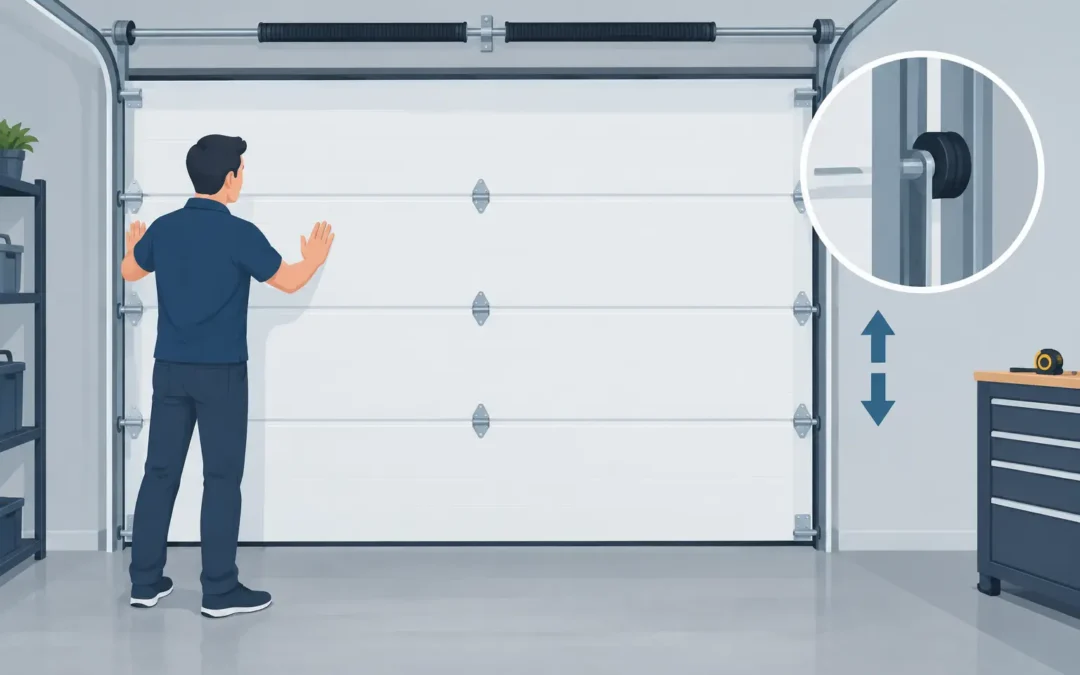
With both hands, lift the door slowly from the bottom. Use a firm grip and keep your fingers clear of section joints, rollers, hinges, and tracks. Raise it to about waist height or halfway open, then carefully let go while staying close enough to regain control if the door moves.
A properly balanced garage door should remain near that position. It may move slightly, but it should not slam to the floor or shoot upward. Next, raise it to about three-quarters open and repeat the check. The door should stay in place there as well.
Finally, lower the door by hand. It should travel smoothly and with steady resistance, not bind, shake violently, or feel as if it is pulling hard in one direction. Reconnect the opener only after the door is fully closed, then operate it once to make sure the trolley re-engages correctly.
What a Balanced Door Feels Like
A balanced door feels controlled. You should not need to strain to lift it, and it should not race up or down when you release it. Heavier wood, insulated steel, and oversized doors can require more effort than a lightweight single-car garage door. Even so, the movement should be predictable and the door should remain at the height where you place it.
For a commercial sectional door or rolling steel door, do not assume the residential hand-test procedure applies. These systems can be significantly heavier, use different counterbalance designs, and operate in high-traffic environments. A trained commercial door technician should evaluate balance, spring tension, guides, operators, and safety devices according to the specific door system.
Signs Your Door Is Out of Balance
The hand test gives you a clear answer, but day-to-day operation often provides warning signs first. Pay attention if your opener starts sounding louder than usual, if the door moves unevenly, or if one side appears to rise before the other.
A door that closes too quickly by hand usually has insufficient spring tension or a failed spring. A door that rises on its own may have excessive tension. Neither condition is something to correct by adjusting springs yourself. Garage door springs store substantial energy, and improper adjustment can cause serious injury or property damage.
Other signs include a visible gap in a torsion spring, a loose or frayed cable, rollers that come out of the track, a crooked door panel, or an opener that struggles to lift the door. You may also notice that the opener’s safety reversal system activates for no apparent reason. That does not always mean the photo eyes are at fault. Excessive door weight or binding can contribute to the problem.
Do Not Adjust Springs Yourself
Testing a door is a reasonable homeowner maintenance check. Repairing the counterbalance system is different. Torsion springs, extension springs, lift cables, and bottom brackets are under tension. The wrong tool, adjustment, or sequence can turn a routine repair into a dangerous situation.
This is especially true if a torsion spring is broken. The door may still be partially supported by the remaining spring, which can make the problem less obvious. Do not run the opener repeatedly to force the door up, and do not try to lift a double door alone. A heavy door can fall quickly once the counterbalance system fails.
Professional service includes more than replacing a spring. A qualified technician can match spring capacity to the door’s weight, inspect cables and drums, check roller and hinge wear, align tracks, verify opener force settings, and confirm that the door closes and reverses safely. If the door is older, the technician can also identify whether replacement components are practical or whether a new door would be a better long-term value.
What Can Affect Door Balance
A garage door can become unbalanced gradually or all at once. Springs have a finite cycle life, so normal use eventually weakens them. A sudden broken spring is common, particularly during temperature swings when metal components are under added stress.
Door changes can also affect balance. Adding insulation, replacing damaged sections, installing decorative hardware, or upgrading glass can add weight. If the springs were not recalculated for that change, the door may no longer be properly counterbalanced. Likewise, a replacement spring that is the wrong size may let the door operate for a while, but it can create unnecessary wear on the opener and hardware.
Binding is another factor. Dirt in the tracks, worn rollers, loose hinges, damaged weather seals, or an impact from a vehicle can make a door feel unbalanced even when spring tension is close to correct. That is why the complete system should be evaluated rather than focusing on one part.
When to Schedule Professional Garage Door Repair
Schedule service promptly if your door fails the balance test, feels unusually heavy, will not stay open, has a broken spring, or has a loose cable. If the opener is straining, stop using it until the door is inspected. Continuing to operate a door that is out of balance can damage the opener’s motor, gears, rail, and mounting points.
For businesses, prompt repair protects more than the door itself. A malfunctioning dock, warehouse, automotive, retail, or service-bay door can interrupt deliveries, compromise security, and create a safety concern for employees and visitors. Regular inspection is particularly worthwhile for doors that operate many times each day.
Barcol Door Company provides residential and commercial door repair throughout Northern Illinois and Southern Wisconsin, with experienced technicians equipped to diagnose balance problems and address the components causing them. Whether the issue is a worn spring, damaged cable, binding track, or failing opener, the goal is a door that operates safely and reliably again.
A quick balance check every few months gives you a useful baseline for how your door should feel. If that familiar smooth movement changes, treat it as an early warning – and get the right repair before a small issue turns into a door that will not open when you need it.