
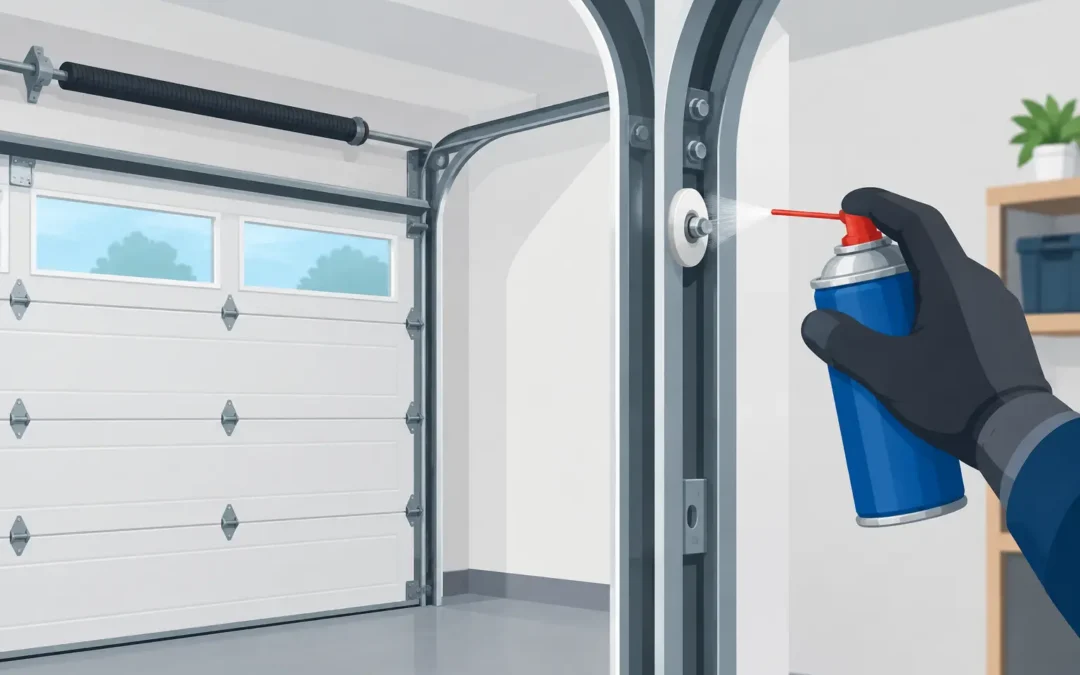
A garage door that squeals, shudders, or drags along its path can make one simple question feel urgent: should you lubricate garage door tracks? Usually, no. The tracks should be clean and dry, while the moving parts that guide and lift the door need the proper lubricant. Knowing the difference can prevent a messy fix from turning into a bigger service call.
Garage doors are heavy, high-tension systems. A little routine care can reduce noise and wear, but lubrication is not a cure for a door that is crooked, binding, or difficult to operate. When the door is not moving smoothly, the cause may be worn rollers, loose hardware, damaged track alignment, an opener issue, or a spring problem that needs professional attention.
Should You Lubricate Garage Door Tracks?
For most residential overhead garage doors, the answer is no. Do not coat the inside of the tracks with grease, oil, or spray lubricant. Tracks are designed to provide a clean channel for the rollers, not a slippery surface for them to slide through.
Lubricant inside the track tends to collect dust, road grit, leaves, pet hair, and other debris. Over time, that buildup can create more resistance than it solves. It can also leave black residue on the rollers and make inspection more difficult.
The better approach is to wipe the tracks clean with a dry cloth or a mild household cleaner, then dry them thoroughly. Inspect both vertical and horizontal sections for dents, bends, loose mounting brackets, or debris. If the rollers are rubbing hard against one side of the track, do not try to correct the alignment by adding lubricant. The track or door may need adjustment.
What Parts of a Garage Door Need Lubrication?
The parts that benefit from lubrication are the components that pivot, turn, or carry load. A garage door lubricant labeled for overhead doors is the best choice. White lithium grease or a silicone-based garage door lubricant is commonly used, depending on the component and manufacturer recommendations.
Apply a small amount to the roller bearings, hinges, torsion spring coils, bearing plates, and the opener rail if the opener manufacturer calls for it. If your door uses nylon rollers without exposed bearings, they may need little or no lubricant. Avoid spraying nylon roller wheels heavily, since excess product can attract dirt or affect certain materials.
A light application is enough. More lubricant does not mean better performance. Excess spray can drip onto vehicles, flooring, stored items, and the door itself. After applying lubricant, open and close the door several times to distribute it across the moving parts, then wipe away visible excess.
Do Not Lubricate These Components
Keep lubricant off the tracks, the garage door opener motor, safety sensors, belts, and weather seals. Do not spray lubricant on cables. Cables are under significant tension and should be inspected by a trained technician rather than handled as a do-it-yourself repair.
The same caution applies to torsion springs. While a technician may lubricate spring coils during maintenance, homeowners should never adjust, remove, or attempt to repair springs. A broken or improperly handled spring can cause serious injury and can leave the door too heavy for the opener to lift safely.
How to Clean Garage Door Tracks Properly
Start with the garage door in the closed position and disconnect the opener only if you understand how to safely operate the door by hand. If the door feels unusually heavy, will not stay in place, or has a broken spring, stop and call for service.
Use a clean cloth to remove loose dust and debris from the inside of each track. For stuck-on grime, use a small amount of mild cleaner on the cloth rather than spraying cleaner directly into the track. Dry the surface completely when finished.
As you clean, look for obvious trouble signs: a track separating from the wall or ceiling, a crushed section, loose bolts, roller wheels that wobble, or gaps where the door appears uneven. The tracks must remain properly spaced and aligned so rollers can move freely. Tightening a visibly loose bracket may seem straightforward, but track positioning is precise. Over-tightening or shifting a bracket can make the door bind.
If you see a small buildup of debris but the door operates normally, cleaning may be all it needs. If the door jerks, makes a grinding sound, comes off track, or reverses unexpectedly, the issue is likely beyond routine maintenance.
Why a Noisy Door Is Not Always a Lubrication Problem
Noise is often the first sign homeowners notice, but its source matters. A dry hinge may make a repetitive squeak. Worn steel rollers can create rattling or grinding. Loose nuts and bolts may cause vibration, especially when the door reaches the curved portion of the track.
A louder bang, a door that rises unevenly, or a sudden change in lifting speed can point to a spring, cable, roller, or track issue. An opener that strains or hums without moving the door may be responding to a door that is too heavy or out of balance. Lubricant will not fix those conditions.
A properly balanced garage door should be manageable by hand when disconnected from the opener. It should not slam shut, race upward, or feel like dead weight. Because balance testing involves a heavy moving door and spring tension, it is best handled with care. If there is any uncertainty about the door’s condition, schedule professional service instead of forcing it to operate.
A Sensible Maintenance Schedule
For many homes in Northern Illinois and Southern Wisconsin, garage door maintenance twice a year is a practical starting point. Seasonal temperature swings, moisture, road salt, and windblown debris can affect moving parts and hardware. Homes with frequent garage use may benefit from more frequent inspection.
During a basic check, clean the tracks, listen to the door during operation, inspect weather seals, and look over the visible hardware. Test the opener’s reversing system according to the manufacturer’s instructions. Make sure photo-eye safety sensors are clean, aligned, and free of stored items or cobwebs.
Lubricate the appropriate moving components sparingly after cleaning. If you are unsure whether a product is compatible with your door, rollers, or opener, do not guess. The wrong product can leave a sticky buildup or fail in cold weather.
Commercial doors require a more deliberate maintenance plan. Rolling steel doors, sectional overhead doors, high-cycle operators, loading-area doors, and fire-rated assemblies can face heavier daily use and more demanding safety requirements. Facilities should keep repairs and preventive service on schedule to limit downtime and identify worn components before a door becomes a safety concern.
When to Call a Garage Door Professional
Call for service promptly if the door comes off its track, a cable is loose or broken, a spring has snapped, rollers are damaged, or the door will not open and close evenly. Other warning signs include a door that shakes excessively, an opener that repeatedly reverses, bent track sections, or a gap beneath a closed door.
A trained technician can identify whether the problem is routine wear, alignment, hardware, balance, or opener performance. That matters because garage doors depend on multiple systems working together. Replacing a worn roller may be simple, while correcting a damaged track or spring system requires the right tools, parts, and experience.
Barcol Door Company provides professional garage door repair, replacement, installation, and ongoing service for homeowners and commercial properties throughout the region. For a door that is noisy, sticking, or visibly out of alignment, a proper inspection is often faster and safer than repeated trial-and-error maintenance.
Keep the tracks clean, lubricate only the moving components designed for it, and pay attention when the door’s normal sound or movement changes. A small concern addressed early can help protect the door, opener, vehicles, and people who rely on it every day.