
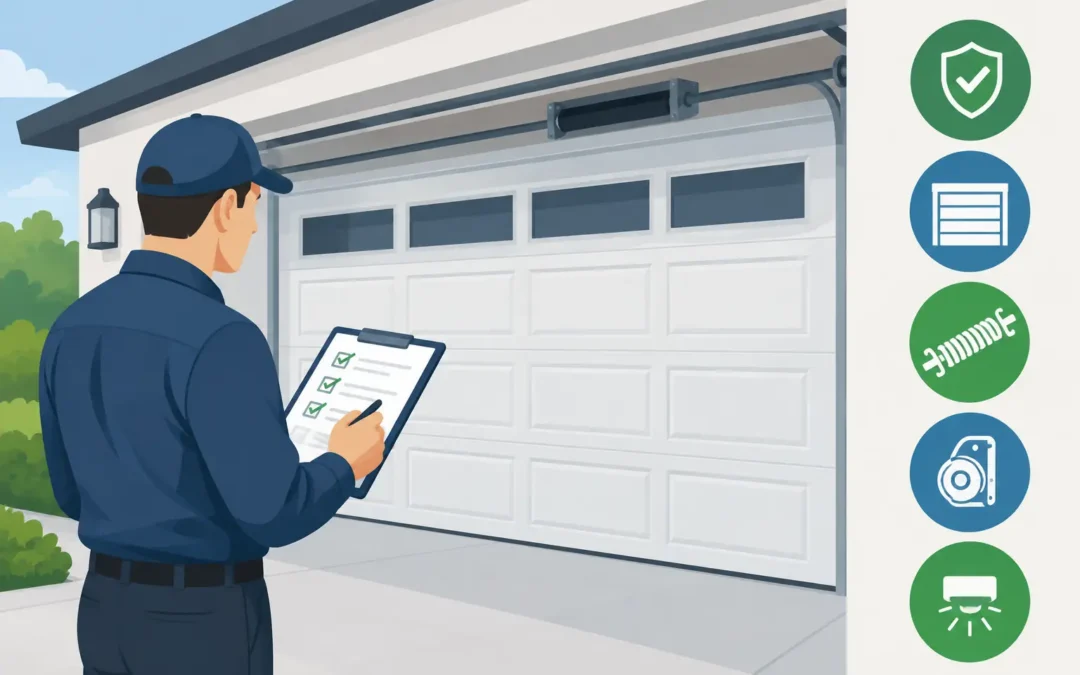
A garage or commercial overhead door can weigh hundreds of pounds, move without much warning, and cycle several times a day. When a spring, cable, sensor, or track is not working correctly, a minor issue can quickly become a safety concern. This overhead door safety checklist helps homeowners and facility managers spot visible problems early and understand when a trained door technician should take over.
For residential doors, safety protects family members, vehicles, and stored belongings. For schools, warehouses, dealerships, hospitality properties, and other commercial facilities, it also protects employees, visitors, inventory, and daily operations. A short routine inspection is one of the most practical ways to reduce avoidable downtime and risk.
Start With a Clear Area Around the Door
Before operating an overhead door, make sure people, pets, vehicles, carts, and stored materials are clear of its path. This sounds basic, but blocked travel areas are a common source of damage and injury. A door that closes on a bicycle, pallet, or parked vehicle may reverse, bind in the tracks, or damage its hardware.
Inside the garage or building, keep ladders, tools, boxes, and other equipment away from the tracks, springs, and operator. Do not use the door as a place to hang cords, signs, hoses, or seasonal decorations. Anything attached to moving door components can interfere with normal operation.
Commercial facilities should also establish clear rules for pedestrian traffic. Employees should never walk under a moving sectional door, rolling steel door, or dock door. If a doorway is regularly used by both people and equipment, visible floor markings and operating procedures can help prevent unsafe habits.
Check the Door Before You Use It
You do not need to disassemble the system to notice many warning signs. Stand back and watch the door complete one full open-and-close cycle. It should move smoothly, stay reasonably level, and stop where it is supposed to stop.
Use this visual portion of the overhead door safety checklist each month:
- Look for bent tracks, loose brackets, missing fasteners, damaged rollers, or panels with cracks and dents.
- Watch for frayed lift cables, worn bottom brackets, or cables that appear to have slipped off a drum.
- Listen for grinding, scraping, popping, banging, or unusually loud vibration during operation.
- Check that weather seals are intact and that the bottom of the door meets the floor evenly when closed.
- Confirm that no springs, cables, or hardware appear loose, broken, or out of position.
If the door jerks, sags, binds, or makes a new noise, stop using it until it can be inspected. Continuing to operate a door with a failing cable, roller, or track can turn a manageable repair into a larger and more expensive problem.
Test the Opener Safety Features
Modern automatic garage door openers use two primary safety features: photo-eye sensors and a reversing mechanism. Both should work correctly every time the door closes.
Photo-Eye Sensors
Photo-eye sensors are mounted near the floor on each side of most residential garage door openings. They send an invisible beam across the opening. If a person, pet, vehicle, or object breaks that beam while the door is closing, the door should stop and reverse.
Check that the sensor lenses are clean, the brackets are not bent, and the indicator lights show that the sensors are aligned. Dirt, cobwebs, snow, landscaping debris, or a light bump can cause a sensor problem. Never bypass, tape over, or disable photo eyes to make a door close. That removes a critical layer of protection.
For commercial operators, safety devices vary by application. Depending on the door and facility, the system may use monitored photo eyes, edge sensors, loop detectors, warning lights, or other entrapment protection. A qualified technician should test and service these devices according to the door type, usage level, and applicable code requirements.
Auto-Reverse Test
For a residential door, place a solid object such as a 2-by-4 board flat on the floor in the center of the door opening. Close the door using the opener. When the door contacts the object, it should reverse promptly.
If it does not reverse, discontinue automatic operation and arrange service. Do not adjust force settings, springs, or travel limits unless you are qualified to do so. An incorrect adjustment can create an entrapment hazard or cause the door to strike the floor too hard.
Keep Hands Away From Springs, Cables, and Bottom Brackets
The most dangerous parts of an overhead door system are often the components that do the lifting. Torsion springs, extension springs, lift cables, drums, and bottom brackets are under significant tension. They are not homeowner repair items.
Never loosen a bottom bracket, remove a cable, wind a spring, or attempt to replace a broken spring yourself. A door may become unstable or fall unexpectedly when these components are handled incorrectly. The same caution applies to commercial doors, where larger and heavier systems can present even greater risk.
A broken spring is not simply an inconvenience. The opener is not designed to lift the full weight of an unbalanced door by itself. Repeatedly trying to run the opener can damage the motor, strip gears, or pull the door out of the tracks. Leave the door closed if possible and schedule professional repair.
Check Manual Operation and Balance Carefully
A properly balanced residential door should not feel excessively heavy when disconnected from the opener. However, this check should only be performed if the door is fully closed, the area is clear, and there is no visible damage to springs, cables, or tracks.
Pull the emergency release cord only when the door is closed. Lift the door manually using the handles, not the panels or joints. It should move with controlled resistance and remain near the halfway point without rapidly rising or dropping. If it slams down, shoots upward, or feels too heavy to lift, reconnect the opener only if safe to do so and call for service.
Commercial doors should generally be evaluated by trained maintenance personnel or a professional door company. Heavy sectional, rolling steel, and high-cycle systems have different counterbalance setups and operating demands. The right inspection schedule depends on door size, cycle volume, environment, and whether the opening serves the public, vehicles, loading areas, or secure spaces.
Inspect Controls, Locks, and Emergency Access
Wall controls should be mounted high enough to be out of the reach of small children and positioned where the person operating the door can see the full opening. Teach children that garage door remotes are not toys. Keep remotes secured in vehicles or stored out of reach indoors.
For homes, test the lock or vacation mode on the opener if available. This can prevent remote operation while the family is away. For commercial properties, inspect key switches, card access, interlocks, locks, panic hardware, and door closers as applicable. A door system is only as secure as its controls and hardware.
Emergency release hardware deserves attention, especially in commercial settings. Staff should know who is authorized to use it and what steps to follow after a power outage or operator failure. Releasing a door without understanding its condition can be unsafe if the counterbalance system has failed.
Address Weather, Impact, and High-Use Conditions
Northern Illinois and Southern Wisconsin weather places extra stress on overhead doors. Ice at the threshold, wind-blown debris in the tracks, road salt, moisture, and temperature swings can affect seals, sensors, rollers, and hardware. Clear snow and ice from the door path before operating it. Avoid forcing a frozen door open with the opener.
Commercial doors also take regular impacts from forklifts, delivery vehicles, carts, and equipment. Even if a door still opens after an impact, bent tracks, damaged panels, or shifted hardware should be inspected. Operating a damaged door can put workers at risk and create a sudden interruption during a busy shift.
High-cycle doors need more frequent attention than doors used only a few times a day. A warehouse door that runs dozens of cycles per shift has different maintenance needs than a residential garage door. Scheduled service is usually less disruptive and less costly than an emergency repair after a door fails in the open or closed position.
When to Call a Professional
Call for qualified overhead door service if you see a broken spring, loose or frayed cable, bent track, damaged bottom bracket, failed safety reversal, door off its tracks, or an opener that runs without moving the door. These are not issues to work around.
Barcol Door Company provides residential and commercial door repair, installation, replacement, and hardware support throughout Northern Illinois and Southern Wisconsin. Experienced service helps ensure the repair addresses the cause of the problem, not just the most visible symptom.
A door that moves quietly, closes correctly, and responds to its safety devices is easy to take for granted. Give it a few minutes of attention each month, and treat any change in its movement or sound as a reason to act before someone gets hurt or operations come to a stop.