
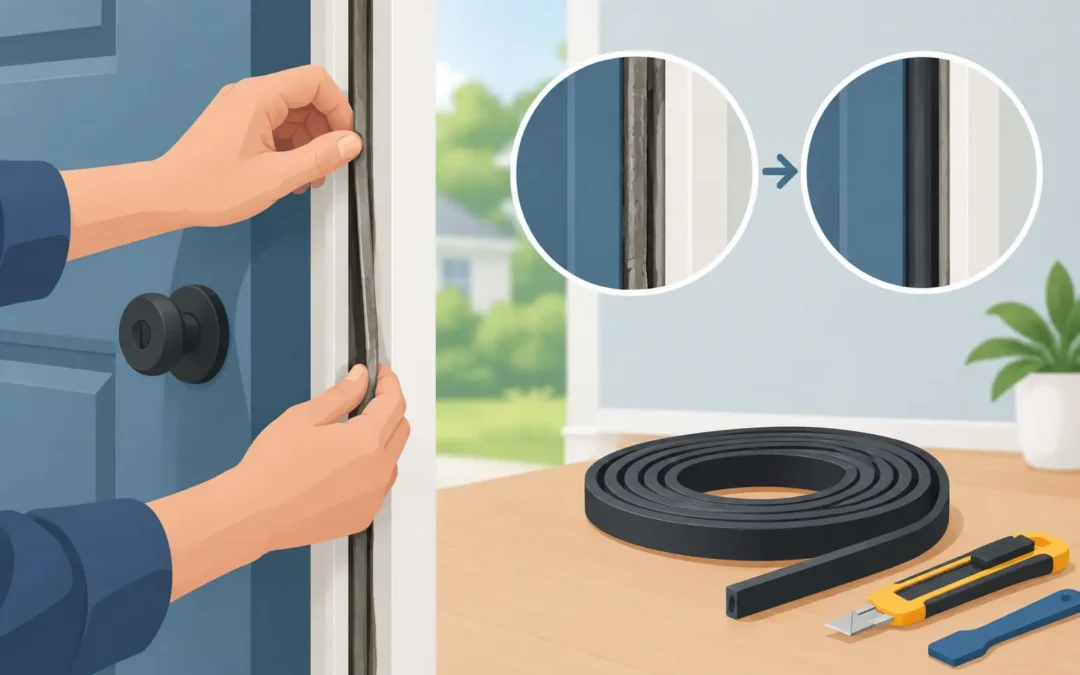
A thin strip of cracked rubber can turn a dependable garage or commercial door into a source of cold drafts, rainwater, insects, and unnecessary energy loss. When you replace worn weatherstripping before the damage spreads, you protect the door opening, the space behind it, and the equipment stored inside.
Weatherstripping is a small component with a major job. It closes the gaps around a moving door without preventing proper operation. For homeowners, that often means a drier garage and fewer pests. For businesses, it can mean cleaner loading areas, better temperature control, safer walking surfaces, and less exposure to wind-driven rain.
Signs It Is Time to Replace Worn Weatherstripping
Do not wait for a large visible gap before inspecting the seals. Weatherstripping can lose its flexibility long before it falls off. Rubber hardens with age and weather, vinyl can split, and brush seals can become bent or thin. Northern Illinois and Southern Wisconsin weather can speed up that wear through freeze-thaw cycles, snow, road salt, heat, and moisture.
Start with a simple daylight check. With the garage or commercial door closed, look for light along the bottom edge and sides. A small amount of light may be normal on an uneven surface, but a clear line of daylight usually means the seal is no longer making consistent contact.
Other warning signs include water entering after rain or snowmelt, leaves and debris collecting inside, insect activity near the door, visible cracking, loose fasteners, or a bottom seal that stays flattened after the door opens. You may also notice a colder garage, higher heating and cooling costs near the opening, or wind noise during storms.
For a residential overhead door, inspect the bottom seal and the perimeter weatherstrip around the jambs and header. On commercial sectional doors, rolling steel doors, dock doors, and service doors, inspect the bottom astragal, side seals, header seals, and brush seals where applicable. Each system has different clearances and hardware, so the correct replacement is not always a one-size-fits-all product.
Choose the Right Weatherstrip for the Door
The best replacement depends on the door style, opening condition, floor surface, and amount of traffic through the area. A seal that works well on a standard residential garage door may not be appropriate for a rolling steel door or a busy commercial loading area.
Bottom seals for overhead and sectional doors
Bottom seals attach to the bottom edge of a garage or sectional door and compress against the floor when the door closes. They are commonly made from flexible vinyl or rubber. Some slide into an aluminum or PVC retainer, while others use screws or fasteners directly through the seal.
The retainer profile matters. T-style, U-style, bulb-style, and bead-style seals are not interchangeable, even when they look similar from a distance. Measure the width of the door, inspect the existing track or retainer, and confirm the profile before ordering material. Installing the wrong seal can create gaps, make the door drag, or allow the seal to pull loose.
A larger bulb seal can help compensate for minor floor irregularities, but it has limits. If the concrete has a deep dip, heave, or broken edge, a new bottom seal alone may not solve the problem. The door should still close level and square before the final seal is selected.
Perimeter weatherstripping for garage openings
Perimeter weatherstripping mounts to the exterior door jambs and header. It typically has a rigid vinyl mounting flange and a flexible flap that rests against the face of the closed door. This is the material that blocks the side and top gaps around many residential garage doors.
Look for brittle flaps, warped mounting strips, missing nails, or sections that no longer touch the door. Proper placement is important. The flap should contact the door lightly and consistently, not press so hard that it adds unnecessary resistance to the opener or causes the door to bind.
Commercial brush seals and specialty seals
Commercial door openings often need more durable or specialized products. Brush seals are common on rolling steel doors, counter doors, and openings where the surface is uneven. Their dense bristles follow minor irregularities while allowing the door to move. Heavy-duty rubber astragals and edge seals may be used on sectional, service, and industrial doors.
In food service, healthcare, hospitality, schools, and other managed facilities, the correct seal may also need to support cleanliness standards, occupant comfort, or fire-rated opening requirements. Weatherstripping is not a substitute for rated components or code-required door assemblies. When a door is fire-rated or part of a regulated opening, use components that are approved for that application.
How to Replace Worn Weatherstripping Correctly
For a straightforward residential garage door, replacing weatherstripping can be a manageable maintenance task. Work with the door fully closed and disengage the opener only if the job requires moving the door by hand. Never loosen bottom brackets, lift cables, springs, or spring hardware. Those parts are under high tension and should only be handled by a trained door technician.
First, remove the damaged material and clean the mounting surface. Dirt, old adhesive, loose nails, and corrosion can prevent a new seal from sitting flat. For a bottom seal that slides into a retainer, inspect the retainer closely. Bent channels and sharp edges can tear a new seal during installation. Replace a damaged retainer rather than forcing the material through it.
Measure the opening and cut replacement material slightly long when possible. It is easier to trim a small amount after fitting than to discover the seal is short. If the material slides through a track, a small amount of approved lubricant can help, but avoid products that leave an oily residue where dirt will collect.
For perimeter weatherstrip, begin at the top corners and work down the jambs. Close the door and position the flexible flap so it makes even contact across the face of the door. Fasten the strip gradually, checking alignment as you go. The goal is a uniform seal, not excessive pressure.
After installation, operate the door several times and watch the seal as the door travels. It should not catch on hinges, rollers, tracks, or hardware. Check the opening again for daylight, then test after the next rain or snow event. If water still enters, inspect the floor slope, threshold condition, and door alignment instead of simply adding more weatherstrip.
When Weatherstripping Is Not the Real Problem
A new seal cannot correct a door that is out of balance, damaged, or improperly aligned. If one side of the door sits higher than the other, the bottom seal may only touch the floor on one end. If the door has bent sections, loose hinges, worn rollers, damaged tracks, or a failing opener, weatherstripping may wear out quickly again.
This is especially common with commercial doors that see frequent cycles, forklift traffic, loading dock activity, or exposure to harsh weather. A door that has been struck or pushed out of alignment should be evaluated before new seals are installed. Otherwise, the business may spend money on replacement material without addressing the reason the gap developed.
Thresholds are another trade-off to consider. A garage floor threshold can improve water control at some residential openings, particularly where rainwater runs toward the building. However, it changes the transition at the doorway and may not be suitable for every vehicle, accessibility requirement, or commercial traffic pattern. A professional assessment can determine whether a threshold, a larger bottom seal, floor repair, or door adjustment is the right solution.
Get Professional Help for High-Use or Complex Doors
For homeowners, professional installation is often worthwhile when the door has uneven gaps, a damaged bottom retainer, or signs of broader mechanical wear. For facility managers, expert service helps ensure seals are matched to the door type, opening use, and building requirements.
Barcol Door Company provides practical support for residential garage doors and commercial door systems throughout Northern Illinois and Southern Wisconsin. From perimeter seals and bottom weatherstripping to rolling steel door brush seals and larger door repairs, experienced technicians can identify whether the issue is the seal itself or the door system behind it.
A properly sealed door should close cleanly, operate without strain, and keep the weather where it belongs. Addressing worn weatherstripping now is a simple way to avoid a colder, wetter, less secure opening when the next season arrives.