
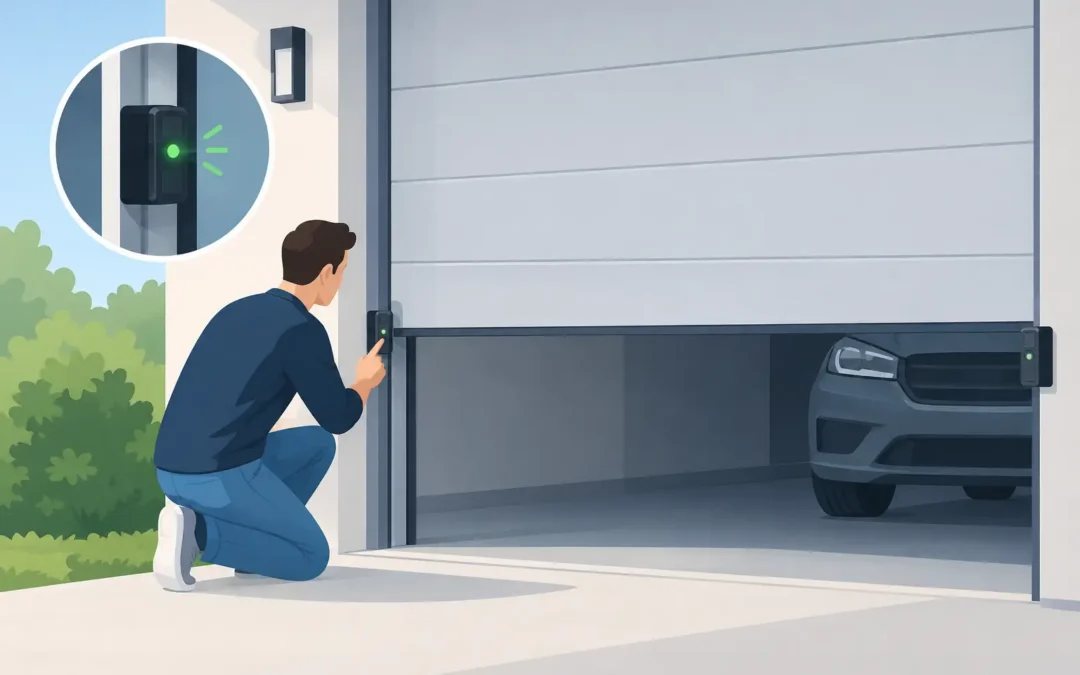
A garage door that starts down, then reverses or refuses to close, often points to the safety sensors near the bottom of the tracks. Before you reset garage sensors, take a moment to look at what the door is doing. The problem may be as simple as a dirty lens or bumped sensor, but it can also involve damaged wiring, an opener issue, or a door that is not operating safely.
Garage door photo-eye sensors are designed to stop the door from closing on a person, pet, vehicle, or object. They are a required safety feature on modern automatic garage doors. Resetting them should never mean bypassing them. The goal is to restore proper operation, then confirm the door closes and reverses as it should.
What Garage Door Safety Sensors Do
Most residential garage doors have two small photo-eye sensors mounted a few inches above the floor, one on each side of the opening. One sensor sends an invisible beam across the doorway, and the other receives it. When that beam is interrupted or the sensors are out of alignment, the opener will not allow the door to close normally.
Common signs of a sensor problem include a door that reverses immediately after touching the floor, a door that will only close when you hold down the wall button, or indicator lights on the sensors that are blinking or off. The color and behavior of those lights vary by opener manufacturer, so the opener manual can help explain the specific signal. Still, a steady light on both sensors usually indicates that the beam is clear and aligned.
Do not assume the sensors are the only issue. A binding door, broken spring, damaged track, or opener malfunction can create similar symptoms. If the door is heavy, crooked, noisy, or stops at different points during travel, leave the system alone and arrange professional service.
How to Reset Garage Sensors
There is usually no separate reset button on the sensors themselves. In most cases, resetting means clearing the obstruction, cleaning and aligning the photo eyes, and restarting power to the opener if needed. Start with the garage door in the fully open position whenever possible. Keep people and vehicles out of the doorway while testing.
1. Check the doorway and sensor path
Look across the bottom of the opening between the two sensors. Remove boxes, tools, bicycles, leaves, cobwebs, snow, or anything else that could interrupt the beam. A small object close to the floor can be enough to prevent the door from closing.
Also look for a hanging cord, loose weather seal, or an object that moves into the sensor path as the door begins to close. If the problem appears only at certain times of day, direct sunlight may be shining into the receiving sensor. Shielding the sensor from glare or having a technician adjust its position may solve that issue.
2. Clean both sensor lenses
Wipe each lens with a soft, dry microfiber cloth. Dirt, moisture, road salt, and spider webs can block or scatter the beam. Avoid spraying cleaner directly onto the sensor, and do not use abrasive materials that could scratch the lens.
Check the sensor brackets while you are there. A bracket bent by a trash can, lawn equipment, or vehicle tire can move the photo eye just enough to cause an intermittent failure.
3. Align the sensors carefully
Each sensor should face directly across the garage opening at the other sensor. If one is tilted, gently adjust the bracket until both indicator lights are steady, following the guidance for your opener model. Do not force a rusted or damaged bracket. That can break the sensor housing or create a wiring problem.
Measure the sensor height if the brackets appear uneven. The sensors should be mounted at approximately the same level and kept close to the floor, where they can detect an obstruction in the door opening.
4. Inspect the wires
Follow the low-voltage wires from each sensor back toward the opener. Look for loose connections, cuts, staples driven through the wire, pinches, or exposed copper. Rodents and accidental impacts are common causes of damaged sensor wiring.
If a wire is loose at the sensor, turn off power to the opener before touching the connection. Reconnecting a clearly loose wire may restore operation, but damaged wiring should be replaced rather than taped together as a long-term fix. A clean repair helps prevent repeat failures and protects the safety system.
5. Restart the garage door opener
If the sensors look clean, aligned, and connected but the lights still do not respond correctly, unplug the garage door opener or turn off its circuit breaker for about one minute. Restore power and allow the opener to restart. Then check the sensor lights again.
A power cycle can clear a temporary electronic issue, but it will not fix a failed sensor, broken wire, or bad opener circuit board. If the indicator lights remain off or continue blinking after alignment and a restart, further diagnosis is needed.
6. Test the door safely
Once the sensor lights show normal operation, close the garage door using the wall control or remote. Stand clear of the opening and watch the entire cycle. Then test the safety system with a solid object, such as a piece of lumber, placed in the sensor path. The door should not close while the beam is blocked.
After removing the object, test the door’s reversing function according to the opener manufacturer’s instructions. If the door does not reverse when expected, stop using the automatic opener until the system has been inspected.
Why Holding the Wall Button Is Not a Fix
Many openers allow the door to close only when the wall button is held continuously if the sensors are not communicating. This feature is intended to let an adult visually monitor a closing door during a sensor fault. It is not a repair method.
Do not rely on this override as part of normal use, and never leave a child or another person to operate it without supervision. More importantly, do not disconnect, tape over, or permanently bypass the sensors. A door can weigh well over 100 pounds, and a working safety system is essential.
When a Sensor Reset Will Not Solve the Problem
Sensor trouble is common, but it is not the answer to every garage door issue. Call for service if one or both sensor lights remain off after you check power and wiring, if the door closes inconsistently, or if the opener makes unusual clicking or grinding sounds.
You should also schedule a repair if the door is off track, has a broken cable, moves unevenly, or feels too heavy when operated manually. Never attempt to adjust garage door springs, cables, or bottom brackets. These parts are under extreme tension and require trained technicians and the right tools.
For commercial facilities, sensor issues can be more complex. High-traffic openings, rolling doors, security controls, monitored fire door systems, and access equipment may involve additional safety devices and code requirements. Facility managers should avoid improvised repairs that could create a safety or compliance concern.
Keep Sensor Problems From Returning
A quick visual check every month can prevent many sensor-related calls. Keep the lower door opening clear, wipe the lenses when you clean the garage, and watch for loose brackets before they become a problem. During seasonal changes in Northern Illinois and Southern Wisconsin, pay extra attention to moisture, salt, snow buildup, and debris near the floor.
If your garage door will not close reliably after you reset garage sensors, professional inspection is the practical next step. Barcol Door Company can identify whether the issue is the photo eyes, wiring, opener, or the door itself, so you can get back to a garage door that operates safely and dependably.