
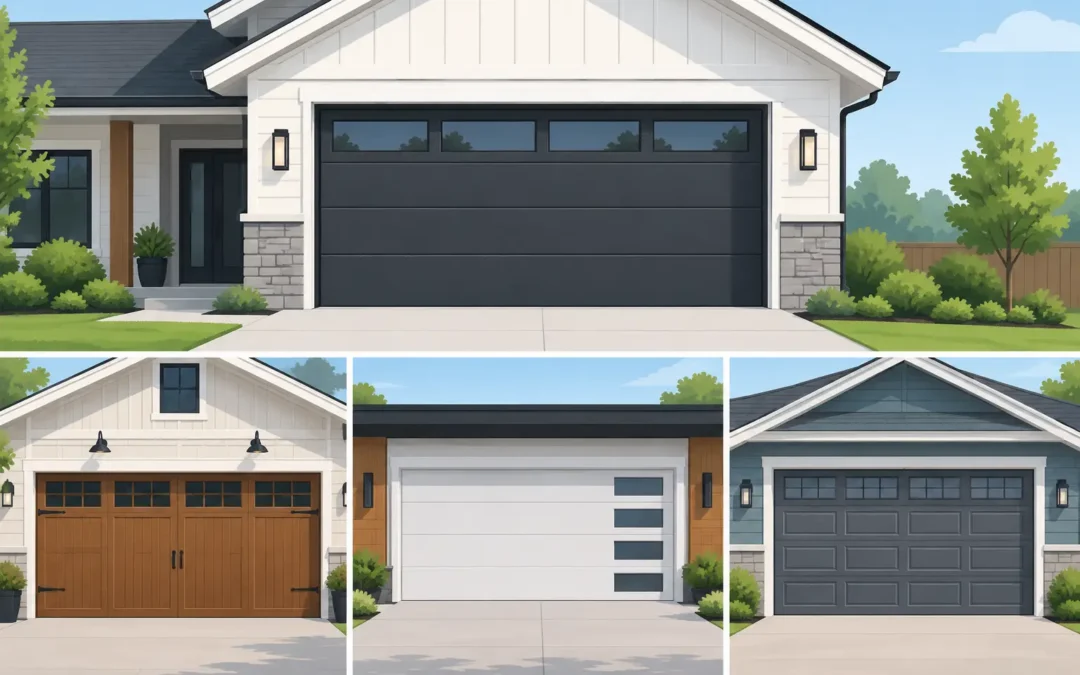
A garage door can account for a large portion of your home’s front-facing exterior, so choosing from today’s residential overhead door styles is about more than replacing a worn-out door. The right choice should complement the home, operate reliably through Northern Illinois and Southern Wisconsin weather, and provide the security and insulation your garage needs. A style that looks good in a showroom but clashes with the roofline, windows, or entry door can work against your curb appeal for years.
The best starting point is to look at your home as a whole. Architectural style, garage placement, exterior materials, and how you use the garage all influence which door will be the right long-term fit.
The Main Residential Overhead Door Styles
Most residential garage doors are sectional overhead doors, meaning they are made of horizontal panels that travel upward on tracks and rest overhead when open. Within that dependable operating design, homeowners have several distinct style options.
Traditional raised-panel doors
Raised-panel doors remain a practical choice for ranch homes, colonials, split-levels, and many newer suburban homes. The panels create depth without drawing too much attention, which makes this style especially flexible when a homeowner wants a clean, familiar appearance.
They are available in steel, wood, composite materials, and several colors. A white raised-panel door is a safe match for many homes, but darker colors, wood-grain finishes, and window inserts can give the same basic style more character. This is often the best route when replacing an existing door and maintaining a classic look matters more than making a dramatic exterior change.
Carriage house doors
Carriage house doors are built to resemble the swing-out doors found on older coach houses and barns, while still operating as modern overhead doors. They commonly feature vertical lines, crossbuck details, decorative hardware, and windows placed across the top section.
This style works well with farmhouse, craftsman, cottage, rustic, and traditional architecture. It can also add warmth to a plain garage-forward facade. The trade-off is that decorative hardware and detailed overlays should be selected carefully. Too many design elements can make a smaller home look busy, while a simpler carriage design may provide the same appeal with a cleaner result.
Contemporary and modern doors
Contemporary garage doors favor simple geometry, flush panels, broad horizontal lines, aluminum frames, and full-view glass. Black, charcoal, bronze, and natural wood-tone finishes are common choices. These doors pair well with modern homes, mid-century designs, updated ranches, and properties with strong horizontal rooflines.
Full-view glass doors make a bold architectural statement and can bring useful daylight into the garage. Privacy, heat gain, and visibility into the garage should be considered before choosing large glass sections. Frosted, tinted, or obscure glass may provide a better balance for homes close to the street or neighboring properties.
Flush-panel and minimalist doors
Flush-panel doors have a smooth, flat appearance with little or no visible panel embossing. They are less decorative than raised-panel doors but more restrained than a glass-forward contemporary design. For homeowners updating siding, trim, lighting, or front entry features, a flush-panel door can make the garage look current without competing with the rest of the exterior.
This is a good example of why style is not only about ornament. A quiet, well-proportioned door in the right color can improve curb appeal more than a highly detailed door that does not fit the house.
Match the Door to the Home, Not Just a Color Sample
When comparing residential overhead door styles, start with the architectural cues already present on the property. Brick homes often look balanced with traditional panels or carriage house detailing. Homes with board-and-batten siding may support carriage doors with vertical elements. A modern exterior with dark window frames and clean trim may call for flush panels or a full-view design.
Color should connect the garage door to other permanent features. Matching the front door exactly can work, but it is not the only option. Many homeowners choose a garage door color that relates to roof shingles, window frames, shutters, or brick tones instead. A contrasting black door may look sharp on a light-colored contemporary home, while a wood-grain finish may soften a stone or siding exterior.
Windows deserve the same attention. Window shapes should generally echo the home’s existing windows, whether they are square, rectangular, arched, or divided-light. Placing windows across the top of the garage door is common because it allows daylight in while limiting direct sightlines into the garage. On some homes, windows placed lower or arranged vertically can better match the architecture.
Material Choices Affect Appearance and Upkeep
The door material has as much influence on long-term satisfaction as the panel design.
Steel is the most common residential garage door material because it offers durability, broad style availability, and manageable maintenance. It can be embossed to resemble wood, finished in a range of colors, and built with insulation. For many homeowners, insulated steel offers the strongest balance of cost, appearance, and year-round performance.
Wood provides authentic texture and can be customized for distinctive homes, especially historic, upscale, or craftsman-style properties. It requires more maintenance than steel, however, and seasonal moisture changes can affect its finish. A wood-look steel or composite door may be the more practical option when the goal is the appearance of wood with less upkeep.
Aluminum and glass are often selected for contemporary homes. They are visually light and offer a modern look, but glass selection matters in a cold-weather climate. Insulated glass and a properly built frame can improve comfort, while single-pane glass may be less suitable for a garage attached to conditioned living space.
Insulation Is Part of the Style Decision
A door’s appearance is what most people notice first, but insulation affects how the garage performs every day. This matters most for attached garages, garages with living space above them, workshops, and spaces used for storage beyond vehicles.
An insulated door can help moderate temperature swings, reduce outside noise, and make the door feel more solid in operation. It will not turn an unheated garage into a living room, but it can make the space more comfortable and help protect items stored inside. The door’s R-value is useful for comparison, though the right choice depends on wall insulation, air sealing, heating plans, and how the garage is used.
A detached garage used only for parking may not need the highest insulation level. For an attached garage with a bedroom above it, investing in a well-insulated door is usually easier to justify. Weather seals around the perimeter and at the bottom of the door also matter. Even a high-quality door cannot perform as intended if gaps allow wind, water, and debris inside.
Do Not Overlook Hardware, Openers, and Safety
Decorative handles and strap hinges can complete a carriage house look, but they should be designed for overhead door operation. Fixed decorative hardware gives the appearance of traditional swing doors without interfering with movement.
The opener should be sized and selected for the door’s weight and construction. Heavier insulated doors, wood doors, and oversized doors place different demands on the system than a lightweight single-car steel door. Quiet operation may be a priority when bedrooms sit above or beside the garage. Safety sensors, a properly balanced door, and professional installation are essential regardless of style.
A door that reverses unexpectedly, moves unevenly, makes loud noises, or has damaged springs or cables needs prompt professional attention. Garage door components are under significant tension and are not a safe place for improvised repairs.
Choose for the Next Ten Years, Not the Next Weekend
The most successful garage door replacement is one that looks appropriate from the curb, fits the way the garage is used, and remains dependable through changing seasons. Before deciding, view full-size samples or completed doors whenever possible, compare insulation options, and consider the door from the street as well as from inside the garage.
For homeowners who want experienced guidance, Barcol Door Company can help narrow the options based on home style, budget, performance needs, and installation requirements. A well-chosen overhead door should do its job quietly every day while making the whole property look more complete.