
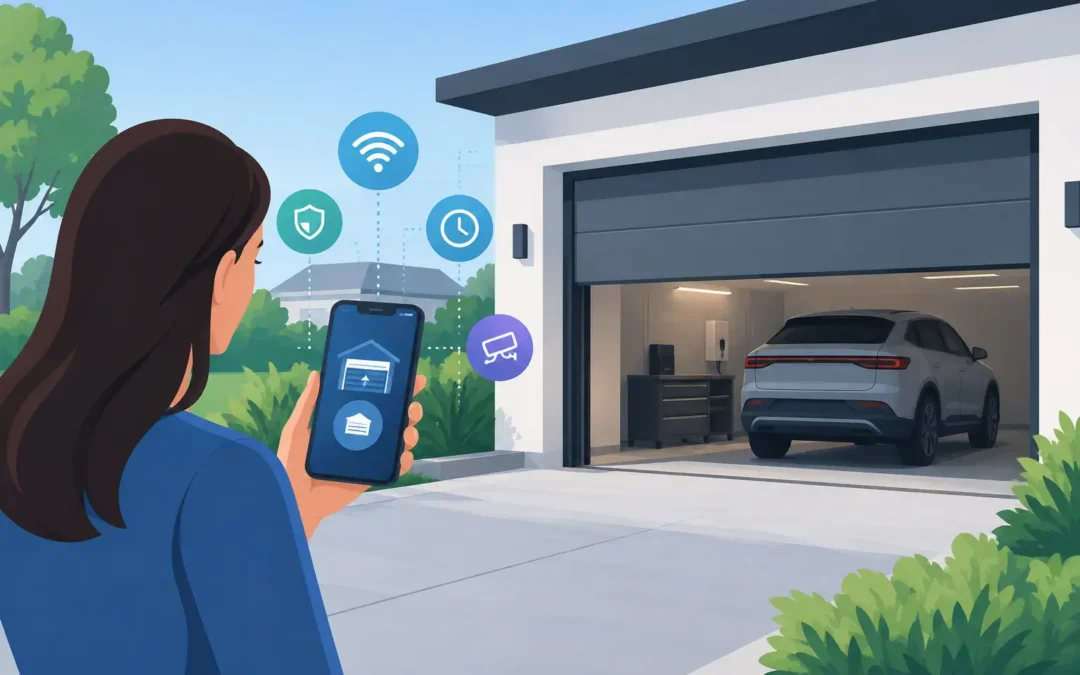
A garage door is often the largest moving entry point on a property. That is why smart garage access trends are less about adding another app and more about controlling a real security, safety, and service concern. For homeowners, the value is knowing whether the door is closed after the morning rush. For commercial properties, it is knowing who can enter a service bay, storage area, loading zone, or secured facility – and when.
Smart access can be a practical upgrade when it is selected for the way a property actually operates. It can also create frustration when a system is overcomplicated, poorly installed, or treated as a substitute for a reliable door and opener. The best results start with the basics and build from there.
Smart Garage Access Trends Center on Control
The most useful change in garage access is simple: owners and managers no longer need to be standing near the door to check its status or operate it. A connected opener can send an alert when the door opens, show whether it is open or closed, and allow approved users to operate it from a phone.
For a homeowner, that may mean closing the garage from work after realizing a child left it open. For a facility manager, it may mean checking that a service entrance was secured at the end of the day without driving across the property. These features are especially useful for detached garages, rental properties, busy family homes, auto-related businesses, and buildings with multiple staff members.
Remote control does not eliminate the need for good operating habits. Notifications should be set up for the people responsible for the property, and access should be reviewed periodically. A smart system is most effective when it supports clear accountability rather than giving every user unlimited control.
Guest Access Is Replacing Shared Remotes
Traditional remotes are easy to pass around and easy to forget about. Smart systems increasingly allow property owners to issue access through a mobile app, set time limits, and remove permissions when a job or visit is complete.
This is a meaningful improvement for homeowners who need to admit a dog walker, house cleaner, family member, or contractor. Instead of leaving a remote in a vehicle or sharing a keypad code indefinitely, the owner can provide access only for the needed window of time.
Commercial properties can benefit even more. Temporary credentials can help control access for maintenance vendors, delivery personnel, seasonal staff, and outside contractors. The right setup depends on the size of the operation. A small shop may need only a few managed users, while a school, hospitality property, dealership, or multi-building facility may need access policies tied to specific roles and locations.
Video and Delivery Features Have a Place – With Limits
Garage delivery options and camera-equipped openers have attracted considerable attention. The appeal is clear: packages can be placed inside the garage rather than left at the front door, and owners can view activity around one of the home’s main access points.
For the right household, these features add convenience and peace of mind. They can also be helpful at properties where expensive tools, equipment, or deliveries are regularly stored in the garage. Video verification may allow an owner to confirm that a door closed properly after a delivery or service visit.
Still, not every garage needs a camera or in-garage delivery service. Privacy preferences, Wi-Fi coverage, device subscriptions, and the physical layout of the garage all matter. A camera cannot correct a damaged door section, a weak spring, a misaligned photo eye, or an opener that is nearing the end of its service life. The underlying door system must remain safe and dependable.
Battery Backup Is Becoming a Practical Expectation
Power outages are not rare in Northern Illinois and Southern Wisconsin. A battery backup on a compatible garage door opener can keep the door operating during an outage, which is useful when a vehicle needs to leave or return home.
For residences, this is largely a convenience and safety feature. For businesses, the impact can be more significant. A service department, vehicle fleet, receiving area, or emergency-access location may need a documented plan for opening doors when normal power is unavailable. Battery backup can be part of that plan, but it should not be the only consideration. Commercial facilities may also need manual-release procedures, trained staff, and door equipment suited to the building’s operating demands.
Smart Garage Access Trends for Commercial Facilities
Smart access gets more complex when a door is part of daily business operations. A residential-style connected opener is not automatically the right answer for a commercial sectional door, rolling steel door, or high-use service entrance. Cycle frequency, door weight, safety devices, code requirements, employee training, and access-control integration all deserve attention.
Many commercial buyers are moving toward clearer access records and more controlled entry. If a door opens after hours, management may want to know whether the event was scheduled, who had authorization, and whether the door was secured afterward. That information can improve operations, but only if the system is configured correctly and employees understand the process.
The strongest commercial approach is usually layered. It may combine durable door equipment, commercial-grade operators, access controls, properly located keypads or credentials, safety sensors, and a maintenance plan. Smart features are one layer of that system, not the entire system.
Facilities also need to consider what happens when internet service fails. Some functions may rely on cloud connectivity, while local controls may continue operating. Before selecting a system, ask how users will enter and exit during a network outage, who can override access when necessary, and how permissions are managed when employees leave.
Compatibility Should Come Before Convenience
The fastest way to create an access problem is to buy technology before confirming compatibility. Older openers may not support modern smart controls, and add-on devices do not always provide the same reliability or feature set as a compatible new opener. In some cases, an upgrade kit makes sense. In others, replacing an aging opener is the better long-term value.
Homeowners should consider the opener’s age, safety features, noise level, lifting capacity, and condition before adding smart controls. A door that shakes, binds, or reverses unexpectedly needs professional attention first. Smart access will not make a worn-out system operate correctly.
Commercial customers should take an even closer look at the entire opening. The operator must be matched to the door type and usage, while access equipment must work with the facility’s security expectations. Fire-rated openings, rolling doors, high-traffic overhead doors, and secure employee entrances may each require a different solution.
Cybersecurity and Privacy Belong in the Decision
A connected garage opener should be treated like any other device that controls entry to a property. Use a strong, unique account password and enable multi-factor authentication when available. Keep the app, opener firmware, and home or facility network equipment updated.
It is also wise to limit access to people who need it. Remove former employees, tenants, contractors, and household members when their access is no longer appropriate. Review user lists a few times each year, particularly after staffing changes or a move.
For businesses, ownership matters. The company should control the primary administrator account rather than relying on an individual employee’s personal login. Document who has administrative authority, how credentials are issued, and who is responsible for reviewing access after personnel changes.
Installation and Service Still Make the Difference
Smart features work best when paired with professional installation and a well-maintained door system. Proper travel limits, photo-eye alignment, force settings, weather protection, and dependable hardware affect daily performance as much as the app on a phone.
Barcol Door Company helps homeowners and commercial customers evaluate the whole opening, not just the connected feature. That approach matters because a secure, convenient garage starts with a door and operator that are correctly matched, installed, and serviced.
Before choosing a smart access option, decide what problem you want to solve. If the concern is leaving the door open, status alerts and remote closing may be enough. If several people require temporary entry, managed guest access may be the priority. If a commercial facility needs accountability across multiple doors, a more complete access-control plan may be justified.
Choose the features you will use, protect the access you grant, and keep the door itself in dependable condition. That is how smart garage access becomes a practical improvement instead of one more system to manage.