
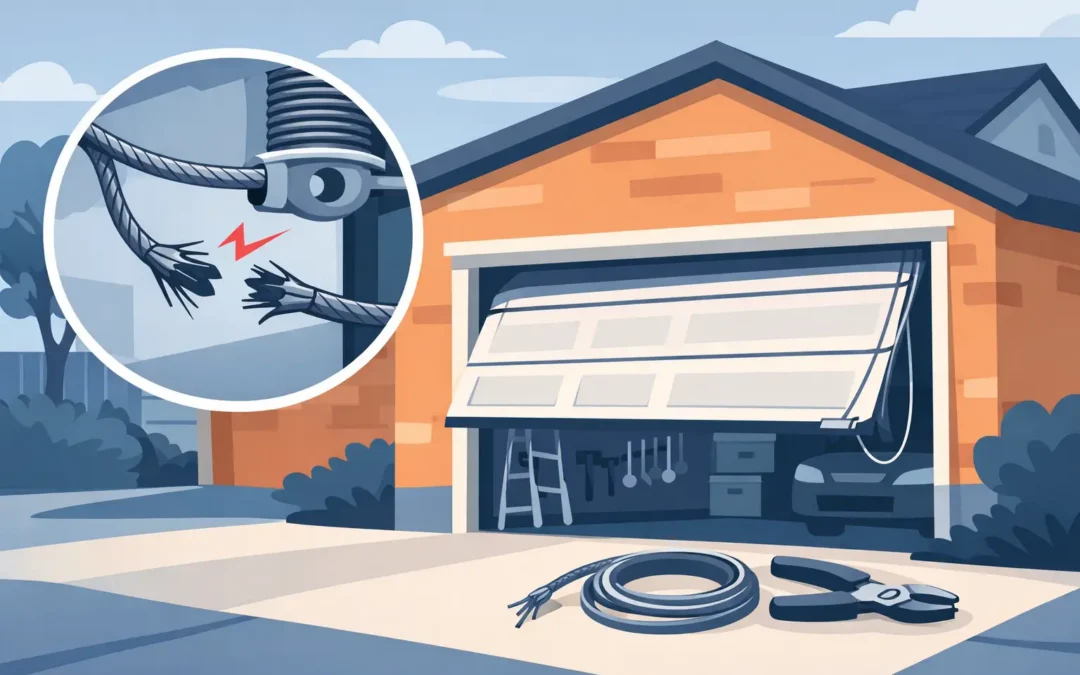
A garage door cable rarely fails without giving the system a reason. It may fray near the bottom bracket, slip off the drum after the door binds, or snap when an aging spring can no longer carry its share of the lifting load. When it happens, the door can become crooked, jammed, or dangerously heavy in a matter of seconds.
Understanding what causes garage door cable failure helps homeowners and facility managers spot trouble early. More importantly, it helps prevent a small wear issue from becoming a damaged door, a blocked loading area, or an unsafe repair attempt.
How Garage Door Cables Work
Lift cables are part of the counterbalance system that raises and lowers a sectional overhead door. On a typical torsion-spring setup, a cable runs from the bottom of the door up to a drum mounted near the top of the opening. As the spring turns, the drums wind or unwind the cables to keep the door moving evenly.
Extension-spring systems use a different arrangement, but the cable still performs the same basic job: helping transfer the door’s weight through a controlled lifting system. The cable itself is strong, but it depends on properly adjusted springs, aligned tracks, level mounting, and hardware in good condition.
That is why a broken cable is often a symptom of a larger issue, not simply a bad cable.
What Causes Garage Door Cable Failure?
Normal wear and corrosion
Every opening and closing cycle puts the cable under tension. Over time, the individual strands can wear, especially where the cable bends around a drum or passes through hardware. Once strands begin to fray, the remaining strands carry more of the load until the cable eventually breaks.
Northern Illinois and Southern Wisconsin weather can speed up that process. Moisture, road salt carried into the garage, condensation, and high humidity can corrode steel cables. Corrosion may look minor at first, but pitting weakens the wire and makes failure more likely under normal door operation.
A cable with visible fraying, rust, or loose strands should be replaced before it fails. Lubricant can reduce friction at appropriate moving parts, but it cannot restore a weakened cable.
A broken or poorly balanced spring
Garage door springs do most of the heavy lifting. The cables guide and support that lifting force, but they are not designed to compensate for a failed spring or a seriously unbalanced door.
When a torsion spring breaks, one side of the door may lose support immediately. The door can drop unevenly, causing a cable to jump off its drum or go slack and tangle. On extension-spring doors, worn springs or missing safety components can create similar problems.
Improper spring adjustment can also shorten cable life. If one side carries more load than the other, the door may rise crookedly and place excessive stress on a cable, drum, bearing, or bottom bracket. Spring work requires specialized tools and training because stored spring tension can cause serious injury.
A door that is out of alignment
A garage door should travel straight and smoothly in its tracks. If the tracks are bent, rollers are worn, hinges are damaged, or the door has been struck by a vehicle, the door can bind during operation. That binding forces the counterbalance system to work harder and can cause one cable to loosen or come off the drum.
A door that looks uneven while opening is a common warning sign. So is a door that stops partway, rubs against the track, makes grinding noises, or leaves one side higher than the other. Continuing to operate it can turn an alignment repair into a cable, spring, track, and panel repair.
Damaged drums, bearings, and bottom brackets
Cables do not operate alone. Drums guide them at the top of the door, while bottom brackets secure them at the bottom. If a drum is cracked, heavily worn, or installed incorrectly, it may not hold the cable in its proper groove. The cable can overlap, unravel, or jump off the drum.
Worn end bearings and center bearings can also affect how the torsion shaft turns. If the shaft does not rotate smoothly, cable tension may become uneven from one side of the door to the other.
Bottom brackets deserve special attention. They are connected directly to the lift cables and remain under substantial tension when the door is closed. Never remove or loosen a bottom bracket as a do-it-yourself repair. A qualified technician should inspect and service that hardware.
Obstructions and sudden impact
A bicycle, tool chest, trash bin, or vehicle positioned in the door’s path can cause an abrupt stop. Even if the opener reverses, the impact can bend a track, damage a roller, or knock the door out of level. The cable may then lose tension or peel off the drum on the next cycle.
Commercial doors face additional risks. Forklifts, delivery equipment, pallets, and high daily operating cycles can quickly expose weak components. A loading-area door that is struck or forced while partially open should be inspected before it returns to service.
Improper installation or incorrect replacement parts
Cable length, diameter, drum type, spring size, and door weight must work together. An incorrect cable or drum may appear to function at first, yet wear rapidly or allow uneven winding. A replacement door section, insulation upgrade, glass addition, or operator change can also alter door weight and balance.
This is one reason professional installation matters. The goal is not simply to make the door move. It is to ensure the complete system is matched, balanced, and operating safely over thousands of cycles.
Warning Signs Before a Cable Breaks
Garage door cables often provide visible clues before failure. Look for frayed wire strands, rust, loose cable loops, or a cable that is not sitting neatly in the drum grooves. Do not assume a cable can be pushed back into place and safely used again. If it came off, the underlying cause still needs attention.
Pay attention to how the door moves as well. A door that shakes, travels unevenly, becomes unusually noisy, or feels heavier than normal may have a counterbalance problem. If the opener strains, stops unexpectedly, or the door will not open more than a few inches, stop using it.
For a residential door, avoid pulling the emergency release or attempting to lift a crooked door by hand unless a trained professional has advised you to do so. For a commercial opening, keep people and vehicles clear, secure the area, and arrange service promptly.
What to Do When a Garage Door Cable Fails
First, stop operating the door. Do not keep pressing the opener button in hopes that the door will straighten itself out. Repeated operation can bend tracks, damage panels, strip gears in the opener, or cause the door to fall farther out of position.
If the door is partially open, keep everyone away from the opening. Do not stand beneath it, pull on the cable, or try to force it closed. A cable failure may be accompanied by a broken spring, and the door may no longer be supported evenly.
A professional inspection should determine whether the cable alone needs replacement or whether related parts need service. In many cases, replacing both cables is the practical choice because they have experienced the same age, usage, and environmental conditions. The technician should also check spring balance, drums, shaft bearings, rollers, tracks, bottom brackets, and opener settings.
Preventing Future Cable Problems
Regular inspection is the most effective prevention. Homeowners can visually check cables, rollers, tracks, and weather seal several times each year without touching tensioned hardware. Keep the tracks clear of debris, avoid parking too close to the door, and address unusual movement before it becomes a failure.
Professional maintenance adds another layer of protection. A technician can test the balance of the door, inspect high-tension components, tighten appropriate hardware, identify worn rollers or bearings, and confirm that the opener is not working against a door that needs mechanical repair. High-cycle commercial doors may need more frequent service because their components accumulate wear much faster.
For dependable garage door cable repair, the right response is prompt, experienced service rather than a temporary fix. Barcol Door Company can inspect the complete system, replace worn components, and help restore safe, reliable operation so your door is ready for the next day’s use.