
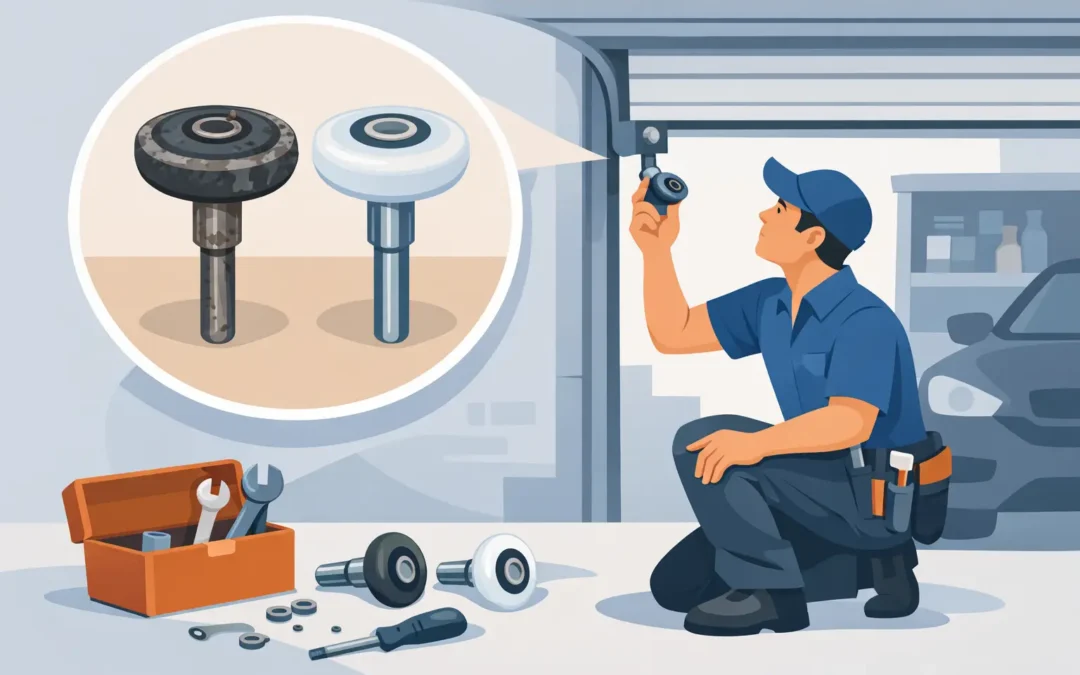
A garage door that rattles, jerks, or sounds louder than usual may be telling you exactly when should garage rollers be replaced. Rollers are small components, but they carry a major share of the work every time the door moves. When they wear out, the entire system can operate poorly – including the tracks, hinges, cables, springs, and opener.
For homeowners and facility managers, the right time to replace rollers depends on their condition, the door’s use, and the type of rollers installed. Waiting until a roller comes apart or leaves the track can turn a straightforward repair into a larger service call.
When Should Garage Rollers Be Replaced?
Garage rollers should be replaced when they show visible wear, make excessive noise, bind in the track, or no longer turn smoothly. As a general rule, standard plastic rollers may need attention after a few years of regular use, while quality nylon or steel rollers can last much longer. A door that opens and closes multiple times daily will wear rollers faster than one used only occasionally.
Age alone is not the best measure. A roller can appear intact while its bearings are worn, its stem is loose, or its wheel no longer rolls freely. The practical question is whether the rollers are allowing the door to travel smoothly and stay properly aligned in its tracks.
A professional inspection is especially worthwhile if the door is older, has been hit by a vehicle, has recently come off track, or is putting extra strain on the opener. In Northern Illinois and Southern Wisconsin, seasonal temperature swings can also harden lubricants, expose worn parts, and make an existing issue more noticeable.
Warning Signs Your Garage Door Rollers Are Worn
Noise is often the first sign. Squeaking may point to dry rollers or tracks, but grinding, scraping, popping, or a rumbling sound can indicate rollers that are cracked, worn flat, or failing at the bearings. Lubrication can help a sound roller move quietly, but it will not restore a roller that is physically damaged.
Watch the door while it operates from a safe distance. If it shakes, hesitates, or moves unevenly through the curved section of the track, one or more rollers may be binding. You may also notice the door drifting slightly, rubbing against the track, or requiring more force from the opener than it once did.
A visual check with the door closed can reveal obvious problems. Look for cracked plastic wheels, chipped edges, rusted steel rollers, bent stems, loose hinges, or rollers sitting crooked in the track. Do not place hands near moving rollers or attempt to adjust bottom brackets. Those brackets are connected to high-tension cables and should only be serviced by a trained technician.
Other signs that call for prompt service include:
- A roller that has popped out of the track
- A door that stops or reverses unexpectedly
- An opener that strains, vibrates heavily, or makes new noises
- Gaps between the roller and track caused by bent hardware or alignment issues
- A garage door that will not open or close evenly
These symptoms do not always mean every roller needs replacement. The underlying issue could involve track alignment, worn hinges, damaged cables, spring problems, or an opener setting. That is why a complete garage door inspection is more useful than replacing a single visibly worn part and hoping the problem is solved.
Roller Material Makes a Difference
Not all garage door rollers perform the same way. Basic plastic rollers are common on older doors and lower-cost installations. They are quiet at first, but they can crack or wear relatively quickly, particularly on heavier doors or doors that see frequent use.
Steel rollers are durable and often appropriate for demanding applications, but unsealed steel bearings can become noisy without regular maintenance. They may also develop rust in damp garages or in buildings where moisture and contaminants are common.
Nylon rollers are a popular upgrade for many residential overhead doors. Quality nylon rollers with sealed bearings generally provide quieter operation and require less maintenance than basic plastic or unsealed steel options. They are often a sensible choice for attached garages, where door noise can carry into living areas.
The best replacement depends on door weight, track condition, usage, and budget. A light single-car door used twice a day has different needs than a heavy insulated double door, a service-bay door, or a commercial sectional door that cycles throughout the day. Selecting the wrong roller may save a little upfront while shortening the life of other components.
Why Delaying Roller Replacement Can Cost More
Worn rollers do more than create noise. They increase friction, and friction places additional stress on the opener and the door’s moving hardware. An opener is designed to guide a balanced door, not force a dragging door through damaged or binding rollers.
As rollers deteriorate, the door can pull against the track and place uneven loads on hinges. Over time, this may contribute to bent track sections, loose mounting brackets, damaged hinges, or a door that comes off track. If the system is already out of balance because of a spring issue, the added resistance can make operation unreliable and potentially unsafe.
For commercial properties, roller wear can affect more than convenience. A noisy or poorly moving door at a loading area, maintenance bay, school facility, or automotive dealership can interrupt operations and create a safety concern for employees and visitors. Routine service is typically easier to schedule and less disruptive than an emergency repair after a door becomes inoperable.
Can You Replace Garage Door Rollers Yourself?
Some upper rollers can be replaced by an experienced do-it-yourselfer who understands garage door hardware and follows proper safety procedures. However, roller replacement is not always a simple task. Hinges must be handled correctly, tracks need to remain aligned, and the door must be supported safely during the work.
Bottom rollers require particular caution. The bottom brackets are attached to the lift cables, which are under spring tension. Removing or loosening those brackets without the right training and tools can cause serious injury or property damage.
Even when only upper rollers are involved, a professional technician can inspect the rest of the system at the same time. That matters because worn rollers often appear alongside loose hinges, damaged weather seals, dry bearings, track issues, or an opener that needs adjustment. Replacing parts without identifying the cause of the wear may only postpone the next problem.
How to Help New Rollers Last Longer
New rollers perform best when the rest of the door system is maintained. Keep the tracks clear of leaves, dirt, and accumulated debris, but avoid applying heavy grease inside the tracks. Grease attracts grit, which can interfere with smooth roller travel. The rollers themselves, hinges, and springs should receive the appropriate garage door lubricant as part of regular maintenance.
It also helps to test door operation periodically. With the opener disconnected and the door fully closed, a properly balanced door should generally stay near the halfway point when carefully raised by hand. Do not attempt this test if springs, cables, or other hardware appear damaged. An unbalanced door should be inspected by a professional rather than forced into operation.
Pay attention after any impact. A vehicle bump, a ladder strike, or an object caught in the path of the door can bend a track or damage a hinge enough to cause roller problems later. Addressing that damage early protects the rollers and keeps the door operating as designed.
Schedule Service Before the Door Fails
A garage door does not need to be completely stuck before it deserves attention. If it is louder, rougher, slower, or visibly uneven, an inspection can identify whether roller replacement is needed and whether other components are contributing to the problem.
Barcol Door Company provides experienced garage door repair and replacement service for homeowners and commercial facilities across the region. A qualified technician can recommend rollers suited to the door, correct related issues, and help restore smooth, dependable operation. Taking care of worn rollers now is a practical way to protect the door you rely on every day.