
A garage door that starts down, then suddenly returns to the open position is doing more than causing an inconvenience. In many cases, it is responding to a safety feature designed to prevent injury or damage. Understanding why garage doors reverse can help you identify a simple obstruction, avoid an unsafe do-it-yourself repair, and know when it is time to schedule service.
Modern garage door systems are built to reverse when they detect something in the door’s path or sense more resistance than expected. That is a critical protection for families, vehicles, pets, and property. But when the system reverses with nothing obvious underneath it, the cause may be a sensor alignment issue, a damaged track, an opener setting, or a mechanical problem that needs professional attention.
Why Garage Doors Reverse Before They Close
Most residential garage doors reverse for one of two reasons: the photo-eye safety sensors detect an interruption, or the opener believes the door has contacted an obstruction. Both systems are necessary, but they respond to different conditions.
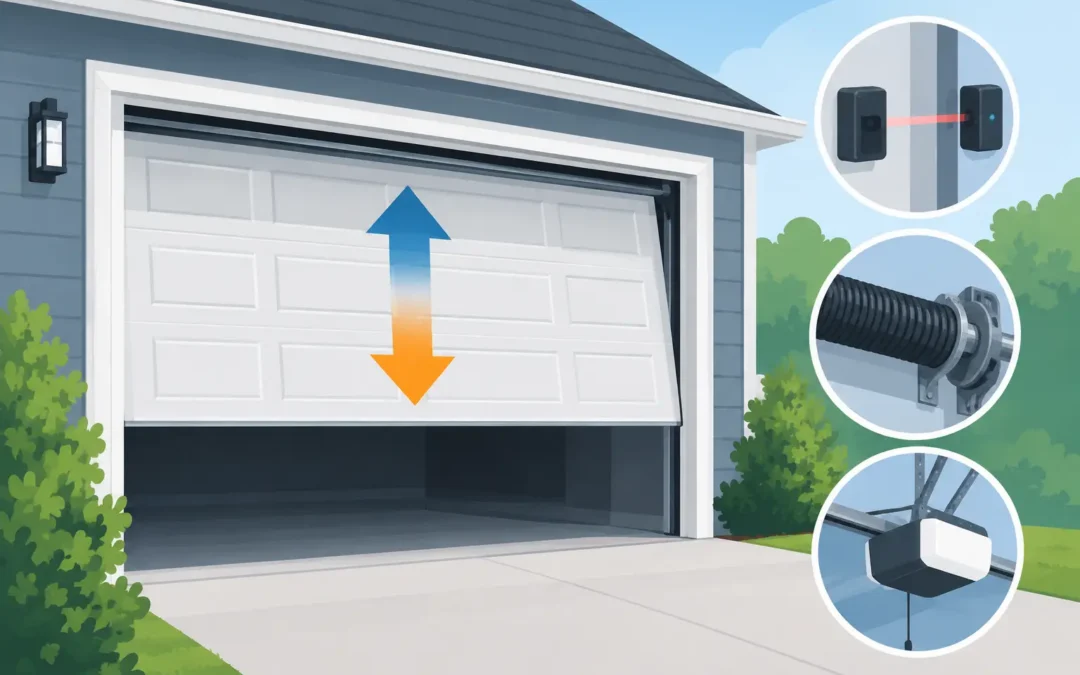
Photo-eye sensors are mounted near the bottom of the door tracks, typically a few inches above the floor. One sensor sends an invisible beam to the other. If a person, object, pet, or even a buildup of debris blocks that beam while the door is closing, the opener reverses the door automatically.
The opener also monitors the amount of force required to move the door. If the door encounters excessive resistance while closing, the opener interprets that resistance as an obstruction and reverses. This may happen when the door contacts an object, but it can also happen when the door is binding in the tracks or becoming too heavy for the opener to move properly.
Start With the Safety Sensors
Safety sensors are the most common reason a garage door reverses without an apparent obstruction. Before adjusting anything, look along the floor and door opening for items that may be crossing the sensor beam. A broom, garden tool, bicycle tire, box, snow buildup, or loose weather seal can be enough to trigger the system.
Next, inspect the sensors themselves. Their indicator lights should usually be illuminated. The exact light pattern varies by opener manufacturer, but a blinking or unlit sensor often means the beam is blocked, the sensors are misaligned, or there is a wiring problem.
Dirty or misaligned photo eyes
Dust, cobwebs, road salt, moisture, and spider webs can collect on the sensor lenses. Gently wipe each lens with a soft, clean cloth. Avoid harsh cleaners that may scratch the lens or leave residue behind.
If the lenses are clean but the indicator light is still blinking, one sensor may have been bumped out of alignment. Check that both sensors are securely mounted and facing each other at the same height. Small adjustments can restore the beam, but do not force brackets or damage the low-voltage wiring.
Sunlight can also affect certain sensor locations. Strong late-day sunlight shining directly into a sensor may interrupt the beam temporarily. If the problem occurs at roughly the same time each day, a technician can help determine whether sensor positioning or a protective shield is needed.
Never bypass the sensors
It may be tempting to hold the wall button until the door closes or disconnect the sensor system altogether. That is not a safe long-term fix. The safety reversal system exists to prevent the door from closing on a person, pet, vehicle, or stored item.
Holding the wall button may allow some openers to close in a temporary situation, but it does not correct the problem. If the sensors will not operate normally, arrange for service before relying on the door again.
Check for Obstructions and Track Problems
If the sensors appear to be working, inspect the door’s travel path. Look for sticks, leaves, packed snow, ice, small tools, or other debris along both tracks. In Northern Illinois and Southern Wisconsin, winter conditions can create problems that are easy to miss. Ice near the bottom seal or frozen debris in the track can make the door resist closing and trigger a reversal.
Do not chip at ice with sharp tools or use excessive force on the door. You can damage the bottom seal, bend the track, or create a larger repair issue. A small amount of appropriate de-icer around the threshold may help with minor surface ice, but recurring freezing or water intrusion should be addressed properly.
Bent tracks, loose mounting brackets, worn rollers, and damaged hinges can also create enough drag to make the opener reverse. You may notice scraping, popping, grinding, or a door that slows down at the same point every time it closes. These are signs that the problem is likely mechanical rather than electronic.
A garage door track is not something to straighten by hand. Tracks must remain correctly positioned for the door to travel safely. Improper adjustments can cause the door to bind, come off track, or place added stress on the opener and springs.
Force and Limit Settings Can Cause Reversing
Your opener uses limit settings to determine where the door should stop when fully open or closed. It also uses force settings to determine how much resistance is acceptable during operation. If either setting is incorrect, the door may reverse before it reaches the floor or immediately after touching it.
A door that closes nearly all the way, touches the floor, and then reverses often has a close-limit or close-force issue. However, it is important not to assume that adjustment is the answer. A poorly balanced door, failing rollers, or a binding track can produce the same behavior.
Many homeowners adjust force settings too high in an effort to keep the door closed. That can defeat an important safety function and increase the risk of injury or property damage. Opener adjustments should be made according to the manufacturer’s instructions and only after checking that the door moves smoothly.
If the door has begun reversing after years of normal operation, a change in settings is not always the cause. Wear on springs, cables, rollers, or the opener itself may be the real issue.
Test Whether the Door Is Balanced
An overhead garage door should be properly balanced so the opener is not carrying the full weight of the door. Springs are designed to offset that weight. When springs weaken or break, the door becomes harder to lift and can cause the opener to reverse, strain, or stop working altogether.
With the door fully closed, disconnect the opener using the emergency release only when it is safe to do so and the door is not under unusual strain. Manually lift the door about halfway. A balanced door should stay near that position without rapidly dropping or rising. If it feels extremely heavy, slams down, or will not stay in place, stop and call a garage door professional.
Do not attempt to repair or adjust torsion springs, extension springs, cables, or bottom brackets yourself. These components are under significant tension and can cause serious injury when handled incorrectly. This is a repair where experienced service is the right choice.
When the Opener May Be the Problem
Sometimes the door itself is in good condition, but the opener is failing. Common warning signs include intermittent operation, a humming motor, inconsistent travel, a stripped gear, or an opener that runs without moving the door correctly.
Age matters. An older opener may lack the diagnostic features, security updates, and reliability of a current model. Replacement can be a practical option when repeated repairs are adding up, especially if the opener no longer responds consistently to safety sensors or remote controls.
For commercial doors, reversing issues deserve even faster attention. A malfunctioning overhead or rolling door can interrupt deliveries, create a security concern, and expose employees or customers to unsafe conditions. Commercial systems may involve heavier doors, specialty operators, safety devices, and access controls, so diagnosis should be handled by qualified technicians familiar with the equipment.
When to Call for Garage Door Repair
A clear sensor obstruction or a dirty lens is often a manageable homeowner fix. Beyond that, it is wise to schedule service if the door reverses repeatedly, makes loud noises, hangs unevenly, will not close, or appears to be off track.
You should also call for help if a cable is loose, a spring is broken, the track is bent, or the opener is straining. Continuing to run the door can turn a repairable problem into a damaged opener, door section, or track system.
Barcol Door Company helps homeowners and commercial property managers identify the real cause of reversing doors and complete repairs with the right parts and adjustments. A trained technician can test the safety system, inspect the balance and hardware, and make sure the door closes reliably without compromising its built-in protections.
A reversing garage door is often trying to tell you something. Clear the path, check the sensors, and listen for changes in how the door moves. If the cause is not obvious or the door does not operate safely after basic checks, leaving the repair to a professional is the sound decision.