
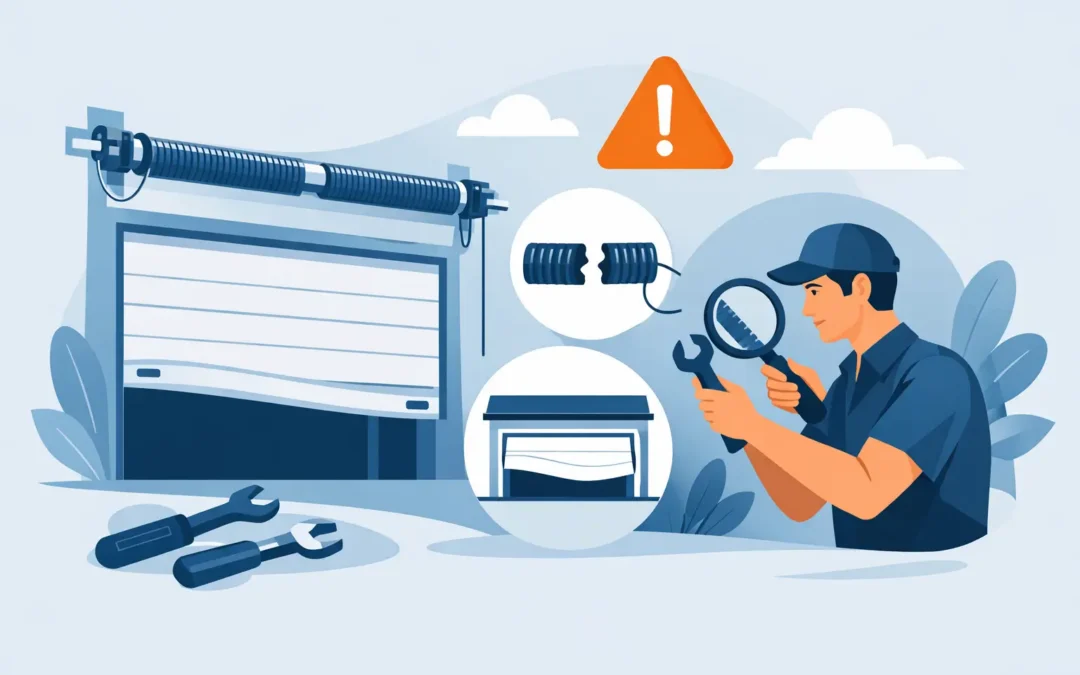
A garage door that suddenly feels too heavy is not just an inconvenience. It can be one of the clearest garage spring repair signs that a critical part of the door system has failed. Springs carry most of the door’s weight, allowing the opener to move a heavy door with controlled force. When they weaken or break, the door can become difficult to operate, unsafe to use, and hard on the opener.
For homeowners, that can mean being unable to get a vehicle out of the garage. For businesses, a failed spring can interrupt deliveries, restrict access to a service bay, or create a safety concern for employees and customers. Knowing what to watch for helps you stop using the door before a smaller issue turns into a larger repair.
Why Garage Door Springs Matter
Most residential overhead doors use either torsion springs mounted above the door opening or extension springs installed alongside the horizontal tracks. Commercial doors may use larger torsion spring systems designed for heavier doors and higher cycle counts. Regardless of the configuration, the job is the same: counterbalance the weight of the door.
A properly balanced door should open and close smoothly without the opener straining, jerking, or making excessive noise. Springs are under extreme tension, however, and they wear with every cycle. A cycle is one complete opening and closing of the door. The lifespan of a spring depends on its rating, the door’s weight, weather conditions, maintenance history, and how often the door is used.
Because spring failure can happen without much warning, it pays to recognize changes in how the door looks, sounds, and moves.
7 Garage Spring Repair Signs to Watch For
1. You heard a loud bang in the garage
A broken torsion spring often makes a sharp, loud sound when it releases tension. Many homeowners describe it as a gunshot, a firecracker, or something heavy falling in the garage. If you hear that sound and the door will no longer open normally, a broken spring is a likely cause.
Do not assume the problem is the opener. Trying to run the opener repeatedly can damage its motor, gears, rail, or trolley because it is attempting to lift a door without spring assistance.
2. The door feels unusually heavy
With a broken or severely weakened spring, even a standard residential garage door can feel far heavier than expected. If you disengage the opener using the emergency release and cannot safely lift the door by hand, stop there. The door may be at or near its full dead weight.
A heavy door is especially urgent when a vehicle is trapped inside. It may be tempting to recruit several people and force the door open, but an improperly supported door can fall suddenly. A qualified technician has the tools and training to secure and repair the system safely.
3. The door opens only a few inches, then stops
Modern openers are designed to sense unusual resistance. When a spring breaks, the opener may lift the door a short distance and then reverse, stop, or hum without moving the door. This is a protective response, not a problem to override.
The same symptom can also come from a damaged track, a binding roller, or an opener issue. That is why a professional inspection matters. The right repair depends on the actual cause, and replacing parts based only on a guess can waste time and money.
4. There is a visible gap in the torsion spring
Look above the garage door opening, but do not touch the spring or its hardware. A torsion spring that has broken will usually have a noticeable separation in the coil, often about two inches wide. This visible gap is one of the most reliable signs of a broken spring.
Extension springs can be harder to assess from the ground. Look for a spring that is stretched unevenly, hanging loose, or no longer connected correctly to its cable or pulley system. If anything appears loose or out of place, keep people clear of the door and arrange service.
5. The door is crooked or moves unevenly
A garage door that rises higher on one side than the other needs attention. On a two-spring torsion system, one broken spring can leave the remaining spring carrying an uneven load. The door may bind in the tracks, tilt as it travels, or stop partway open.
Uneven movement is not always a spring problem. Frayed cables, worn drums, damaged rollers, or a bent track can cause similar behavior. But all of these conditions can affect safe operation, so the best response is the same: stop using the door until it has been inspected.
6. The cables are loose, slack, or off the drum
Garage door cables work with the springs to lift and lower the door evenly. When spring tension is lost, cables can loosen, unwind from the cable drums, or become tangled. A cable issue may leave the door hanging at an angle or stuck in place.
Never attempt to rewind a cable or reset it while the spring system is under tension. The cable may be a symptom of the failure, not the source of it. Restoring it without correcting the underlying issue can create a dangerous situation.
7. The door is getting noisier or less balanced over time
Not every spring problem begins with a sudden break. Squeaking, popping, grinding, or a door that gradually becomes harder to lift may indicate worn springs or other moving parts in need of service. A door that drifts down when manually raised halfway can also be out of balance.
Some noise may come from dry rollers, hinges, or bearings, so noise alone does not automatically mean spring replacement. Still, changes in sound combined with slower movement, visible wear, or poor balance are worth addressing before the door becomes inoperable.
What to Do When You Suspect a Broken Spring
First, keep the door closed if possible and do not operate it with the remote, wall button, or emergency release. A door with a failed spring may be too heavy for the opener and may not stay in place when disconnected. Keep children, pets, vehicles, and employees away from the area.
Next, look for obvious signs from a safe distance, such as a gap in the torsion spring, loose cables, or a door sitting unevenly in the opening. This information can help a service professional prepare for the repair, particularly for commercial doors with specialized springs or hardware.
If the door is open when the spring fails, treat the situation with added caution. Do not walk under it or attempt to pull it down manually. A technician can secure the door and determine the safest way to return it to service.
Why Spring Repair Is Not a DIY Project
Garage door springs store enough force to cause serious injury when handled incorrectly. The repair process involves selecting the correct spring size, safely releasing tension, installing and winding the replacement spring, setting cable tension, and confirming that the door is balanced and the opener is operating properly.
There is also a performance reason to leave the work to an experienced professional. The wrong spring may allow the door to move, but it can shorten opener life, create uneven travel, and increase wear on cables, rollers, and bearings. A correct repair is not simply about getting the door open again. It is about restoring controlled, dependable operation.
For double-door systems, technicians commonly recommend replacing both springs when one breaks. They have endured the same number of cycles, and the second spring may be near the end of its service life. There are exceptions, particularly when springs were replaced at different times or have different specifications, but the decision should be based on the door’s actual setup.
Preventing Future Spring Problems
Springs eventually wear out, but routine attention can help identify concerns earlier. Keep the tracks clear, listen for changes in operation, and schedule service if the door begins binding or losing balance. Avoid adding heavy insulation, decorative hardware, or other weight to the door without confirming that the spring system is sized correctly.
Commercial operators should also consider usage patterns. A door used dozens of times each day needs a maintenance approach that matches its cycle demands. Planned service can help facilities avoid unexpected downtime at loading areas, automotive bays, storage spaces, and secure access points.
When a garage door starts sending warning signs, prompt action protects more than the spring. It protects the opener, the door hardware, and the people who rely on that opening every day. Barcol Door Company can help homeowners and commercial facilities diagnose the issue and restore safe, reliable door operation with expert workmanship.