
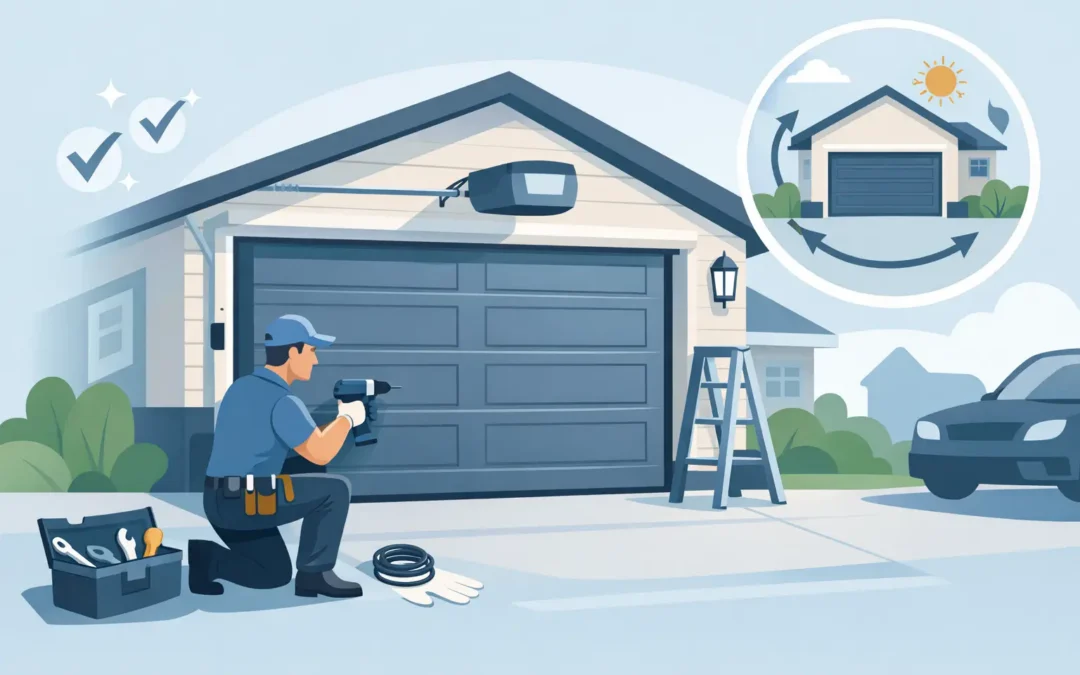
A garage door is usually the largest moving object in a home, and many families use it more often than the front door. That makes residential garage door installation more than a curb appeal project. The right door and a correct installation affect daily convenience, home security, energy efficiency, and the long-term reliability of the entire system.
For homeowners in Northern Illinois and Southern Wisconsin, the decision also has to account for real weather. Heavy snow, wind, cold temperatures, and humid summers put a garage door, its hardware, and its weather seal to work. Choosing a quality door is the first step. Having it measured, balanced, and installed by experienced professionals is what helps it perform as intended.
Start With the Door Your Home Actually Needs
Garage doors come in many styles, materials, insulation levels, and price ranges. There is no single best choice for every home. A detached garage used mainly for parking has different needs than an attached garage that shares a wall with a living space or serves as a workshop.
Steel overhead doors remain a practical choice for many homeowners. They are durable, available in a broad range of colors and panel designs, and can provide the classic raised-panel look or a more modern appearance. Steel doors with insulated cores can also reduce temperature swings and help make the garage more comfortable year-round.
Wood and wood-look doors offer a distinctive appearance, especially on traditional homes. Real wood can create exceptional curb appeal, but it requires regular maintenance to protect it from moisture and seasonal exposure. A steel door with a wood-grain finish may offer a similar visual effect with less upkeep. Aluminum and glass doors suit many contemporary homes, although they may not provide the same insulation or dent resistance as a heavier insulated steel door.
The best choice usually comes down to how the garage is used, the architectural style of the home, the level of maintenance you are willing to handle, and the budget for the project. A knowledgeable installer can walk through those trade-offs before an order is placed.
Why Residential Garage Door Installation Is Not a DIY Job
A garage door system looks straightforward from the driveway, but its safe operation depends on components working together under significant tension. The door must fit the opening correctly, move smoothly in its tracks, and sit level when closed. The springs must be properly sized to counterbalance the door’s weight. The opener must be matched to the door and adjusted to reverse when it encounters an obstruction.
Torsion springs and extension springs deserve particular caution. These parts store substantial energy. Improper handling can cause serious injury or damage to the door, vehicle, or garage structure. The same is true of worn cables, incorrectly aligned tracks, and brackets that are not securely attached to the framing.
Professional installation is not simply about getting the door up on the wall. It includes accurate measurements, inspection of the opening and framing, correct track placement, spring adjustment, safety testing, and final checks for quiet, balanced operation. That attention to detail helps avoid common issues such as a door that binds, gaps at the floor, reverses unexpectedly, or puts unnecessary strain on the opener.
Measure the Opening and the Space Around It
A proper installation begins before the new door arrives. The width and height of the finished opening are essential, but they are not the only measurements that matter. Installers also check the headroom above the opening, the side room along both jambs, and the backroom available inside the garage for horizontal tracks and the opener rail.
Low headroom garages may require specialized track configurations. A garage with limited depth can affect the type of opener or rail arrangement that will work best. Uneven floors, damaged jambs, or deteriorated framing should be addressed before the new system is installed. A new door cannot seal well against a floor that slopes sharply or framing that has shifted out of square.
This site review is also the right time to discuss exterior trim, weather sealing, and any electrical work needed for an opener. Solving those details early keeps the installation day efficient and prevents unwelcome surprises after the old door has been removed.
Insulation Matters More Than Many Homeowners Expect
An insulated garage door is not just for homes with heated garages. It can help limit heat loss from an attached garage, reduce outside noise, and add stiffness to the door sections. In a region with cold winters, that can make a noticeable difference near rooms located above or beside the garage.
Insulation is often described by R-value, which measures resistance to heat flow. A higher number generally provides better insulation, but it is not the only consideration. The quality of the weather seal, the condition of the walls and ceiling, and the frequency of garage use also affect the result.
For a detached garage that is rarely heated, a basic non-insulated door may be the sensible value choice. For an attached garage, a workshop, or a garage used for storage that is sensitive to extreme temperatures, an insulated door is often worth the additional investment. The right recommendation should be based on the home, not a one-size-fits-all upgrade.
Select an Opener That Matches the Door and Your Routine
A new garage door is a good opportunity to evaluate the opener. An older opener may still run, but it may lack the safety, convenience, and security features homeowners now expect. Modern openers commonly include battery backup, keypad access, motion-sensing lights, smartphone control, and automatic closing options.
The drive type matters as well. Chain-drive openers are dependable and cost-effective, but they can be louder. Belt-drive units are typically quieter, making them a strong option when the garage is below a bedroom or next to a living area. Wall-mount openers can free up ceiling space in garages where overhead storage or a tall vehicle creates clearance concerns.
The opener should never be used to force an improperly balanced door. A door that is too heavy, drags in the tracks, or has weak springs will shorten opener life and create a safety concern. The door should be balanced and operating correctly before the opener is connected and programmed.
Do Not Treat Safety Features as Extras
Garage door safety has improved significantly, but those protections only work when they are installed and tested correctly. Photo-eye sensors near the floor must be aligned so the door reverses if a person, pet, bicycle, or vehicle crosses the opening. The opener’s force and travel limits must also be set to prevent the door from closing too hard or failing to seal at the floor.
A complete installation should include testing the reversal system, examining the cables and rollers, and verifying that the emergency release can be operated when needed. Homeowners should know how to use the emergency release, especially during a power outage, while recognizing that a door with a broken spring may be too heavy to lift safely by hand.
Once installed, a simple monthly visual check can catch developing problems. Look for frayed cables, loose hardware, worn weather seals, unusual noise, or a door that no longer moves evenly. If the door is shaking, binding, or closing unevenly, stop using it and arrange service rather than waiting for a complete failure.
What a Professional Installation Should Include
A dependable installation process starts with clear recommendations and accurate pricing. The installer should help identify a door style, construction, insulation level, and opener that suit the property and budget. Once the product is selected, the work should include removal of the existing door when applicable, installation of the new system, adjustment of springs and hardware, opener setup, safety testing, and a walkthrough of basic operation and care.
It is also worth asking who will handle future repair needs. Garage doors are mechanical systems, and even quality components eventually need adjustment or replacement. Working with a local company that can provide installation, repair, replacement parts, and ongoing support gives homeowners one dependable source when service is needed.
Barcol Door Company brings more than a century of door experience to residential projects, with the product selection and professional workmanship homeowners expect from a long-established local provider.
Plan for Long-Term Performance
The lowest initial price is not always the lowest cost over the life of the door. A poorly fitted door, weak hardware, inadequate weather sealing, or an opener that is not suited to the application can lead to repeated service calls and early replacement. On the other hand, it is possible to overspend on features that will not add meaningful value to the way the garage is used.
A practical residential garage door installation balances appearance, durability, insulation, safety, and budget. It should leave the door operating quietly, sealing properly, and ready for daily use from the first cycle. When you choose the door around the home and rely on experienced installation, the result is simple: a garage door you can count on every time you press the button.