
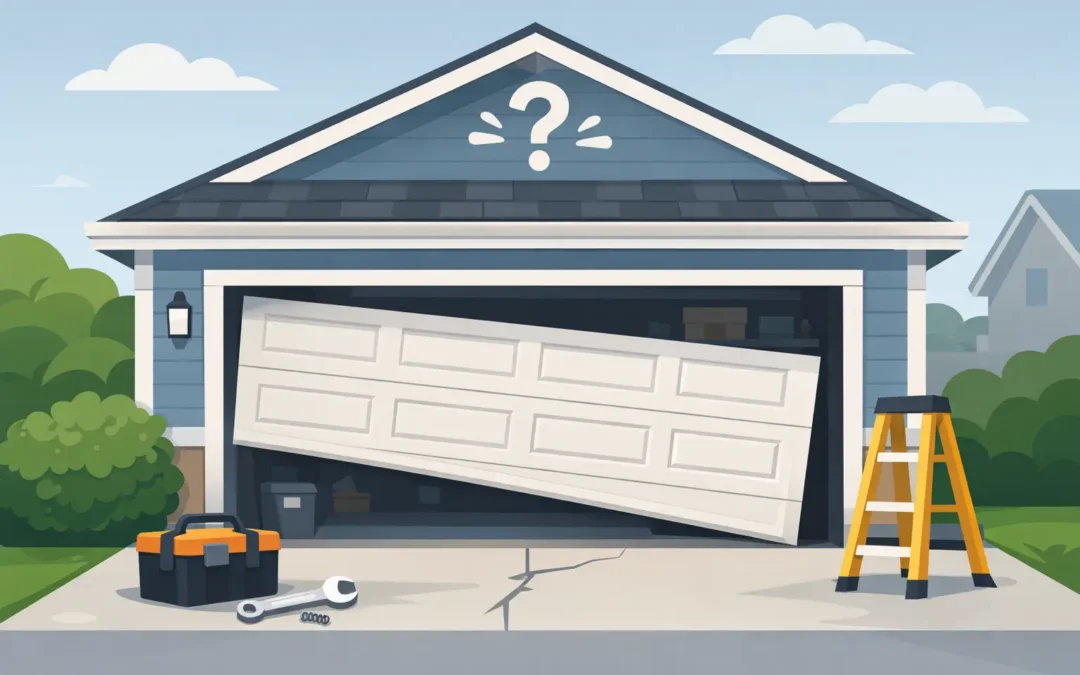
A garage door that suddenly looks uneven is hard to ignore. If you are asking, “why is my garage door crooked,” the short answer is that something in the system is no longer moving evenly. That might be a worn cable, a track problem, damaged rollers, spring issues, or even a door section that has shifted out of alignment. In some cases, it is a minor adjustment. In others, it is a sign that the door is no longer safe to operate.
A crooked garage door is not just a cosmetic issue. When one side rises higher than the other, or the bottom sits at an angle when closed, the door is under uneven stress. That added strain can wear out parts faster, make the opener work harder, and create a real risk of the door jamming or dropping unexpectedly.
Why is my garage door crooked when it opens or closes?
Garage doors are designed to move in a balanced, controlled path. The springs carry most of the door’s weight, the cables help lift it evenly, the rollers guide it through the tracks, and the opener provides movement. When any one of those components starts failing, the whole system can go out of square.
The most common cause is a cable problem. If one lifting cable becomes frayed, stretched, loose, or slips off the drum, one side of the door may rise while the other lags behind. That creates the crooked appearance many homeowners notice first thing. This is especially common when a door has been operating with worn parts for a while and the problem finally becomes visible.
Track damage is another frequent issue. If a vertical or horizontal track is bent, loose, or pulled away from the framing, the rollers may not travel evenly. A door can start binding on one side, which throws off alignment. Sometimes this happens after a minor bump from a vehicle or from years of vibration and hardware loosening.
Spring trouble can also cause the door to sit unevenly. Torsion and extension spring systems are meant to counterbalance the weight of the door. If a spring is worn out, improperly adjusted, or broken, the lifting force changes. In a two-spring setup, one weak spring can make the system feel off-balance before it fully fails.
Damaged rollers or worn hinges may be part of the problem as well. If rollers are cracked, seized, or coming out of the track, one side of the door may not move as smoothly as the other. Hinges that are bent or loose can shift the door sections enough to create a visible lean.
In some cases, the issue is with the door itself. A panel may be warped, cracked, or damaged from impact. Wood doors can shift with age and moisture. Steel doors can bend if struck. If the sections are no longer sitting true, the entire door can look crooked even if the hardware is still mostly intact.
What a crooked garage door usually looks like
Not every crooked door looks the same. Sometimes the bottom edge is slanted when the door is closed, leaving a gap on one side. Sometimes the door starts straight but twists as it opens. In other cases, one side appears higher than the other when the door is halfway up.
These details matter because they can point to different causes. A gap at the bottom often suggests cable tension, track alignment, or floor-level issues. A twist during travel may point to rollers, hinges, or track problems. A door that jerks upward unevenly can indicate a spring or cable issue that should be addressed quickly.
If the opener sounds strained, the door shakes, or you hear popping, scraping, or grinding, that is another sign the system is not moving correctly. Once a garage door starts operating unevenly, continued use usually makes the problem worse.
What you can safely check before calling for service
There are a few things a homeowner can inspect without taking unnecessary risks. Start with a visual check while the door is fully closed. Look at the bottom seal and see whether one side touches the floor before the other. Then step back and compare the tracks on both sides to see if anything appears bent or loose.
You can also inspect the rollers and hinges for obvious damage. If a roller is cracked or sitting oddly in the track, that may be part of the issue. Look at the lift cables near the drums and bottom brackets, but do not touch them. If one cable appears loose, frayed, or out of place, stop using the door.
Pay attention to the springs, too. A visible gap in a torsion spring usually means it has broken. Extension springs may look stretched out or uneven. Again, this is a look-only inspection. Springs and cables are under high tension and should not be adjusted without the right tools and training.
It is also worth checking for simple obstructions. Debris in the track, hardened grease buildup, or a loose bracket can affect travel. But if the door is clearly crooked, avoid forcing it up or down to test it further.
When a crooked garage door becomes a safety issue
A garage door can weigh hundreds of pounds. If it is visibly uneven, that weight may not be supported properly. That is why a crooked door should be treated as more than a nuisance.
The biggest risk is component failure. A frayed cable can snap. A roller can jump the track. A bent track can cause the door to bind and stop suddenly. If the opener keeps pushing against resistance, it can damage more parts or pull the door farther out of alignment.
There is also a personal safety concern. If someone tries to manually lift a door with a broken spring or failing cable, the door can slam shut. If the door is already racked or twisted, that risk increases. For homeowners and commercial property managers alike, the smart move is to stop operation until the problem is diagnosed.
Why is my garage door crooked if the opener still works?
This is a common question. The opener does not actually do the heavy lifting on a properly functioning garage door. Its job is to guide the movement, while the springs and hardware handle the weight. So a garage door can still open with the opener even when the system is out of balance.
That does not mean the opener is fine, though. If the door is crooked, the opener is likely working harder than it should. Over time, that can wear down the motor, trolley, gear assembly, or rail components. What starts as a cable or track issue can turn into a more expensive repair if it is ignored.
For commercial sectional doors, the same principle applies. An operator may still move the door, but uneven travel usually points to a hardware issue that needs professional attention. In higher-cycle environments, delaying repair can lead to downtime and added wear on multiple components.
Repair or replace?
It depends on what caused the problem and how long it has been going on. If the issue is limited to a cable, roller, hinge, track adjustment, or spring replacement, repair is often the right answer. Many crooked garage doors can be corrected without replacing the full door.
Replacement makes more sense when the door sections are badly damaged, the system has multiple failing components, or the door is older and has recurring problems. If a panel is bent and the track, rollers, and spring system have also seen better days, putting money into repeated repairs may not be the best value.
This is where an experienced technician can save you time and guesswork. A proper inspection should look at the full system, not just the visible symptom. The goal is not only to straighten the door but to make sure it operates safely, seals properly, and does not fail again a month later.
The value of fast, professional service
When a garage door goes crooked, quick service matters. A same-day repair can prevent further damage, restore security, and keep a small issue from turning into a full breakdown. For homeowners, that means getting the car in and out safely and protecting the home. For commercial properties, it means maintaining access, security, and day-to-day operations.
At Barcol Door Company, that kind of repair call is treated for what it is – a problem that needs a clear diagnosis and competent workmanship. With garage door systems, there is not much value in trial and error. The right fix comes from understanding how the entire door is supposed to work and correcting the actual cause.
If your garage door is crooked, the best next step is simple: stop using it, take a quick visual look for obvious damage, and get it inspected before the problem gets bigger. A door that moves evenly is not just easier on the equipment. It is safer for everyone who depends on it.