
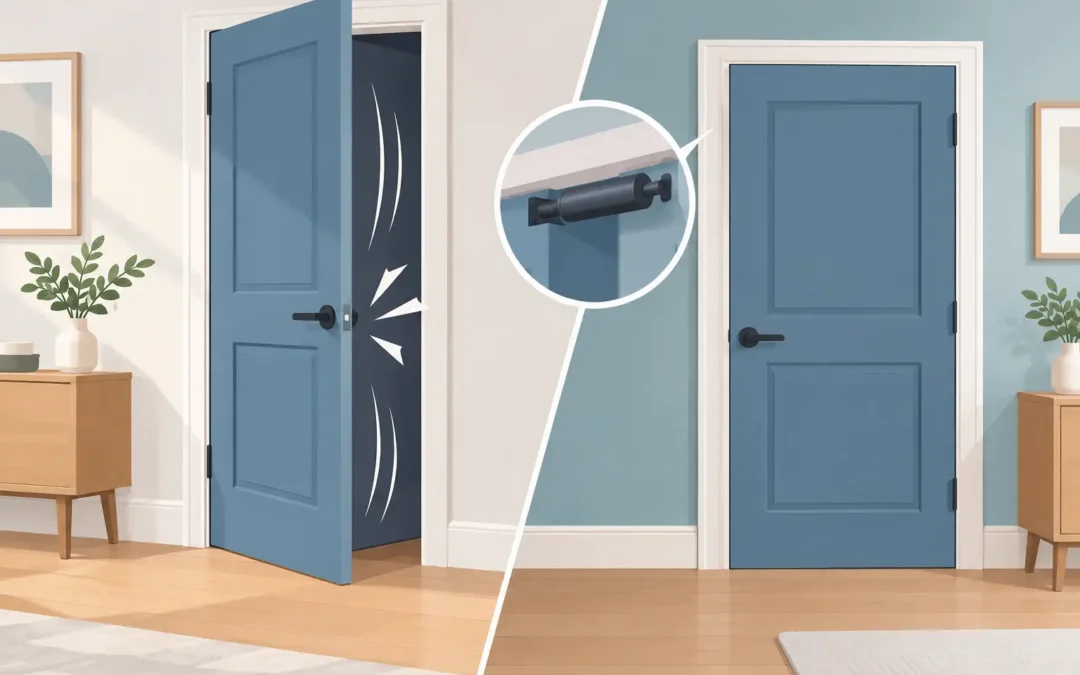
A door that slams can rattle windows, interrupt a classroom or office, wake a household, and damage the opening every time it hits the frame. Understanding why doors slam shut is the first step toward a safer, quieter, longer-lasting door system. In many cases, the cause is simple. In others, especially with commercial, fire-rated, or high-traffic doors, the problem calls for professional adjustment or repair.
Why Doors Slam Shut
Doors do not usually slam without a force acting on them. That force may be air pressure, gravity, a strong door closer, worn hinges, or a door that is no longer properly aligned in its frame. The right fix depends on the door type and where it is installed.
A lightweight interior door may slam because an HVAC system changes the air pressure in a hallway. A heavy steel entry door may slam because its closer has been adjusted too aggressively. A commercial fire door may close fast because a damaged closer is no longer controlling the sweep and latch speed correctly. Treating every slamming door the same can create bigger problems, particularly when code-required hardware is involved.
Air pressure and open windows
Air movement is one of the most common reasons for a door that seems to have a mind of its own. Opening a window, exterior door, garage door, or even a large exhaust fan can change air pressure inside a building. The pressure difference pulls or pushes nearby swinging doors.
This often happens in homes during seasonal weather changes and in commercial buildings with large HVAC systems. A door may only slam when a particular exterior door is opened, when the furnace starts, or when a bathroom or kitchen exhaust fan runs. If the behavior is inconsistent, air pressure is a likely factor.
Start by noticing the conditions around the problem. Does the door move when windows are open? Does it happen only when another door opens? If so, the door hardware may be functioning normally, but the building needs better air balance or a device that cushions the closing action.
Gravity, uneven floors, and an out-of-plumb frame
A door should remain reasonably stable when left partially open. If it steadily swings closed from nearly any position, gravity may be taking over. That can happen when the frame was installed slightly out of plumb, the floor has settled, or the hinges have shifted over time.
Older homes and commercial facilities are especially likely to develop this issue as buildings settle. A door may also start rubbing at the top, bottom, or latch side of the frame. Those symptoms point to alignment rather than a simple latch problem.
Minor hinge adjustments may help, but bending hinges or forcing the door into position can damage the hardware and finish. For a commercial opening, a professional should evaluate the frame, hinges, door weight, and clearances before making changes.
Loose Hinges Can Make a Door Slam
Hinges carry the full weight of a swinging door. When hinge screws loosen, hinge leaves wear, or the hinge barrel becomes damaged, the door can sag or shift. That movement changes how the door swings and how it meets the latch and frame.
On a residential wood door, tightening loose screws may solve the problem if the screw holes are still sound. If screws spin freely, the underlying wood may be stripped and need repair before the hinge can hold properly again. Replacing one screw with a longer fastener is sometimes appropriate, but it must be done carefully to avoid splitting the jamb or interfering with hidden wiring.
On hollow metal, steel, or high-use commercial doors, hinge wear can be more involved. Continuous hinges, ball-bearing hinges, pivots, and specialty hinges each have different service requirements. A heavy door that slams and drags should not be ignored. Continued use can damage the frame, closer, latch, and strike, turning a manageable repair into a more expensive replacement.
Door Closers That Are Set Too Fast
A hydraulic door closer is designed to close a door in a controlled way. It provides enough force to latch the door while slowing it down before impact. When the closer is worn, leaking, incorrectly sized, or improperly adjusted, the door may swing shut with excessive speed and force.
Most closers control two separate portions of the closing cycle. Sweep speed governs most of the door’s travel from open to nearly closed. Latch speed controls the final few inches needed for the latch to engage. If either setting is too fast, the door can slam. If the settings are too slow, the door may not latch, compromising security and, on fire doors, proper operation.
Wind, stack pressure in taller buildings, door weight, weatherstripping, and the type of latch all affect closer performance. That is why a closer adjustment is not simply a matter of turning a screw until the door feels better. Small adjustments can make a meaningful difference. Turning adjustment valves too far can cause leaks or disable the closer.
Commercial doors may also use hold-open arms, delayed-action closers, floor closers, concealed closers, or electromagnetic hold-open devices. These systems should be inspected by trained technicians, particularly in schools, healthcare facilities, assisted living properties, and other buildings where accessibility and life-safety requirements matter.
Check the Latch, Strike, and Weather Seal
Sometimes the door is not truly slamming because it swings too fast. Instead, it may be striking the frame because the latch and strike are misaligned. The door closes, catches briefly, then snaps into place with a loud bang.
Look for scrape marks on the strike plate, chipped paint around the latch edge, or a latch that requires pushing, lifting, or pulling the door to engage. A worn latch, loose strike screws, warped door, or shifting frame can all create this condition.
Weather seals can also change how a door closes. New perimeter gasketing, door sweeps, and thresholds improve energy efficiency, but they add resistance. If a closer is adjusted to overcome that resistance without careful testing, the door can close too hard. Proper installation balances a tight seal with reliable, controlled latching.
A Safe Way to Narrow Down the Cause
Before adjusting hardware, observe the door through several open-and-close cycles. Note whether it slams from the fully open position, only during the final few inches, or only when air is moving through the building. Check for loose hinges, visible closer oil leaks, rubbing edges, and latch marks on the frame.
For doors with closers, avoid removing the closer arm or disassembling the closer body. These components are under spring tension and can cause injury. Do not wedge open a fire door, tape over its latch, or disable its closer to stop the noise. A fire door must self-close and positively latch to do its job.
A residential interior door may benefit from a simple hinge repair or a soft-close solution. An exterior, commercial, fire-rated, or ADA-sensitive opening deserves a more complete assessment. The goal is not merely a quieter door. It is a door that closes smoothly, latches securely, remains accessible, and protects the opening from repeated impact.
When to Call a Door Professional
Call for service when a door is heavy, has a leaking closer, drags on the frame, will not latch consistently, or slams despite basic hinge tightening. Prompt service is especially worthwhile for commercial doors because repeated slamming can damage panic hardware, glass, locks, frames, and closers while creating a safety concern for employees, customers, and visitors.
Barcol Door Company helps homeowners and commercial facilities identify the source of door problems and make practical repairs, from hinges and closers to frames, hardware, and replacement doors. For high-traffic openings, routine inspections can prevent a minor adjustment issue from becoming an emergency repair.
A quiet, controlled close is a sign that the door, frame, and hardware are working together as they should. Address the slam early, and the door will be safer to use, easier on the building, and better prepared for years of daily traffic.