
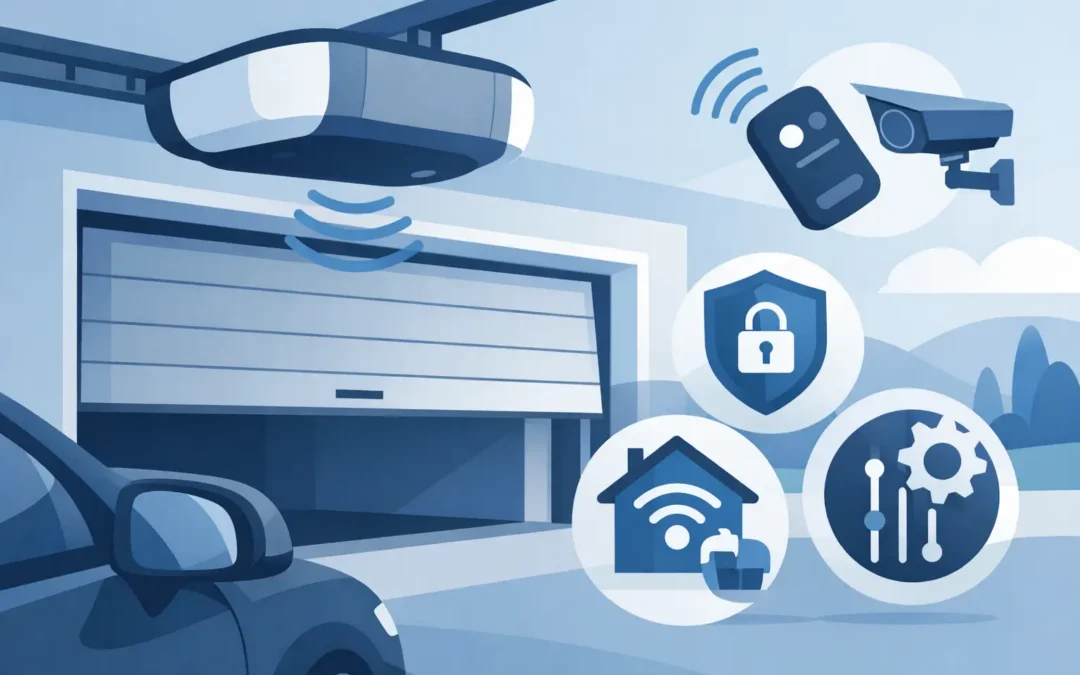
A garage door opener should do more than lift and lower the largest moving door in your home. The best garage door opener features make daily access easier, protect your property, and help prevent the frustrating breakdowns that leave a vehicle stuck inside or outside the garage.
For homeowners, the right choice usually comes down to how the garage is used. A detached garage with a lightweight door has different needs than an attached garage below a bedroom, a garage used as a main entrance, or a space that stores tools, bikes, and other valuables. The best opener is not always the one with the longest feature list. It is the one properly matched to the door, the household, and the conditions it will handle year after year.
Start With the Right Drive System
The drive system has the biggest effect on noise, maintenance, and price. Chain-drive openers use a metal chain to move the trolley. They are durable, affordable, and a practical choice for many detached garages. The trade-off is noise. A chain drive can be noticeable when the garage shares a wall, ceiling, or floor with living space.
Belt-drive openers use a reinforced belt instead of a chain. They typically operate more quietly and smoothly, which makes them a strong choice for attached garages and bedrooms located above the garage. Belt drives generally cost more, but many homeowners find the quieter operation worthwhile.
Screw-drive systems use a threaded steel rod and have fewer moving parts than some alternatives. Performance can vary with temperature changes, so they are not automatically the best fit for every Northern Illinois or Southern Wisconsin home. Direct-drive systems are also exceptionally quiet because the motor itself moves along the rail, though availability and cost may be factors.
A professional should also confirm that the opener has enough lifting capability for the door. A properly balanced garage door should be easy to lift manually when disconnected from the opener. An opener is designed to move a balanced door, not compensate for worn springs, damaged rollers, or a door that is too heavy for its hardware.
Best Garage Door Opener Features for Everyday Use
Battery backup
A battery backup allows the opener to operate during a power outage. This feature matters most for attached garages, homes without a convenient alternate exit, and households that rely on the garage as their primary way in and out.
Without battery backup, the emergency release can still allow manual operation, but that is less convenient and may be difficult for some homeowners. A backup battery adds useful peace of mind during storms, outages, and winter weather events when getting a vehicle out quickly matters.
Wi-Fi and smartphone control
Smart openers let homeowners check door status and operate the door through a compatible mobile app. The practical value is simple: you can verify whether the door is closed after leaving home, open it for a trusted visitor, or receive an alert if it has been left open.
This feature depends on reliable Wi-Fi in the garage. A weak signal can limit performance, so it is worth testing connectivity before choosing an opener primarily for app control. Smartphone access is helpful, but it should supplement dependable wall controls and remotes, not replace them.
Automatic closing and alerts
Some smart systems can send reminders when a garage door remains open or close it automatically after a selected period. This is especially useful for busy households, families with teenagers, and homeowners who have had the nagging experience of turning around halfway to work to check the garage.
Automatic closing settings should be used thoughtfully. If children, pets, vehicles, or frequent activity are common in the garage, choose settings that fit the household routine and keep the safety sensors in good working order.
Quiet operation
Quiet operation is more than a comfort feature. In an attached garage, a loud opener can interrupt sleep, wake a baby, or create a daily annoyance for people who leave early or arrive late. Belt-drive and direct-drive models are usually the better choices when noise is a concern.
Noise can also come from the door itself. Worn rollers, loose hardware, damaged hinges, and an unbalanced door can make even a quality opener sound rough. If an opener suddenly becomes louder, the answer may be a door repair rather than a new motor.
Safety Features Are Not Optional
Every modern residential opener should include photo-eye safety sensors near the bottom of the door tracks. These sensors project an invisible beam across the opening. If something interrupts the beam while the door is closing, the opener should reverse.
The reversing mechanism is another critical safeguard. When the closing door encounters resistance, it should stop and reverse rather than continue applying force. Both the photo eyes and reversing function should be tested regularly according to the manufacturer instructions.
Do not bypass, tape over, or misalign safety sensors to get a door moving. A sensor problem may look minor, but it can prevent the opener from operating safely. Dust, spiderwebs, bumped brackets, wiring damage, or sun glare can all affect photo-eye performance. A trained technician can identify whether the problem is the sensors, wiring, opener logic board, or the door itself.
Motion-detection lighting is also worth considering. A bright integrated light improves visibility when entering the garage at night and can make the space safer when unloading groceries or walking through it. LED lighting is typically longer-lasting and uses less energy than older bulb types, but confirm that the bulbs are approved for use with the opener to avoid interference or premature failure.
Security Features That Protect the Garage
A garage door is often one of the most commonly used entrances to a home. Rolling-code technology is a key security feature because it changes the remote signal after each use, making it much harder for someone to copy the code and gain access.
For homeowners using smart controls, account security matters too. Use a strong password, enable available multi-factor authentication, and remove access for former residents, contractors, or guests who no longer need it. If a remote is lost or a vehicle is sold, erase it from the opener memory as soon as possible.
Vacation lock settings can disable remote operation while you are away, while still allowing the door to be operated from inside when needed. A manual deadbolt or slide lock should not be engaged while the opener is connected, since attempting to run the door against a locked door can damage the opener or door components.
Some opener models include an automatic garage door lock that engages when the door closes. This can add another layer of protection, particularly for garages that hold expensive equipment or connect directly to the home. It is a useful option, but it does not replace sound door construction, properly working hardware, and good habits.
Consider Access, Not Just Opening Power
Keypad entry systems are convenient for families, dog walkers, and children who need access without carrying a remote. Look for a keypad with illuminated buttons if the garage is often used after dark. Temporary PIN codes are useful when giving short-term access to a service provider or visitor.
A wireless wall control can be helpful when a traditional wired button is not practical, while a compact visor remote keeps vehicle access simple. For households with multiple drivers, make sure the opener supports enough remotes and user access options for everyone who needs them.
If the garage is used as a workshop or hangout space, consider an opener with a wall control that provides clear door-status information and easy light operation. Small details like this reduce guesswork and make the system easier for every member of the household to use safely.
Installation Quality Makes the Features Work
Even the most capable opener will not perform well if it is installed on a poorly balanced or damaged garage door. Before installation, the door springs, cables, tracks, rollers, and hinges should be inspected. The opener rail must be secured correctly, force settings must be adjusted properly, and safety sensors need accurate alignment.
This is where experienced installation matters. Barcol Door Company helps homeowners select openers that fit their door, budget, and daily needs, then installs and tests the system for safe operation. That approach helps avoid the common mistake of replacing an opener when the real issue is worn door hardware or a failing spring.
When comparing models, prioritize a dependable drive system, safety sensors, rolling-code security, and professional installation before adding convenience upgrades. Battery backup, Wi-Fi control, automatic alerts, and quiet operation can make a meaningful difference, but their value depends on how you use the garage.
A garage door opener should feel uneventful: press the button, the door moves smoothly, and you leave knowing it will close securely behind you. If yours is noisy, unreliable, or struggling to lift the door, a professional evaluation can help you choose the right next step before a minor issue becomes an inconvenient repair.