
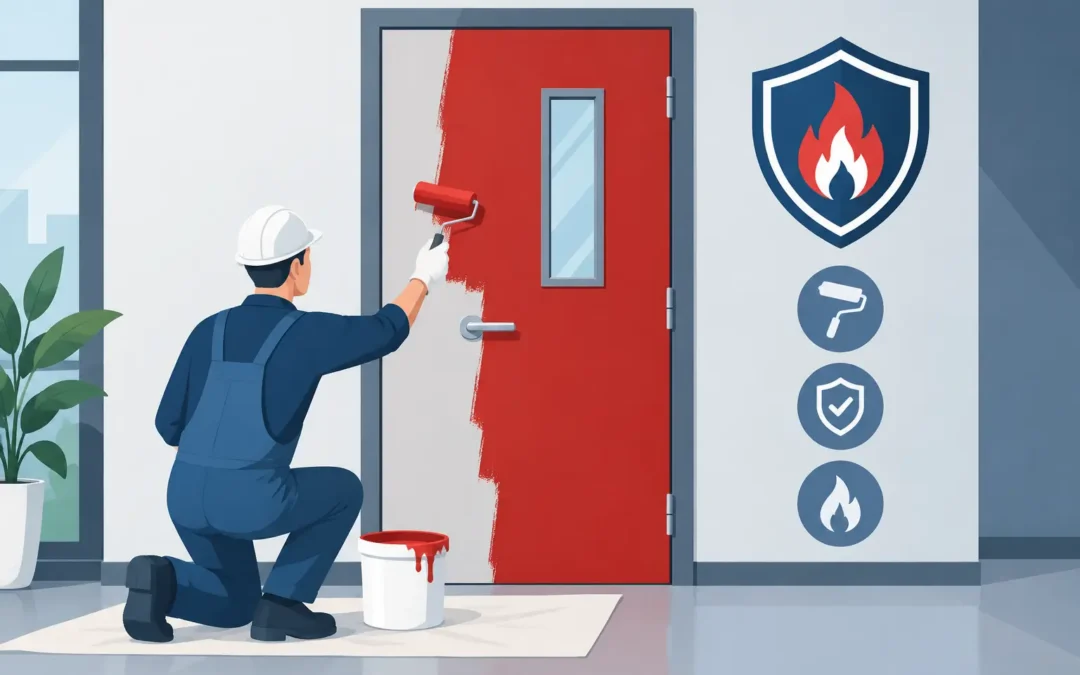
A fire door can look worn long before it stops doing its job. Scuffs, fading, old tenant colors, and surface rust are common reasons facility managers and homeowners ask, “can fire doors be painted?” In many cases, yes – but only when painting is done without changing the door assembly or interfering with the components that allow it to resist fire and smoke.
A fire door is not simply a heavy door with a label. Its rating applies to a tested assembly that can include the door, frame, hinges, latch, closer, glass kit, gasketing, and other hardware. A fresh coat of paint may be acceptable. Covering a label, painting over a smoke seal, or causing a latch to bind is not.
Can Fire Doors Be Painted Without Losing Their Rating?
The practical answer is: it depends on the manufacturer’s instructions, the condition of the opening, and the type of fire door assembly. Field painting is commonly permitted on steel and hollow metal fire doors, particularly when it is part of normal maintenance. However, the work must preserve the door’s listed construction and operating condition.
Before painting, identify the door and frame labels. These labels typically show the manufacturer, fire-protection rating, and other listing information used by inspectors and authorities having jurisdiction. They must remain visible and legible after the work is complete. Do not paint over, remove, scrape, or cover them with tape that leaves adhesive behind.
The door must also continue to close and latch on its own. A fire door that has been painted but will not fully close, latch, or seal is not doing the job it was designed to do. This is why a cosmetic project should begin with an operational check, not a paint sample.
Why the Whole Fire Door Assembly Matters
Fire-rated openings are designed to compartmentalize a building during a fire. The door helps slow the spread of flames and, in many cases, smoke, giving occupants more time to exit and helping protect adjacent areas of the building.
That performance depends on details that are easy to overlook during maintenance. Heavy paint buildup along the edges can reduce clearance and make the door drag. Paint on hinges can affect movement. Coating the latch bolt or strike can keep the door from latching. Paint on an intumescent seal or smoke gasket can affect how that material performs.
The same concern applies to door closers, panic hardware, kick plates, vision panels, and automatic closing devices. These components do not all need to look unfinished, but they should not be coated in a way that prevents inspection, adjustment, or normal operation. If the opening has specialized fire-exit hardware, coordinate the work with a qualified door professional rather than treating it like an ordinary repainting project.
What to Check Before Painting a Fire Door
Start by confirming that the door is actually fire-rated. In commercial buildings, look for a permanent label on the hinge edge of the door and on the frame. A label may also be present on the top edge. In a home, the door between an attached garage and living space may be a rated or code-required door, but construction requirements vary by location and building age. Do not assume a solid-looking door is fire-rated.
Next, inspect the opening. The door should swing freely, close completely, and positively latch without being pushed or pulled into place. Check for damaged hinges, loose screws, missing fasteners, excessive gaps, bent frames, rust, delamination, cracked glass, or holes from removed hardware. Those problems should be corrected before cosmetic work begins.
Also review any product documentation available for the door, frame, seals, and finish. Manufacturers may specify compatible coatings, preparation requirements, or surfaces that should not be painted. For a rated wood door, the acceptable finishing process may be more restrictive than for a hollow metal door. A specialty veneer, factory-applied finish, or labeled glass opening deserves particular care.
When the opening serves a school, healthcare facility, apartment building, hotel, theater, industrial site, or other occupied commercial property, involve the facility manager and follow the building’s maintenance procedures. The authority having jurisdiction may have additional requirements, especially where annual fire door inspections are required.
How to Paint a Fire Door the Right Way
Preparation matters more than speed. Clean the surface to remove dirt, oils, and loose material, then address rust or flaking paint according to the door manufacturer’s recommendations. For a steel door, use a coating system suitable for metal and the environment it faces. Exterior doors and doors exposed to moisture need more protection than an interior corridor opening.
Mask the label carefully so it stays readable. Protect the latch, strike, hinges, closers, gasketing, and any intumescent materials from overspray and excess coating. If hardware needs to be removed for a better finish, keep track of the correct fasteners and reinstall it exactly as intended. Substituting screws or altering hardware locations can create a compliance issue.
Apply light, even coats instead of one heavy coat. Thick paint at the door edges, in the hinge mortises, or around the latch area is a common cause of sticking and failed latching. Allow the coating to cure fully before returning the opening to service.
After painting, test the door again. Open it fully, release it, and watch whether the closer returns it to the frame. Confirm that the latch engages without manual assistance. Check that the door is not rubbing the frame, binding against seals, or leaving an unusually large gap. If it does not operate properly, stop using paint as the explanation and have the opening evaluated.
Parts of a Fire Door You Should Not Paint Over
Some areas should remain clear, readable, or functional. Avoid coating the fire door and frame labels, smoke seals, intumescent seals, latch bolts, strike openings, closers, panic devices, hinges, lock cylinders, and moving hardware. Do not fill or paint over holes, cutouts, or damage that needs a listed repair.
Glass openings require special attention. Fire-rated glass, glazing beads, and glazing compounds are part of the tested assembly. Painting nearby trim may be acceptable, but do not alter the glass, add film, replace glazing materials, or cover markings without confirming the product requirements.
A door coordinator on a pair of fire doors is another item that should never be painted into place. The coordinator helps ensure the leaves close in the correct order. If it sticks or fails, the inactive leaf may not latch, leaving the opening compromised.
When Repainting Is Not the Right Fix
Paint can improve appearance, but it cannot correct a failing fire door. Replacement or repair may be the better choice when a door is warped, severely rusted, damaged by impact, missing its label, drilled with unapproved holes, or unable to latch consistently. The same is true when a frame is bent or the door has been altered for hardware that was not designed for that opening.
Be cautious with older doors that have several paint layers. Repeated coatings can hide labels, build up at edges, and conceal corrosion or damage. In older facilities, existing coatings may also require safe evaluation before sanding or stripping. A qualified contractor can determine whether the door can be restored, repaired with approved methods, or should be replaced with a properly rated assembly.
For homeowners, a garage-to-house door that will not close or latch deserves attention even if the immediate goal is a cleaner appearance. That opening is part of the separation between the garage and living area. A professional inspection can identify whether the issue is paint buildup, a closer adjustment, worn hinges, or a door and frame problem.
Get the Finish and Protection Right
A well-painted fire door can look professional and continue to provide the protection the opening was designed to deliver. The key is respecting the door as a life-safety system, not just a surface that needs color.
For commercial properties across Northern Illinois and Southern Wisconsin, Barcol Door Company can help assess fire-rated doors, frames, and hardware before a small maintenance project becomes a compliance or operational problem. When there is any doubt about labels, hardware, door condition, or proper repair methods, having the opening evaluated is the practical next step.