A door can look perfectly sound and still create a daily problem. It sticks at the latch, closes too fast, fails to lock, leaks cold air, or will not release quickly in an emergency. In many cases, the door itself is not the issue. The door hardware is.
For homeowners, the right hardware improves security, weather protection, and everyday convenience. For commercial buildings, it also affects code compliance, accessibility, life safety, maintenance costs, and the ability to keep an operation moving. Selecting the right components from the start is usually less expensive than repeatedly repairing hardware that was never suited to the opening.
Door Hardware Has a Job to Do
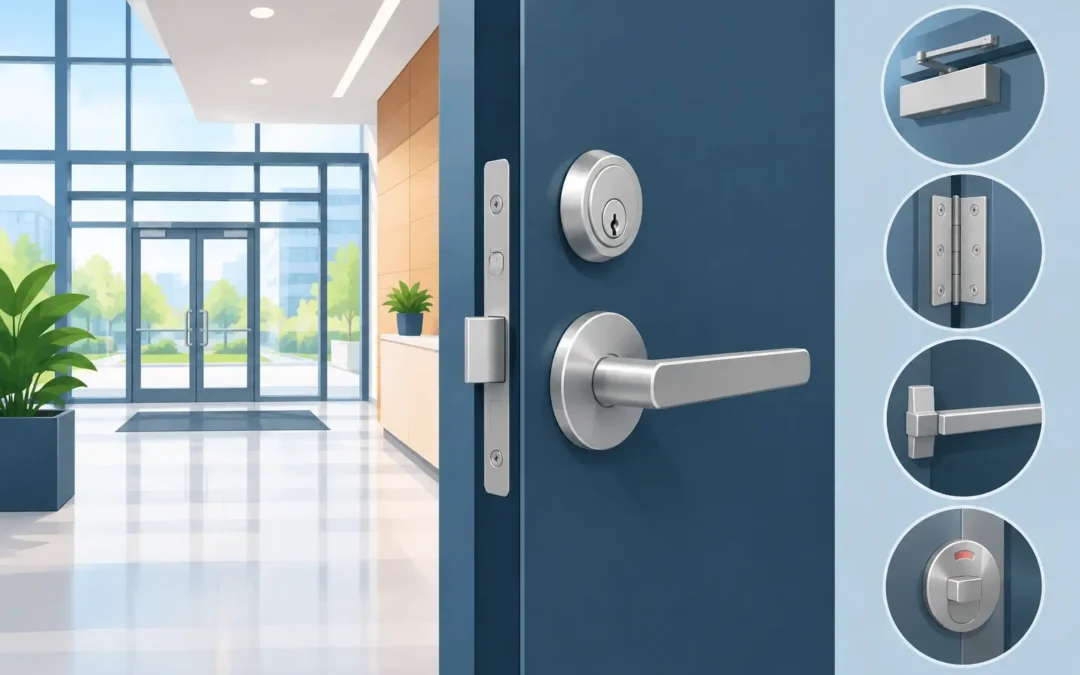
Door hardware includes the working components that allow a door to open, close, latch, lock, seal, and release when needed. Hinges, locks, closers, exit devices, thresholds, weather seals, pulls, kick plates, and electronic access components all need to work together.
The best selection is not always the most expensive option. It is the hardware matched to the door, frame, location, traffic level, and building requirements. A light-use interior office door needs a different solution than a school exit, hotel stairwell door, healthcare facility opening, or exterior service entrance exposed to Northern Illinois winters.
A mismatch often shows up quickly. Light-duty hinges can sag under a heavy wood or hollow metal door. A closer that is too strong can make an ADA-compliant opening difficult to use. A residential lockset may not last on a busy employee entrance. The details matter because every component shares the load.
Start With How the Opening Will Be Used
Before selecting a lock or closer, consider who uses the opening, how often they use it, and what the door must accomplish. This practical approach helps prevent specification mistakes and avoids unnecessary upgrades where they are not needed.
Residential exterior and garage access doors
Homeowners usually prioritize security, reliable latching, attractive finishes, and protection from drafts and moisture. Deadbolts, locksets, hinges, thresholds, and weather seals should be selected for exterior exposure and regular use. Finish matters, but function should come first. Hardware that looks good but corrodes, loosens, or binds after one season is not a good value.
For an attached garage or a side entry door, proper weather sealing can make a noticeable difference. Worn bottom seals, cracked perimeter weather stripping, and damaged thresholds allow water, pests, road salt, and cold air into the building. Replacing these parts is a practical repair that can help protect the door system and improve comfort near the opening.
Commercial and institutional openings
Commercial doors demand a more complete review. Facility managers and contractors need to account for occupancy type, traffic volume, fire ratings, accessibility, security requirements, and the condition of the existing frame. A door opening is a system, not a collection of separate parts.
Schools, theaters, assisted living facilities, hospitality properties, and retail locations often need hardware that can handle frequent use without creating barriers for occupants. High-traffic openings may require commercial-grade hinges, heavy-duty closers, durable lever handles, and exit devices designed for repeated operation. For exterior doors, weather resistance and controlled closing are equally important.
The Hardware Components That Matter Most
Some parts are easy to overlook because they are small or familiar. They are often the parts that determine whether a door works reliably over time.
Hinges and pivots
Hinges carry the weight of the door and control its alignment with the frame. The right hinge size, material, bearing type, and quantity depend on door height, width, weight, and frequency of use. Heavy doors, tall doors, and high-use openings need hardware built for that demand.
When a door drags on the threshold, rubs the frame, or will not latch consistently, hinges are often part of the problem. However, replacing a hinge without checking the frame, fasteners, door condition, and closer adjustment can leave the root cause unresolved.
Locks, latches, and access control
A lock must provide the appropriate level of security without making the opening difficult to manage. Residential applications may call for a dependable keyed entry lock and deadbolt. Commercial facilities may require storeroom, classroom, privacy, passage, or electrified functions depending on who needs access and when.
Mechanical locks remain a dependable choice for many applications. Electronic access control can be the better fit where facilities need audit trails, scheduled access, credential management, or the ability to change access without rekeying every door. It depends on the building’s security needs and the resources available to maintain the system.
Door closers
A properly adjusted door closer quietly returns the door to the frame, engages the latch, and helps maintain security, fire protection, and climate control. A poorly adjusted closer can slam, creep shut, stop short of latching, or create excessive opening force.
Closer adjustment should be handled carefully. Speed, latching action, backcheck, and spring power all affect performance. On rated openings, the closer is part of a life-safety assembly, so removing it or propping the door open can create serious code and safety concerns.
Exit devices and panic hardware
Exit devices allow occupants to leave quickly by pushing on a bar or pad rather than turning a knob or lever. They are commonly required on specific commercial and public assembly openings, particularly where occupant load or use calls for panic or fire exit hardware.
The right device depends on the door type, rating, location, trim function, and security needs. A fire-rated exit opening has different requirements than a non-rated exterior exit. Because code requirements can vary by occupancy and local jurisdiction, qualified specification and installation are essential.
Weather seals, thresholds, and sweeps
Weather protection is not only a comfort issue. It helps keep out rain, snow, wind, dirt, insects, and debris that can damage flooring and create maintenance work. Exterior doors need compatible thresholds, sweeps, perimeter seals, and, in some situations, automatic door bottoms.
A good seal must not prevent the door from closing and latching. It also must not create an accessibility problem at the threshold. The correct product balances protection with safe, easy operation.
Fire Ratings and ADA Requirements Cannot Be Treated as Add-Ons
Fire-rated doors and frames are tested assemblies. Their hinges, latching hardware, closers, gasketing, vision components, and other accessories must be appropriate for the opening. Substituting hardware after installation without checking the rating can compromise the assembly and create a compliance issue.
ADA requirements are equally practical. Accessible hardware generally needs to be operable without tight grasping, pinching, or twisting, which is why lever hardware is common. Opening force, closer adjustment, maneuvering clearance, door width, and threshold conditions also influence whether an opening is easy to use.
These requirements are not paperwork details. They affect whether people can enter, exit, and move through a building safely. Early planning is far easier than correcting noncompliant openings after construction or renovation is underway.
When Repair Makes Sense and When Replacement Is Smarter
Many hardware issues can be repaired. Loose hinges can be corrected, closers can be adjusted or replaced, latch alignment can be restored, and worn weather seals can be renewed. Timely service can extend the useful life of a door and reduce disruption for occupants.
Replacement becomes the better decision when hardware is obsolete, repeatedly failing, incompatible with the door or frame, damaged beyond adjustment, or no longer appropriate for current security and code needs. A facility that has changed its use, occupancy, or access procedures may need a different hardware solution even if the existing door is still in acceptable condition.
For commercial projects, keeping records of door locations, hardware functions, keying, ratings, and previous repairs can make future maintenance much easier. It also gives facility teams a clearer picture of where recurring problems are costing time and money.
Work With a Source That Understands the Whole Opening
Door hardware performs best when it is selected and installed with the door, frame, and building use in mind. That requires more than choosing a finish from a catalog. It requires practical experience with field conditions, code-sensitive openings, replacement parts, and the demands of daily use.
Barcol Door Company supports homeowners, contractors, and facility teams with hardware for residential, commercial, fire-rated, and ADA-conscious applications across Northern Illinois and Southern Wisconsin. The goal is straightforward: provide components that fit the opening, perform as intended, and hold up where they are needed most.
If a door is hard to operate, will not secure properly, or has become a repeated maintenance issue, treat it as an opening problem rather than a nuisance. The right correction can make every trip through that door safer, easier, and more dependable.