
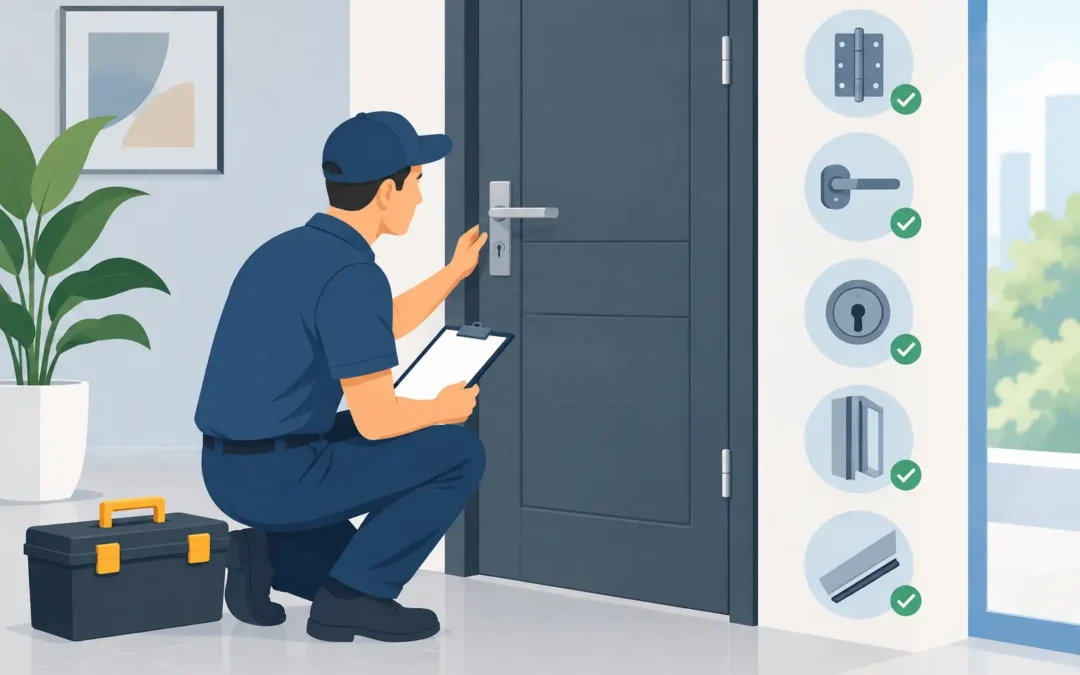
A door that sticks, drags, slams, or will not latch is more than an inconvenience. At home, it can affect security and daily access. In a commercial facility, it can disrupt traffic flow, create safety concerns, and lead to expensive emergency repairs. This door maintenance checklist helps homeowners and facility managers identify common problems early and know when a professional repair is the right call.
Regular attention protects the systems people rely on every day, from overhead garage doors and openers to hollow metal entry doors, closers, panic devices, and rolling steel doors. The goal is not to turn every property owner into a door technician. It is to catch visible wear before it becomes a failed door, damaged hardware, or a safety issue.
Start With a Safe Visual Inspection
Begin with the door closed and take a few minutes to look at the full opening. Check the door panel, frame, track, weather seal, hinges, hardware, and surrounding wall or floor area. Look for dents, cracks, rust, loose fasteners, water staining, bent metal, and gaps that were not there before.
For residential garage doors, inspect the sections for damage and make sure the bottom seal meets the floor evenly. A gap can allow water, pests, cold air, and debris into the garage. For commercial openings, look closely at the frame, threshold, and perimeter seals. A damaged frame or failed weather seal can affect security, energy use, and code compliance.
Pay attention to changes in operation. Doors rarely fail without warning. A new scraping sound, a door that requires extra force, or a latch that no longer lines up can point to a developing issue.
Door Maintenance Checklist for Moving Parts
Moving hardware deserves regular attention because wear builds gradually. Frequency depends on use. A front entry door may need a seasonal inspection, while a busy school, hotel, warehouse, or medical facility may need monthly checks and scheduled professional service.
Use this checklist for doors that open, close, lock, or travel on tracks:
- Check hinges for loose screws, sagging, rust, or squeaking. Tighten accessible fasteners only if the door and frame are stable.
- Inspect locks, latches, strike plates, and handles. The latch should engage fully without lifting, pulling, or forcing the door.
- Look at door closers for leaking fluid, loose arms, damaged covers, or a door that closes too fast or does not close completely.
- Test panic devices and exit hardware on commercial doors. The device should release the latch easily and allow the door to open without binding.
- Examine rollers, tracks, cables, and brackets on overhead doors for visible damage, unusual wear, or loose components.
- Check weather stripping, door sweeps, thresholds, and perimeter seals for splits, compression, missing sections, or daylight around the opening.
Lubrication can help some components, but it is not a cure for worn or damaged parts. Use a product suited to the application and avoid applying heavy grease to garage door tracks. Grease can attract dirt and make operation worse. Commercial hardware may also have manufacturer-specific service requirements, especially fire-rated doors and closers.
Test How the Door Operates
A proper inspection includes opening and closing the door several times. Listen as much as you watch. Grinding, popping, screeching, or repeated banging should not be ignored.
For a swinging entry door, check whether it opens smoothly, clears the floor, and returns to the frame without slamming. If the door rubs the threshold or drags across the floor, the issue may be worn hinges, loose hardware, frame movement, moisture exposure, or an improperly adjusted closer. The right repair depends on the cause, which is why repeated adjustments without an inspection can create a larger problem.
For automatic garage doors, stand clear and operate the opener from a safe position. The door should move smoothly without jerking, shaking, or reversing unexpectedly. Test the photo-eye safety sensors by placing an object in the door’s path and confirming that the door will not close on it. Also test the opener’s reversal feature according to the manufacturer instructions.
Never attempt to repair, loosen, or adjust garage door springs, lift cables, bottom brackets, or high-tension components yourself. These parts are under significant force and require trained service technicians with the proper tools.
Protect Security and Weather Resistance
Door maintenance is also security maintenance. A strong door can still be vulnerable if its lock, strike plate, closer, frame, or hinge screws are failing. Check that exterior doors close tightly and latch without needing to be pushed or pulled into place.
For homeowners, inspect the garage-to-house door as carefully as the overhead garage door. This door is an important security and fire separation point. Make sure it self-closes and latches if required by the home’s design or local code.
For commercial properties, examine all public, employee, and service entrances. Doors used for deliveries, trash removal, or shift changes often receive the most abuse. A loose lever, damaged closer, bent hinge, or failed weather seal can quickly turn a secondary entrance into a security gap.
Weather seals need special attention before Northern Illinois and Southern Wisconsin winters. Cold temperatures can make seals brittle, while snow, salt, and moisture accelerate corrosion around thresholds, tracks, and steel components. In summer, heat and humidity can swell wood doors and reveal alignment issues. Seasonal checks help prevent small weather-related problems from becoming service calls at the worst possible time.
Give Fire-Rated and ADA Doors Extra Attention
Some doors have requirements that go beyond ordinary function. Fire-rated doors, frames, and hardware are part of a building’s life-safety system. They must close and latch properly, and they should not be modified with unapproved hardware, wedges, hold-open devices, or field alterations.
If a fire door is blocked open, fails to latch, has a missing label, or has damaged hardware, schedule a professional inspection. Do not assume a repair that works on a standard office door is appropriate for a rated opening.
ADA-related concerns also deserve prompt action. A door that is too difficult to open, closes too quickly, has an obstructed approach, or has improperly positioned hardware can create access problems for visitors and employees. Facility managers should address these concerns with qualified door professionals who understand the door, frame, closer, hardware, and applicable requirements as one system.
Know When to Call for Professional Service
Basic inspection and cleaning are useful, but a door repair should be handled by a trained technician when there is damage to structural components, high-tension garage door parts, electrical opener systems, fire-rated openings, rolling steel doors, or commercial exit hardware.
Call for service when a door will not close or latch, a garage door is off track, an opener reverses without cause, cables appear loose or broken, a closer leaks, a panic device sticks, or the frame is damaged. For commercial properties, it is usually less costly to address these issues during normal service hours than to wait for an access, security, or life-safety failure.
Barcol Door Company helps homeowners and commercial facilities maintain, repair, replace, and upgrade the door systems they depend on. From garage door service to commercial steel doors, frames, closers, hardware, and specialty openings, the right repair starts with an accurate diagnosis.
A few minutes of routine inspection can prevent a door problem from becoming a disruption. Keep this checklist on hand, document recurring concerns, and schedule service before a worn component becomes the reason a home, business, or facility cannot open safely.