
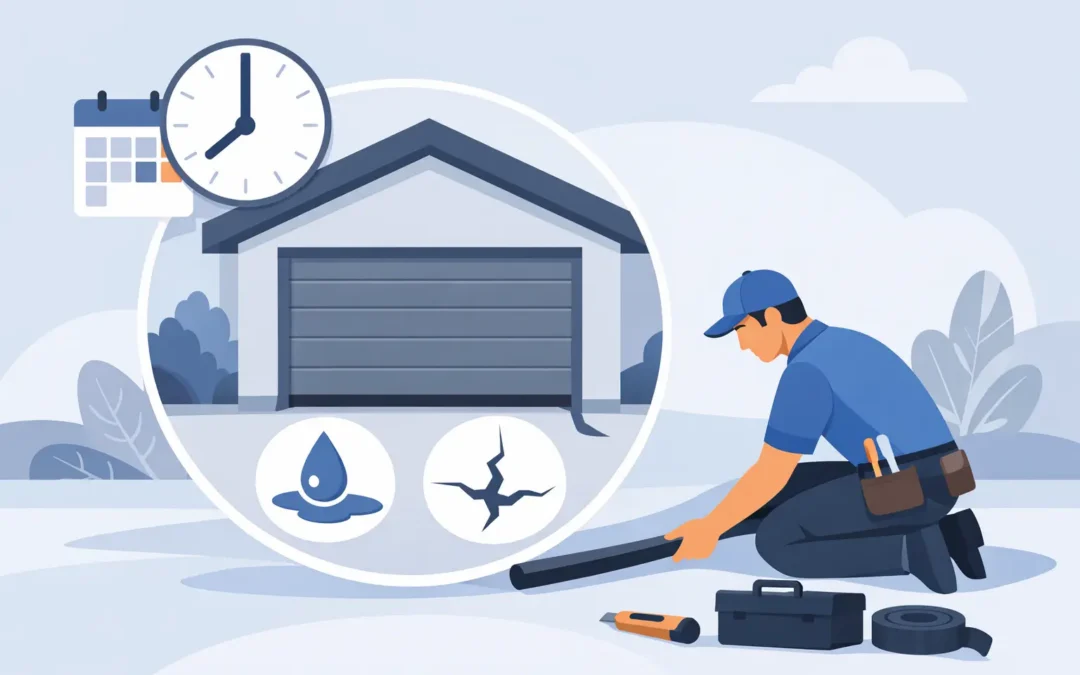
A garage door that closes but still lets in cold air, rainwater, leaves, or insects has a weather-sealing problem. Garage door seal replacement is a practical repair that protects the garage, improves comfort in adjacent rooms, and helps keep the door operating as it should. It is also one of the easiest maintenance items to overlook until a storm, a pest problem, or a rising utility bill makes it impossible to ignore.
For homeowners, the concern is usually a wet garage floor or a noticeable draft. For commercial properties, worn seals can affect stored inventory, employee comfort, cleanliness, and daily operations. The right replacement depends on where the gap is, the door type, and the condition of the door itself.
Signs You Need Garage Door Seal Replacement
The bottom seal is the most visible part of a garage door weatherproofing system, but it is not the only one. A door can have a new bottom gasket and still allow water or air inside through the sides, top, or gaps between door sections.
Look at the door from inside the garage during daylight hours. If you can see light around the perimeter when the door is closed, the seal may be worn, compressed, torn, or improperly fitted. Light does not always mean a major repair is needed, but it is a clear reason to inspect the weatherstripping more closely.
Water marks along the floor at the bottom of the door are another common warning sign. A bottom seal may flatten with age, crack in extreme temperatures, or pull loose from its retaining track. On an uneven concrete floor, even a good seal can struggle if it is not sized and installed correctly.
Other signs include brittle rubber, loose side weatherstripping, leaves blowing into the garage, recurring insect activity, and noticeable cold air near the door. If the garage is connected to the home or used as a workshop, gym, storage area, or finished space, those gaps become more than a minor inconvenience.
Commercial facilities should also watch for seals that interfere with loading, rolling, or overhead door operation. A torn or dragging seal can wear faster and may create a trip hazard or prevent a door from closing evenly.
What a Garage Door Seal Actually Does
A garage door seal is not designed to make the door airtight like a high-performance exterior entry door. Garage doors move, flex, and sit over concrete that may not be perfectly level. The goal is to create a durable barrier against ordinary weather, debris, pests, and drafts while allowing the door to open and close without binding.
The bottom seal is typically a flexible vinyl or rubber gasket attached to the lower edge of the door. When the door closes, the seal compresses against the floor. Side and top weatherstripping mount to the garage door frame and press against the outside face of the door.
The best material depends on the installation. Vinyl is common and economical, while rubber and heavier-duty materials can provide better flexibility in changing Midwest temperatures. A commercial overhead or rolling steel door may require a different profile and more durable components than a standard residential sectional garage door.
A seal cannot correct every issue. If the door is out of level, damaged, poorly adjusted, or sitting above a badly deteriorated floor, replacing weatherstripping alone may not solve the problem. That is why a proper inspection matters before buying material or scheduling a repair.
Choosing the Right Replacement Seal
Garage door seals are not one-size-fits-all. Bottom seals come in several profiles, including T-style, bulb-style, bead-end, and U-shaped designs. The correct choice must match the existing retainer or, when necessary, a new retainer must be installed.
Before selecting a replacement, identify the door manufacturer when possible and inspect the bottom retainer for cracks, corrosion, bends, or sharp edges. A new gasket installed in a damaged track may pull out quickly or fail to sit evenly on the floor.
Side and top seals also need to match the frame and door configuration. The weatherstripping should contact the door firmly without creating excessive friction. If it is pressed too tightly, the door can drag during operation. If it barely touches the door, it will not block wind-driven rain or cold air effectively.
For homeowners, material selection often comes down to local weather, garage use, and budget. For a detached garage used mainly for vehicles, a standard quality seal may be appropriate. For an attached garage, heated workspace, or building exposed to strong winds, investing in a more durable seal and a professional fit is often worthwhile.
Can You Replace a Garage Door Seal Yourself?
Many bottom seal replacements are manageable for an experienced homeowner, particularly when the door uses a straightforward retainer and the door is otherwise in good condition. The job usually involves measuring the door width, removing the old seal, cleaning the retainer, sliding in the new gasket, and trimming the ends after checking the fit.
The trade-off is that small mistakes can lead to continued gaps. Installing the wrong profile, cutting material too short, forcing a seal through a bent track, or stretching the gasket during installation can cause premature failure. Cold weather can also make some materials stiff and difficult to work with.
Do not attempt to adjust garage door springs, cables, or other counterbalance components as part of a seal project. Those components are under significant tension and should be handled by a trained technician. If the door is heavy, uneven, noisy, or difficult to close, address that operating issue before focusing on the weather seal.
Professional service is the better choice when the floor is uneven, the retainer is damaged, the door has alignment problems, or the project involves a commercial door. A technician can identify whether a new seal, retainer, door adjustment, or a combination of repairs will deliver the result you expect.
Getting a Better Seal at the Bottom of the Door
The condition of the garage floor has a direct effect on performance. Slight irregularities are common and a flexible bottom gasket can accommodate many of them. Larger dips, cracks, or a sloped floor may leave a persistent gap that no standard seal can fully cover.
In those situations, a wider bottom seal or a compatible threshold may help, but the solution must not obstruct the door or create a drainage problem. Water should be directed away from the garage, not trapped against the door. For commercial properties, the solution also needs to support traffic patterns, equipment use, and applicable accessibility requirements.
Keep the area where the seal contacts the floor reasonably clean. Gravel, hardened mud, road salt, and debris can damage the gasket and prevent a full seal. During winter, avoid chipping ice directly against the bottom edge of the door with metal tools.
When the Problem Is More Than Weatherstripping
If a new seal still leaves visible gaps, the issue may be with the door rather than the gasket. Bent tracks, worn rollers, damaged door sections, loose hinges, and an improperly set bottom bracket can all affect how the door meets the floor and frame.
Wood garage doors can also change shape over time, while steel doors may develop damage that prevents an even closure. On commercial doors, repeated use and contact with equipment can shift components enough to affect sealing and operation. Treating the seal as part of the complete door system prevents repeated, frustrating repairs.
Barcol Door Company can inspect the condition of the weatherstripping, door hardware, and operating system to recommend a repair that fits the property. That approach is especially useful when a simple replacement has turned into an ongoing water, draft, or door performance issue.
A worn seal may seem minor, but it is often the first line of defense between your garage and the weather outside. Address it before the next hard rain or cold snap, and your garage will be cleaner, drier, and more comfortable to use.