
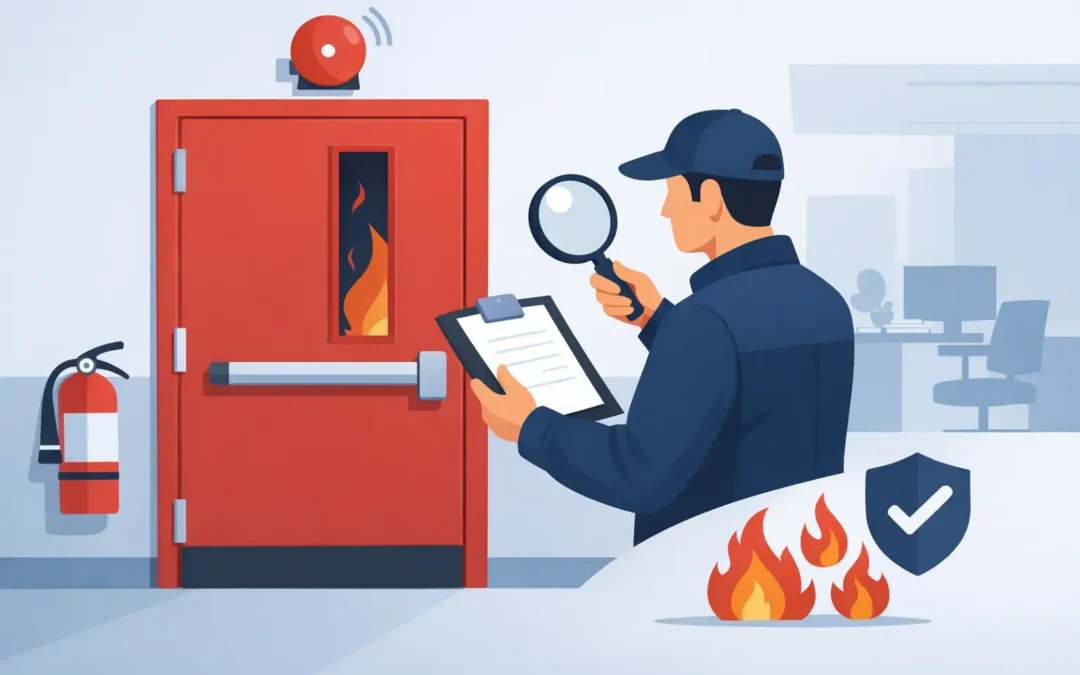
A fire door can look like any other door in a corridor, stairwell, or rated wall opening. Its job is very different. When a fire starts, the door and frame assembly are designed to limit the spread of flames and smoke long enough to protect occupants and support a safe evacuation. That only works when the assembly is complete, properly maintained, and able to close and latch as intended.
For facility managers, property owners, contractors, and maintenance teams, the question of when do fire doors need inspection has a clear baseline: fire door assemblies generally require a documented inspection and test at least once a year. They should also be checked after installation, after a repair or alteration, and whenever damage or a performance issue is found. Local code requirements and the authority having jurisdiction can add requirements, so the applicable rules for your building always control.
When Do Fire Doors Need Inspection?
The widely used standard for fire door assembly inspection is NFPA 80, Standard for Fire Doors and Other Opening Protectives. It calls for fire door assemblies to be inspected and tested not less than annually by a qualified person. This is not simply a visual walk-through. The inspector verifies that the door, frame, hardware, glazing, clearances, and closing operation continue to meet the requirements for a rated opening.
Annual inspections are the minimum, not a reason to wait when something is clearly wrong. A door that has been propped open, struck by equipment, modified by another trade, or fitted with replacement hardware may no longer perform as a fire-rated assembly. In those cases, prompt evaluation is the practical and responsible approach.
Many facilities schedule inspections around a consistent annual maintenance cycle. Schools may coordinate them during summer work. Hospitality properties may arrange work during lower-occupancy periods. Manufacturing sites often include fire doors in planned shutdown or safety maintenance programs. The schedule can vary, but the annual documentation should not be overlooked.
Inspection Is Needed After Work on the Opening
Fire-rated openings are systems, not just doors with a label. Replacing a closer, lockset, panic device, hinge, vision lite, gasket, or threshold can affect the door’s ability to close, latch, or maintain its rating. Even well-intended repairs can create a compliance problem if the replacement part is not listed or compatible with the assembly.
Arrange an inspection after a new fire door installation and after significant repair, replacement, or alteration work. This is especially important when a renovation changes wall finishes, flooring, access-control hardware, or door function. A new floor surface, for example, can reduce the clearance beneath a door. Added security hardware can prevent proper latching. A card reader or electric strike may need to work with the fire alarm and life-safety system in a specific way.
If a door opening has been changed, do not assume that a working door is a compliant fire door. Have the assembly reviewed before the project is considered complete.
Damage and Daily Use Can Trigger an Earlier Inspection
High-use locations often need more attention than an annual calendar date provides. Fire doors at stairwells, kitchens, loading areas, corridors, healthcare facilities, schools, and service areas take regular abuse from carts, traffic, cleaning equipment, and moving materials.
Request a qualified inspection when any of these conditions appears:
- The door will not self-close and latch from the fully open position.
- The door, frame, hinges, closer, latch, or glazing is bent, loose, damaged, or missing.
- A label is painted over, removed, or otherwise unreadable.
- The opening has been drilled, cut, field-modified, or fitted with unapproved hardware.
- The door is blocked, wedged open, or held open by a device not tied to the fire alarm system.
Routine staff observations matter. A custodian who notices a closer slamming, a maintenance employee who sees a latch fail to engage, or a manager who finds a door propped open has identified a potential life-safety issue. Taking the door out of service is not always necessary, but the condition should be reported and assessed quickly.
What Is Checked During a Fire Door Inspection?
A proper fire door inspection covers much more than whether the door opens and closes. The inspector reviews the opening as an assembly and confirms that the components are present, functional, and appropriate for the rating.
The door and frame should have legible labels, with no unapproved field modifications that could compromise the rating. There should be no open holes, breaks, excessive damage, or missing parts. The door must fit within permitted clearance limits and swing freely without binding on the floor, frame, or adjacent materials.
Hardware receives close attention because it controls how the opening performs during a fire. Hinges must be secure and functional. A self-closing device must close the door completely. The latch must engage the strike when the door closes, because an unlatched door can open under fire pressure. Where panic hardware, coordinators, automatic operators, locks, gasketing, or hold-open devices are present, they must be compatible with the rated assembly and operate as required.
For pairs of doors, the inactive leaf, astragal arrangement, coordinator, and latching sequence can be critical. For doors with glass, the glazing, beads, and seals must also be appropriate and intact. A fire-rated label on the door alone does not make a modified opening compliant.
Fire Door Inspections vs. Basic Maintenance
Maintenance teams can and should perform regular visual checks between formal annual inspections. Keeping openings clear, reporting damage, tightening approved hardware where appropriate, and addressing ordinary operation issues helps prevent failures. However, basic maintenance is not a substitute for the required annual inspection and test by a qualified person.
The difference is documentation and expertise. Formal inspections evaluate the rated assembly against applicable requirements and produce records that identify the opening, inspection date, findings, and repairs needed. Those records can be requested by an authority having jurisdiction, insurance representative, accreditation reviewer, or fire safety professional.
A reliable record also helps facilities plan repairs. Rather than discovering a large number of deficiencies immediately before an inspection deadline, a facility can prioritize life-safety concerns, coordinate replacement parts, and budget for larger opening upgrades.
Common Problems That Put Fire Doors at Risk
Most fire door deficiencies are not dramatic. They result from ordinary building use and small changes that add up over time. A closer loses adjustment. Paint builds up on a label. New carpet affects the door clearance. A damaged lever is replaced with hardware that looks similar but is not approved for the application.
Propped-open doors are another frequent problem. Staff may prop a corridor or stair door open for convenience, ventilation, deliveries, or visibility. But a fire door held open with a wedge, trash can, or other manual method cannot close when a fire occurs. If an opening must remain open for daily operations, the solution may involve a listed hold-open device connected to the building fire alarm system. The right option depends on the door’s location, rating, occupancy, and local code requirements.
Do not overlook paint, signage, and access-control changes. A sign may be permitted in a particular location, but fasteners or adhesive can affect the door surface or label. Access-control hardware requires careful coordination with egress and fire alarm requirements. A door contractor experienced in commercial openings can help identify a workable path before minor changes turn into costly corrections.
Who Should Perform the Inspection?
NFPA 80 requires inspection and testing by a qualified person with knowledge and understanding of the operating components of the type of door being inspected. Qualifications matter because fire door compliance often depends on details that are easy to miss, including hardware listings, label information, clearances, latching, and acceptable repairs.
Your building’s authority having jurisdiction has the final say on enforcement and local requirements. That may be a municipal fire marshal, building official, state agency, or another designated authority. Facilities in Northern Illinois and Southern Wisconsin should also recognize that adopted codes and enforcement practices can differ by community and building type.
For complex facilities, it is smart to coordinate the inspection provider with the facility manager, life-safety team, and any security or alarm contractor involved in the openings. This helps prevent repairs that solve one operational issue while creating another.
Keep Fire Door Repairs From Becoming a Bigger Problem
The best time to address a fire door issue is when the first symptom appears. A door that drags, fails to latch, has a broken closer, or shows frame damage is not a problem to add to the next annual list. Prompt service can protect occupants, preserve the opening, and reduce the chance of a more extensive replacement later.
Barcol Door Company provides commercial door, frame, hardware, repair, and fire-rated opening support for facilities that need practical answers and expert workmanship. Keep your annual inspection records current, report daily-use damage quickly, and treat every repair as part of the complete fire door assembly. That approach gives your facility a stronger chance of having each rated opening perform when it is needed most.