
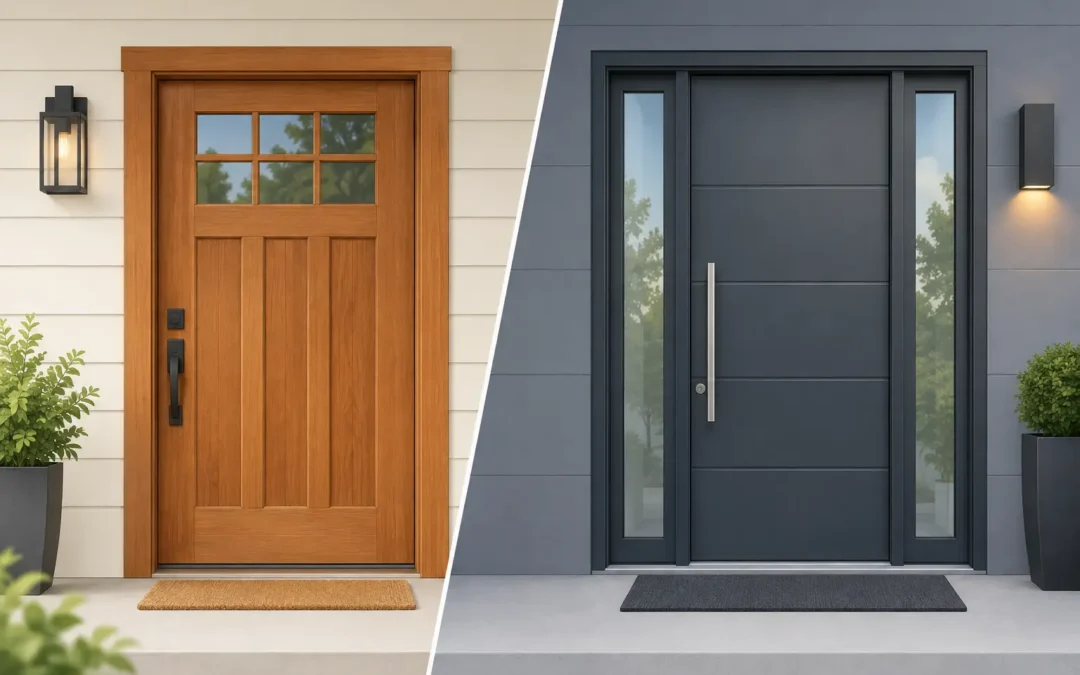
A front or side entry door has a tougher job than most people realize. It needs to look right, resist weather, protect the building, operate reliably, and work with the frame, lockset, closer, and code requirements around it. When comparing wood versus steel entry doors, the better choice comes down to where the door will be used and what matters most: appearance, security, durability, maintenance, or budget.
For a homeowner, the decision often starts with curb appeal. For a school, hotel, retail space, healthcare facility, or industrial building, daily traffic, fire ratings, hardware compatibility, and long-term service needs may carry more weight. Both materials can be excellent choices when they are properly specified and professionally installed.
Wood Versus Steel Entry Doors: The Main Difference
Wood is chosen for its natural character. A quality wood door can bring warmth, architectural detail, and a custom look that complements traditional homes, historic properties, and high-end residential entrances. Species, grain patterns, panel designs, stains, paint colors, and glass options give wood a wide range of visual possibilities.
Steel is built for practical performance. It offers dependable security, a clean finished appearance, and a strong value for exterior entry applications. Steel doors are commonly used on homes, service entrances, offices, schools, apartment buildings, and commercial facilities because they stand up well to regular use and work with a broad selection of commercial hardware.
The material alone does not determine the outcome. Door construction, core type, frame condition, weather exposure, finish quality, hardware, and installation all affect how a door performs over time.
Appearance and Curb Appeal
A wood entry door is difficult to match when the goal is a traditional or distinctive appearance. Natural wood grain gives each door a character that painted steel cannot fully duplicate. Wood also works well for oversized doors, decorative panels, sidelights, and designs intended to fit older architecture.
That said, modern steel entry doors offer more design flexibility than many property owners expect. They are available in smooth and embossed finishes, multiple panel profiles, factory-applied colors, window configurations, and realistic wood-grain looks. For many homes, a well-selected steel door provides a polished appearance at a more manageable price.
Commercial settings usually prioritize a consistent, professional look over natural grain. Steel doors and hollow metal frames can be painted to match a facility’s color scheme and are a practical fit for corridors, rear entrances, mechanical rooms, and public access doors. Wood doors are also common inside commercial buildings, particularly in offices, hotels, theaters, and institutional interiors where appearance matters and weather exposure is limited.
Security and Everyday Durability
Steel is the stronger choice for many security-focused exterior openings. A steel door paired with a properly anchored steel frame, quality deadbolt or panic hardware, reinforced hinges, and professional installation creates a dependable barrier against forced entry. This is especially valuable for commercial buildings, utility rooms, side entrances, and high-traffic locations.
Wood doors can also be secure, particularly solid-core or solid-wood doors with quality hardware. However, wood is more vulnerable to repeated impact, moisture movement, and deterioration if the finish is neglected. A warped wood door can affect latch alignment and weather sealing, which may eventually create security and operating concerns.
For commercial openings, the complete opening matters more than the door slab alone. A strong door will not perform as intended if the frame is loose, hinges are worn, the latch does not engage fully, or the closer is out of adjustment. Professional evaluation should include the frame, thresholds, weather seals, locks, exit devices, and any applicable fire or accessibility requirements.
Weather Resistance in Northern Illinois and Southern Wisconsin
Cold winters, wind-driven rain, humidity, snow, and freeze-thaw cycles put exterior doors to work. Steel doors typically handle these conditions well when they have a durable factory finish, insulated core, good perimeter weatherstripping, and a properly installed threshold. They will not absorb moisture in the same way as wood, making them a practical option for exposed openings.
Steel is not maintenance-free. Scratches and dents should be addressed before corrosion begins, especially along the bottom edge of the door or in areas exposed to road salt and moisture. A damaged finish can usually be repaired more easily than extensive rot, but routine inspection is still worthwhile.
Wood responds naturally to changes in moisture and temperature. Without adequate overhang protection and regular finish maintenance, wood can swell, shrink, crack, or warp. A protected entry with a deep porch roof is a much better environment for a wood exterior door than an opening that takes direct sun, rain, and snow throughout the year.
For homeowners who prefer wood, the answer is not automatically to avoid it. It is to select the right door construction, protect the opening, maintain the finish, and understand that wood requires more attention than steel. The result can be well worth it when appearance is the priority.
Maintenance Requirements and Long-Term Cost
Steel usually wins on routine maintenance. Most steel entry doors need periodic cleaning, inspection of weather seals, lubrication of hinges and locks, and touch-up paint when the finish is damaged. With proper care, a steel door can provide years of dependable service with relatively little upkeep.
Wood requires a more active maintenance plan. Painted doors may need repainting, while stained doors may need refinishing to protect against ultraviolet exposure and moisture. The schedule varies based on sun exposure, roof overhangs, local weather, and the condition of the coating. Small signs of finish failure should be corrected early before water reaches the wood beneath.
Initial price also differs. Steel entry doors are often more affordable than comparable custom wood doors, particularly when durability and insulation are considered. Wood can cost more upfront and may carry greater long-term maintenance expense, but it can add meaningful visual value to the right property.
The lowest purchase price is not always the best value. A door that is poorly fitted, incompatible with its hardware, or not suited to the opening’s exposure can create repair costs long before it should. Spending appropriately on the door, frame, hardware, and installation protects the investment.
Energy Efficiency and Comfort
Insulated steel doors are a strong option for energy efficiency. Many feature insulated cores that help reduce heat transfer, while tight weatherstripping limits drafts around the perimeter. For a conditioned home, office, or facility, this can improve comfort near the entrance and help manage energy use.
Wood also has natural insulating properties, but performance depends heavily on the door’s thickness, construction, glass area, seals, and fit. Any entry door can lose efficiency when gaps develop at the threshold or around the frame. Replacing worn sweeps and weatherstripping is often one of the simplest ways to improve comfort without replacing the entire opening.
Glass inserts deserve special attention. They can add daylight and style, but they also affect privacy, security, and energy performance. Choose glass suited to the location, and consider impact, safety, or fire-rated glazing requirements for commercial applications.
When Steel Is the Better Choice
Steel is generally the practical choice for an exposed exterior opening, a high-use commercial door, a service entrance, or an opening where security and low maintenance are the top priorities. It is also a strong fit when budget matters and the property owner wants a durable, insulated door with a broad range of hardware options.
For businesses and institutions, steel doors and frames are often the straightforward answer because they can be specified for fire ratings, access control, panic devices, closers, vision panels, and other operational needs. They are built to support the demands of busy facilities when properly installed and maintained.
When Wood Is the Better Choice
Wood makes sense when the entrance itself is an architectural feature. It is especially well suited to homes with traditional, historic, craftsman, or custom design elements, as well as sheltered entries where the owner is prepared to maintain the finish. Interior commercial applications may also benefit from wood’s warmer appearance without the same level of weather exposure.
Choose wood because it fits the property and the owner’s expectations, not because it is assumed to be more premium in every situation. An unprotected wood door at a hard-weather location can become a costly project. A well-built, properly protected wood door at a prominent front entrance can be an excellent long-term choice.
Get the Entire Opening Right
The best decision is rarely just wood or steel. It is the right door system for the building. That includes the door, frame, hinges, lock or exit device, closer, threshold, weather seals, and installation details that keep the opening secure and operating correctly.
For a new installation, replacement, or problem door, Barcol Door Company can help property owners and facility managers evaluate the full opening instead of guessing at a single component. A door that fits the building, the weather, the traffic level, and the required hardware will deliver better value long after the first impression.