A garage door opener mounted above the door has been the standard for decades. But when ceiling space is tight, storage is overhead, or a lift is part of the plan, that familiar rail and motor can become a problem. This jackshaft garage door opener review looks at whether a wall-mounted opener is a worthwhile upgrade for homeowners who want a cleaner, quieter, more usable garage.
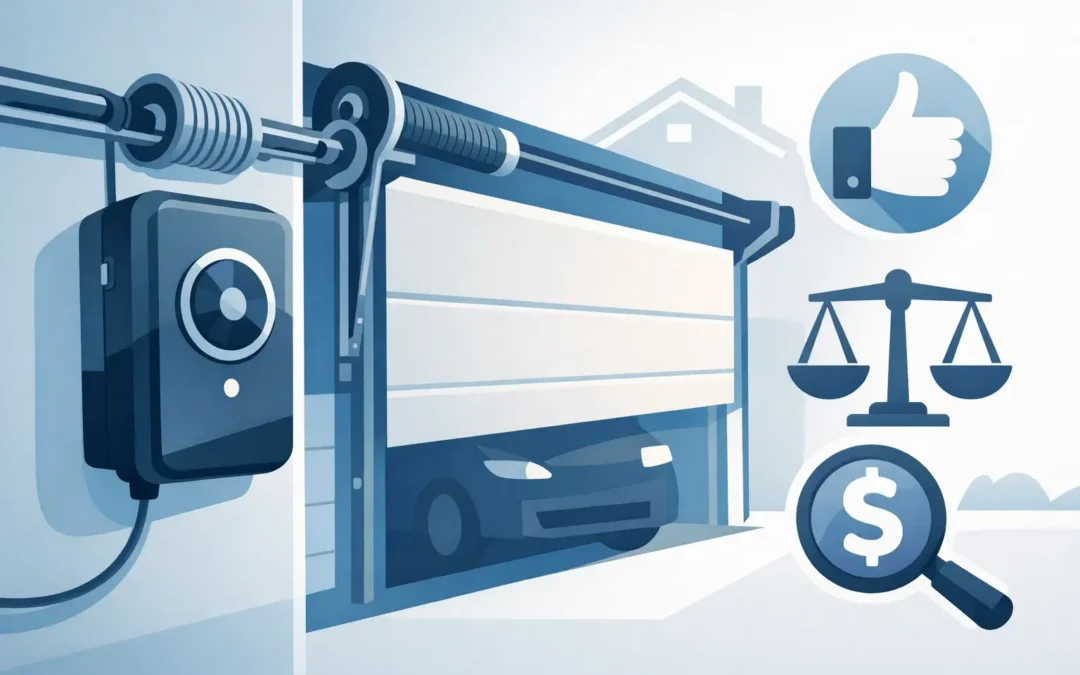
Jackshaft openers mount on the wall beside the garage door, directly at the torsion bar. Instead of pulling the door along a rail from the ceiling, the opener turns the torsion bar to raise and lower the door. The basic purpose is the same, but the installation, performance, and best-use cases are different.
What a Jackshaft Opener Does Better
The biggest advantage is ceiling clearance. A traditional opener occupies the center of the garage ceiling with its motor, rail, and hanging supports. A jackshaft unit removes that equipment from overhead. For homeowners who use ceiling-mounted racks, need room for a vehicle lift, or simply want a less cluttered garage, that can make a noticeable difference.
It can also be a better fit for garages with high, vaulted, or obstructed ceilings. If ductwork, beams, lighting, or storage interfere with a conventional rail installation, a wall-mounted design may provide a practical solution. It is not a workaround for every difficult garage, but it gives an experienced installer another option.
Many current jackshaft models include features homeowners expect in premium openers: battery backup, integrated LED lighting, automatic locking, smartphone control, and safety sensors. The automatic deadbolt-style lock is especially valuable. Because the lock engages when the door closes, it adds a layer of protection beyond the opener itself.
Noise and Daily Operation
A properly installed jackshaft opener is often quieter than an older chain-drive system. Since there is no long trolley rail traveling through the center of the ceiling, there can be less vibration transferred through the structure. That matters when a bedroom, office, or living area sits above or near the garage.
Quiet operation does not mean silent operation. The door itself still moves through tracks, rollers, hinges, and springs. A worn roller, loose track, dry hinge, or unbalanced door will make noise regardless of the opener type. In fact, a premium opener may make existing door problems more noticeable because it is not designed to force a poorly operating door through its cycle.
For the best result, the garage door should be balanced, the torsion system should be in good condition, and the tracks should be aligned correctly. The opener should operate the door, not compensate for mechanical defects.
The Important Trade-Offs
A jackshaft garage door opener is not automatically the right choice for every home. Its higher equipment and installation cost is the first consideration. Conventional openers are generally more affordable and work well in the majority of standard residential garages. If ceiling space is not an issue and the existing setup is straightforward, a quality belt-drive opener may deliver excellent value.
Wall-mounted systems also depend on the garage having the right door and spring configuration. They are designed for sectional garage doors with a torsion spring system and adequate side room near the torsion bar. A garage with extension springs, limited side clearance, unusual track geometry, or a low-headroom setup may require a different approach.
Door condition matters as well. A heavy wood door, insulated steel door, or oversized door may be compatible with a jackshaft opener, but the opener must be properly matched to the application. Size alone does not determine compatibility. The door’s balance, spring setup, cable drums, track arrangement, and overall condition all need to be evaluated.
Do Not Choose by Horsepower Alone
Homeowners often compare openers by horsepower or lifting strength. That is understandable, but it misses the main point. A garage door that is correctly balanced should be relatively easy to lift manually. The springs carry the door’s weight, while the opener controls its movement.
If a door feels excessively heavy, drops quickly, binds in the tracks, or will not stay partway open when disconnected from the opener, the issue is likely mechanical. Installing a stronger opener without correcting the problem can lead to premature wear, unreliable operation, and a safety concern. A professional inspection before replacement helps avoid that mistake.
Security Features Worth Considering
A wall-mounted opener can improve security when equipped with an integrated automatic lock. Unlike a conventional opener that relies mainly on the door being held closed by the motor system, an automatic lock physically secures the door to the track when it reaches the closed position.
Smart controls add convenience and oversight. Homeowners can check whether the door is open, receive activity alerts, and close the door remotely when appropriate. These features are useful for busy households, but they should support good habits rather than replace them. Remotes should be secured, keypad codes should be changed when necessary, and safety sensors should always remain clear and functional.
Battery backup is another feature worth prioritizing in many Northern Illinois and Southern Wisconsin homes. During a power outage, battery backup allows the opener to operate for a limited period. It is a practical safeguard when severe weather or utility interruptions occur.
Installation Is More Than Mounting the Motor
A jackshaft unit takes less ceiling space, but it is not a do-it-yourself shortcut. Correct installation requires the opener to be mounted securely, aligned with the torsion bar, and set up with the required safety devices. The cable tension monitor, photo-eye sensors, travel limits, automatic lock, and backup power system all need proper installation and testing.
The garage door also needs to be inspected before the opener is installed. Springs and cables are under high tension and should only be adjusted by trained technicians. Improper work in this area can damage the door system or cause serious injury.
Professional installation is particularly valuable when the garage has nonstandard conditions, such as a high-lift track system, a door that is unusually tall or heavy, restricted side room, or an existing opener setup that needs to be removed and rebuilt. The goal is not just to make the door move. It is to ensure the door operates safely, closes securely, and performs reliably over time.
When a Jackshaft Opener Makes Sense
A wall-mounted opener is often a strong choice when overhead space has real value. Homeowners planning a garage lift, overhead storage, a golf simulator, or a cleaner finished garage can benefit immediately. It also makes sense when a traditional rail opener is difficult to install because of ceiling obstructions or an unusual garage layout.
It can be an excellent upgrade for homeowners who want quieter operation, automatic locking, and smart control features in one package. For a garage attached to the home, those benefits can justify the added cost.
On the other hand, a standard belt-drive opener may be the smarter purchase for a conventional garage with an open ceiling and a properly functioning door. It can provide quiet, dependable operation at a lower price. The right answer depends on the garage, not just the product category.
A Practical Recommendation for Homeowners
Before selecting any new opener, consider how you use the garage now and how you may use it in the next several years. If the ceiling is simply empty space, a conventional opener may serve you well. If that ceiling needs to hold storage, equipment, lighting, or a future vehicle lift, a jackshaft system is worth serious consideration.
A qualified technician can measure side clearance, inspect the torsion system, check the balance of the door, and explain whether a wall-mounted unit is compatible with your setup. Barcol Door Company can help homeowners make that decision based on the actual door and garage conditions, not a one-size-fits-all recommendation.
The best opener is the one that fits your door, protects your home, and makes the garage easier to use every day.